
Niwaki Field Report: field notes on the poetics of pruning
Author and award-winning garden designer Sophie Walker has devoted years to researching and visiting Japanese gardens. In fact, she’s written an extensive book on the subject, The Japanese Garden, and is currently working on a second. In a guest article for Niwaki Field Report No. 2, she shares some of her key findings – from the attitude of the gardeners to the philosophy that informs each carefully timed cut.
As you might imagine, there’s a lot to dig into. Here’s a snapshot of what we’ve learnt.


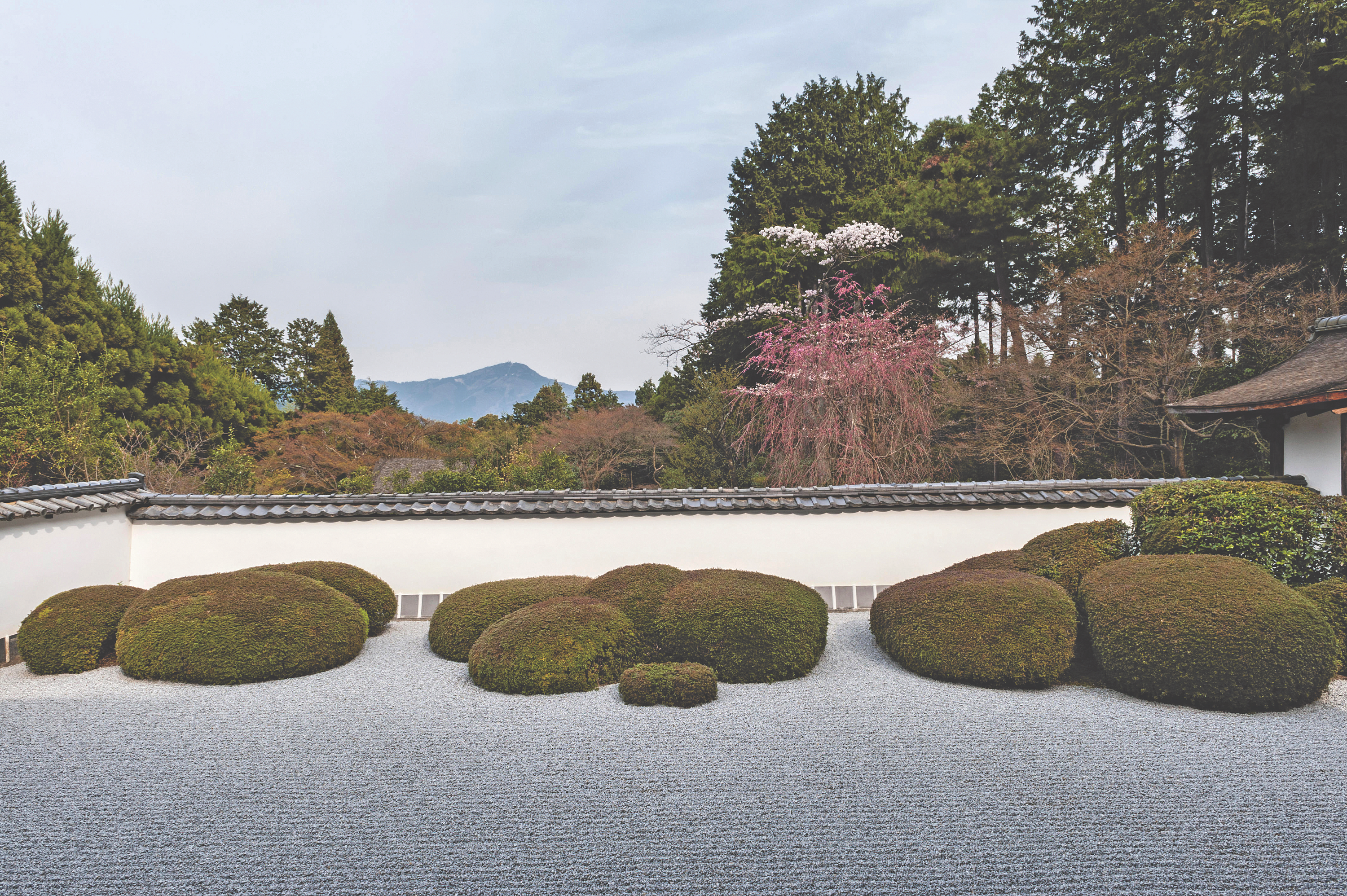
Tightly clipped azalea bushes, “give the impression of being about to move, like a tiger preparing to pounce, or water droplets rolling together across a lotus leaf.”
Reverence not control
It’s often said that the Japanese love of gardens stems from an appreciation for the natural world. This is certainly a useful starting point, but we need to go a little further and think about how Japan experiences the natural world. In spite of years of technological advances, the country remains at the mercy of natural disasters (earthquakes, tsunamis, volcanoes and typhoons … you name it). Ancient Shinto belief states that these forces, being natural, cannot be evil and, furthermore, that there is no distinction between the natural world and mankind. We are in and of nature – we’re not looking in from the outside. This position reinforces the idea that natural environments require our respect, rather than our conquest. Japanese gardens express this in subtle ways, and Sophie Walker knows a thing or two about what this looks like in practice.
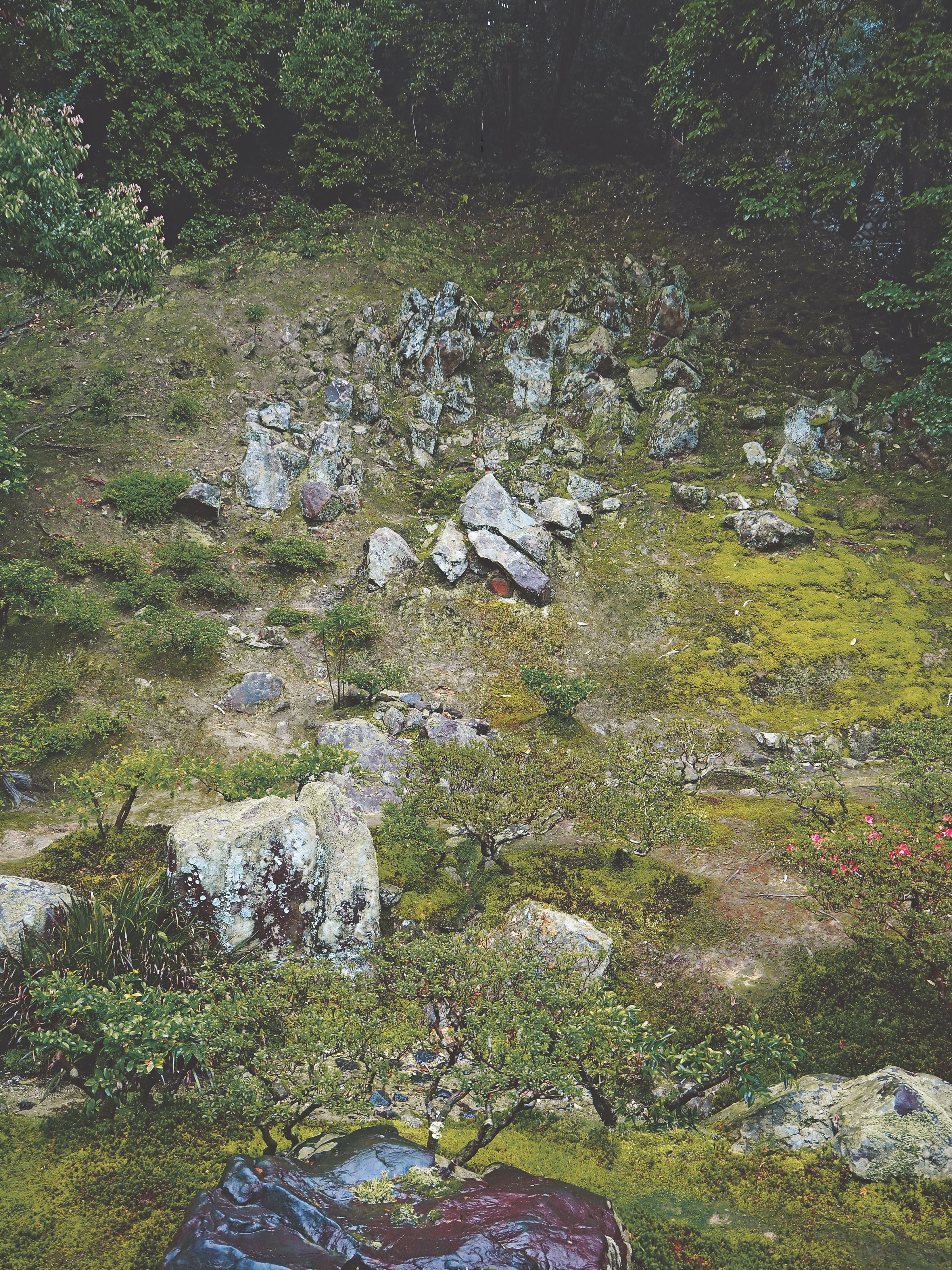
“The karetaki ‘dry waterfall’ at Ginkaku-ji, the Silver Pavilion, is so naturally arranged it is hard to imagine it was set out by man.”

The importance of nature’s original state
Despite their careful (and very deliberate) maintenance, Japanese gardens are inspired by the country’s wilder landscape. Every act, from the careful pruning of a tree to the deliberate placement of a rock, is done with the purpose of bringing this broader environment down to human scale. Of course, there are practical reasons too – Sukashi-ko, ‘the art of thinning’ – is done to protect trees from the weight of winter snow (more on this here). From an artistic point of view, these actions also draw out the inherent qualities of a tree and align it more closely with its associated poetic value. In Japanese gardens, as in Japanese design, there is a search for uncovering ‘the essence’ of a thing.
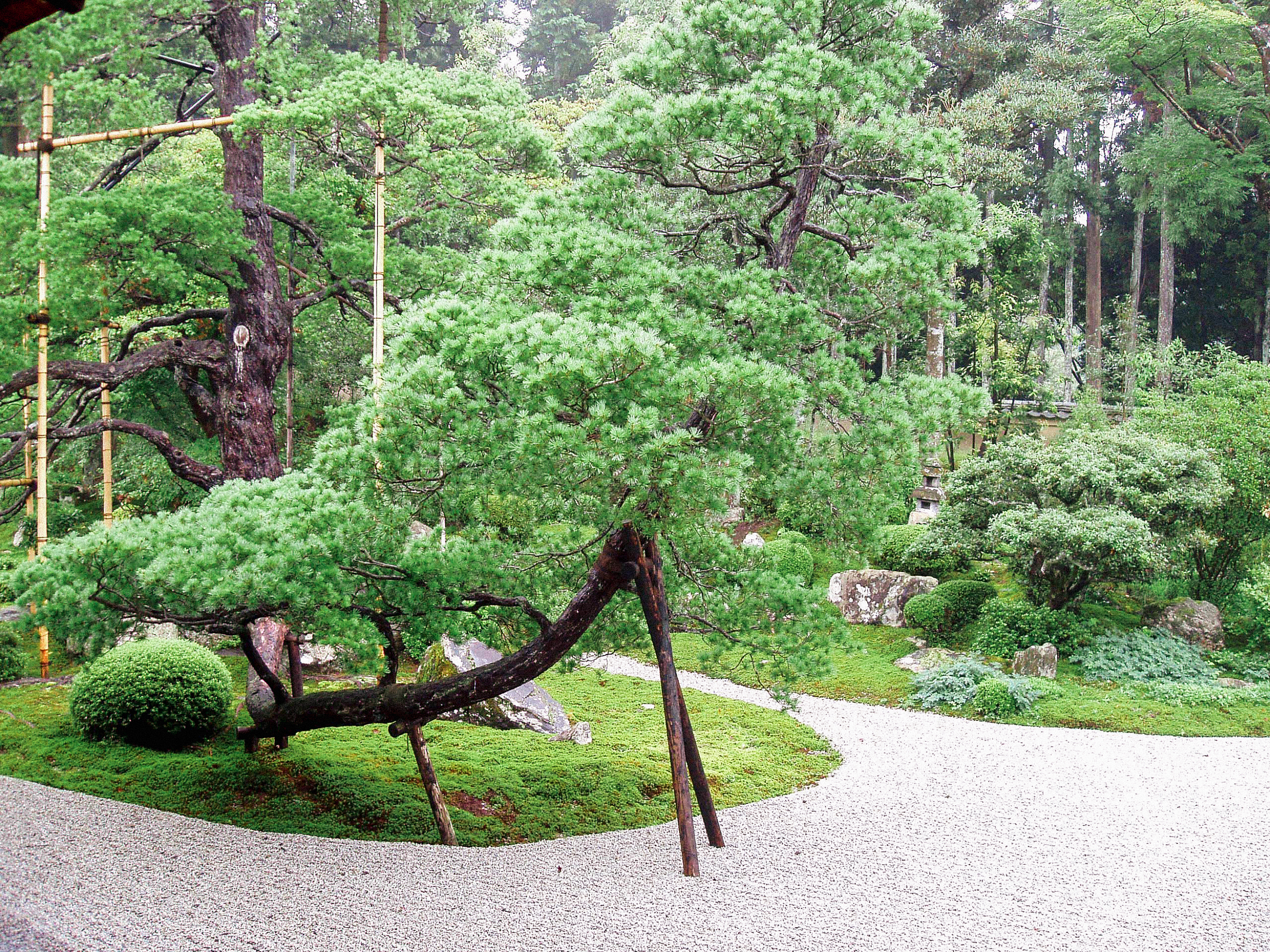
“The art of pruning is not merely a pursuit of beauty for the sake of aesthetics, but an artistic, poetic search for the cultivated form’s wild, natural counterpart.”
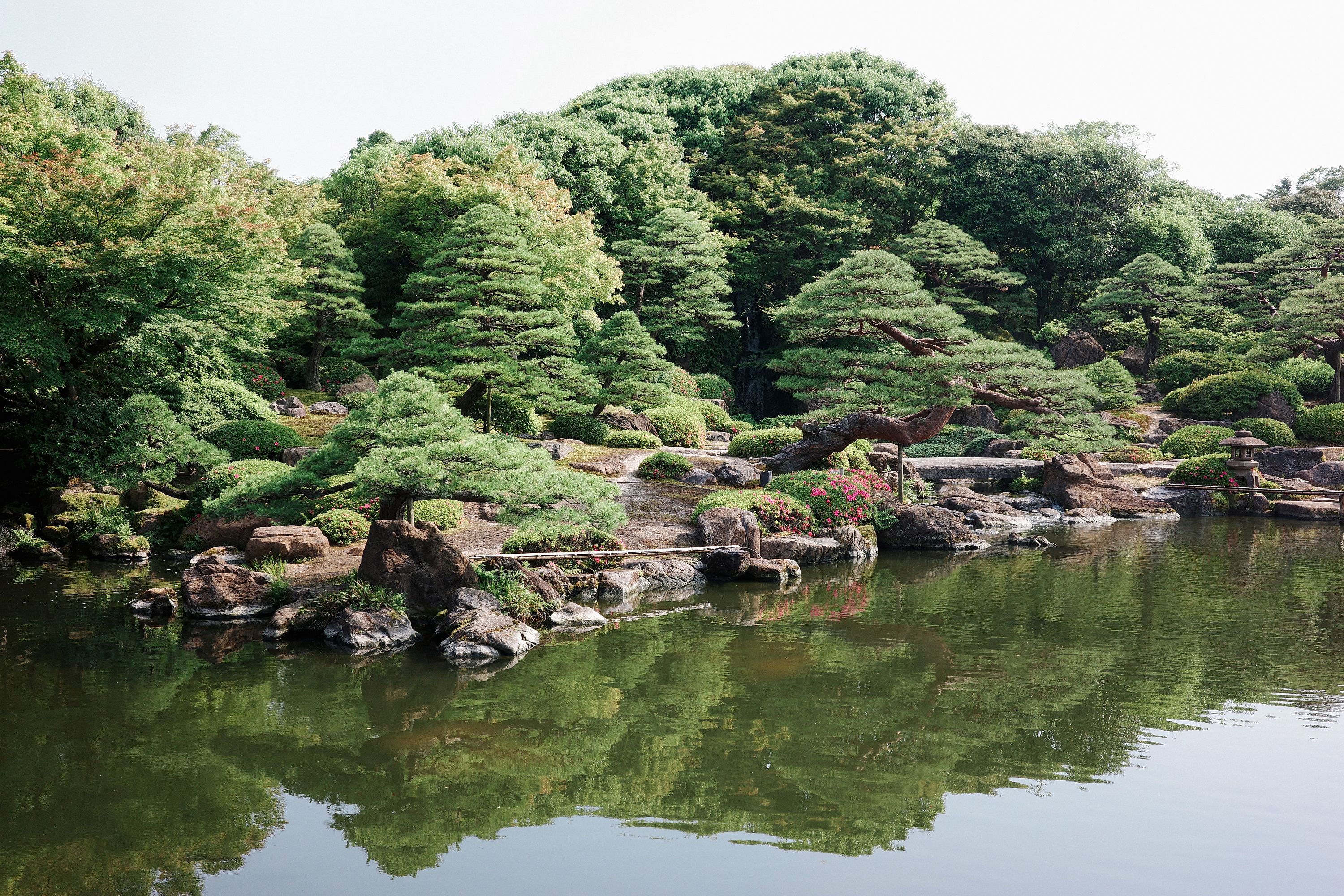
Trees, trees, trees
The term ‘Niwaki’, means small garden tree, and stems from the idea of training a tree specifically for the garden. Some carry symbolic meaning, such as the great white boat pine (Pinus pentaphylla) at the temple of Manshu-in – a reminder of the vessel that brought Buddhist teachings to Japan – while others, like cherry trees planted just beyond a garden wall, are designed to mimic distant clouds. Azaleas are equally popular for this reason, thanks to their small flowers and ability to handle close, cloud-like clipping. Above all, trees are deeply embedded in Shinto belief and are seen as embodying the stillness and stability of faith. Certain species (pine in particular) are also believed to be occupied by Kami – natural spirits – which, from what we can gather, are a good thing to have in the garden (approach with caution!).
Humility and observation
Sophie notes that a gardening apprentice may spend years watching and observing his master before he is allowed a set of tools. This is the result of a deep respect for nature, but also a sense of humility in the face of the garden’s history and the generations of gardeners that have tended it before them. Honouring this legacy is as important as caring for the plants themselves and requires a strong sense of intuition and unwavering patience. This dedication and attention to detail are mirrored in the gardener’s tools. For example, a pair of soft Jika Tabi that invite a more careful step, or a Shuro Brush for sweeping delicate moss.
The philosophies behind Japanese garden design are rarely straightforward or easily summarised, but Sophie Walker is better than most at distilling their core themes. If you’d like to read her thoughts in full, you can find the complete article in Niwaki Field Report No. 2.


