
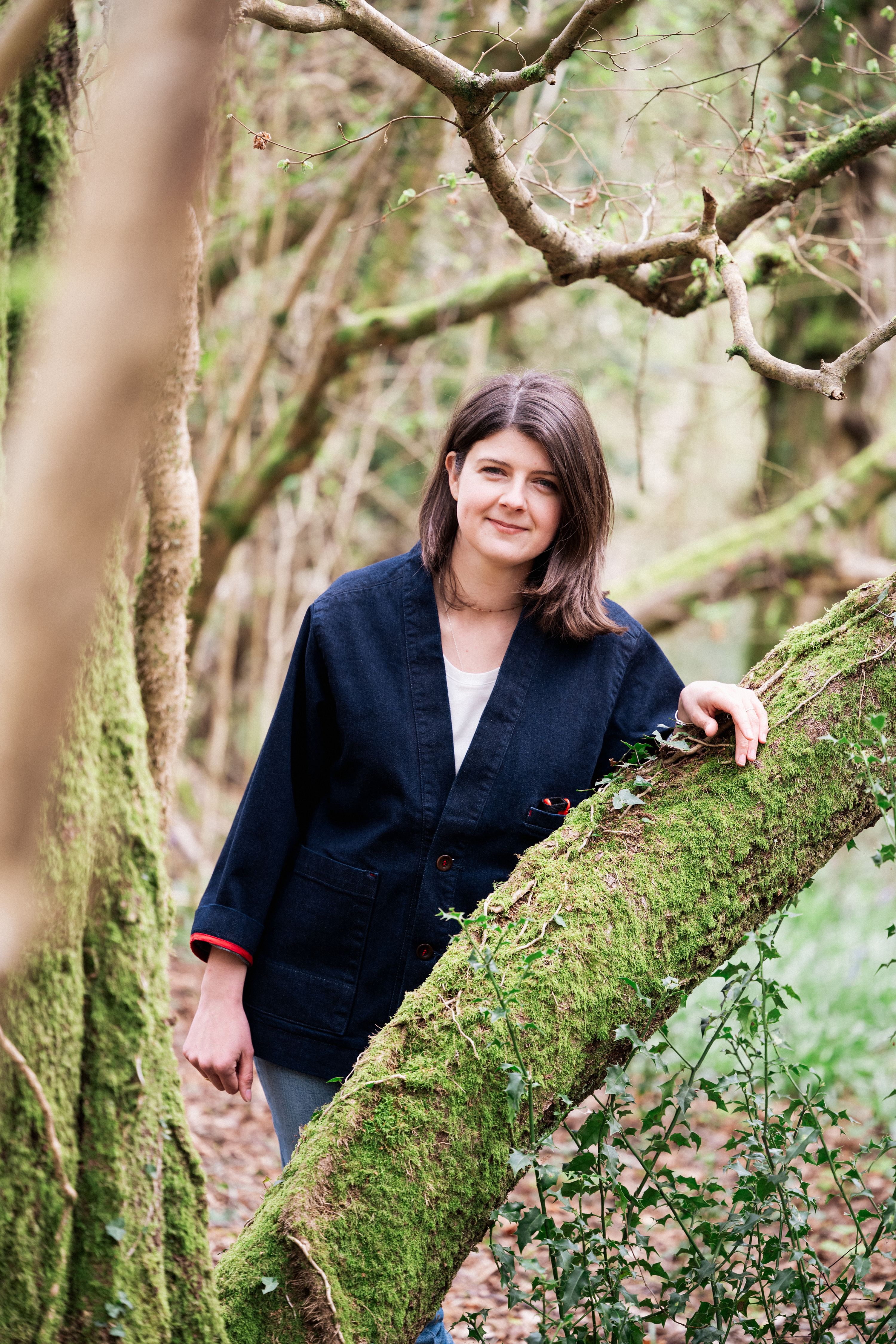
Road to Chelsea 2026: Dispatch 1 with Ashleigh Aylett
Like all good Niwaki days out, our visit to meet rising/risen garden designer Ashleigh Aylett begins on familiar ground with some tree chat. Unsurprising when you consider she is designing the Woodland Trust’s “The Forgotten Forests” garden, sponsored by Project Giving Back, for this year’s RHS Chelsea Flower Show.
We meet at Hillier’s nursery in Hampshire, where the trees in question have been waiting patiently all winter, ever since their selection and tagging for the garden in October. First we inspect five (two larger, three smaller) multi-stemmed Acer campestre. Selected for their shape rather than their size (low, spreading, and with decent space between the branches), like all the trees and plants in the garden, they’re natives. They’re also a key indicator species for ancient British woodland: their prosperity in the wild reflects the health of the complex web of interdependent species of flora in a woodland.
Ashleigh surveys her choices, reacquainting herself with the unique character of each specimen. She hasn’t seen them since November, and in a few short weeks they’ll be on their way to their temporary home in London, so any changes or concerns need to be addressed now. A few small adjustments here and there with a pruning saw, but on the whole all is as she remembers it.

Tidy up with Niwaki GR Pro Secateurs
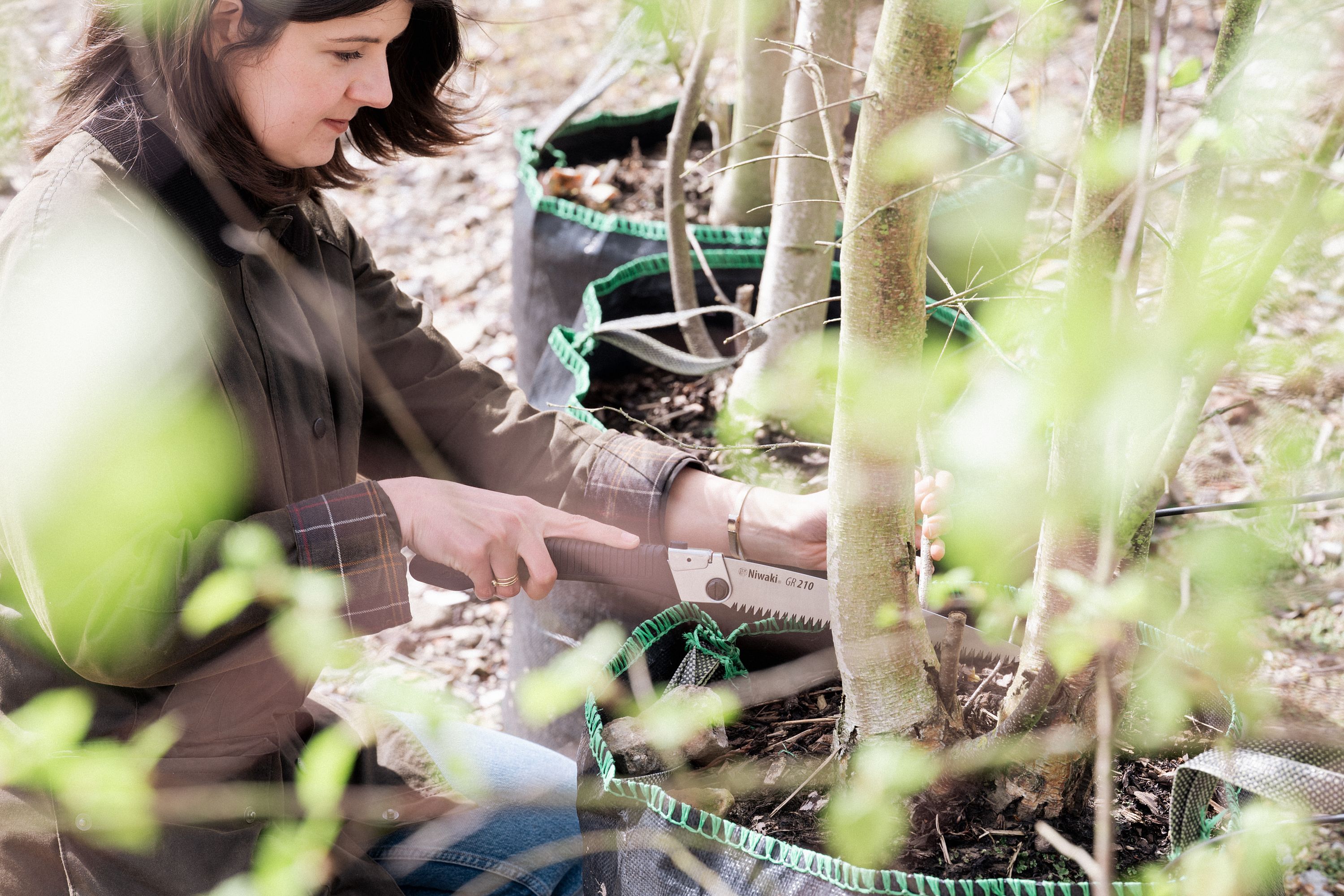
Nip and tuck with a Niwaki GR 210 Pruning Saw

How do you get the Chelsea Flower Show? Planning, planning, planning.
This year’s Woodland Trust Chelsea garden is one of the smaller plots – about eight by six metres – so every detail counts. As Ashleigh explains, it is first and foremost a garden, not an attempt to recreate a woodland in miniature. There’s no deadwood pile planned to suggest decay, for example. Such details would be found in a real woodland, and hopefully in larger, forward-thinking private gardens, where they support essential fungi, insects and much more, but there simply isn’t room in this tightly conceived design. Ashleigh’s intention, she tells us, is to suggest, rather than replicate.
There’s artistry here, not just ecology, though certainly the Woodland Trust’s ecological know-how underpins the whole project, and the story the garden aims to communicate is of the charity’s work restoring once-thriving ancient woodlands that have been overtaken by conifer plantations.
There’s artistry here, not just ecology
The garden offers a snapshot of this work, taking the transition phase between relatively sterile, uniform conifer planting to regenerated ancient woodland as its inspiration. Visitors will enter through a coniferous curtain – using conifers removed from an actual regenerative project – underplanted with bracken (Pteridium aquilinum), one of the few plants to tolerate the oppressive shade of a plantation – before opening up to a much friendlier, more inviting pathway lined with native Acer campestre and Alnus glutinosa. Here, the relevance of the multi-stemmed structures becomes apparent, offering a much more pleasing natural geometry compared with the stark uniformity of the timber crop.
From one side of the garden to the other, the long timeline of the multi-decade regenerative projects undertaken by the Woodland Trust is condensed into a short walk. The path is slightly sunken, to give the feeling of being enclosed and maximise the impact of the relatively small space. It’s not a big move, but it will, Ashleigh hopes, subtly affect the experience of the garden.
To find out more about this project, we drive a few minutes down the road to Otterbourne Wood, in Hampshire. Up to now, Ashleigh has been a regular visitor to Penn Wood in the Chilterns AONB (Area of Outstanding Natural Beauty) to seek inspiration for the garden. Otterbourne is a little different, being just a few acres of trees near the M3 in an unofficial ARSC (Area of Relentless Suburban Creep), but on a quiet, sunny Thursday morning it’s as peaceful as any larger, more protected woodland.
It’s early bluebell season (just before Easter), but Ashleigh is keen to point out some of the less well know native plants that will be featuring in her garden. Asked if she knew all the woodland plants before this project, she explains that as a keen walker she recognised them, but learning what they like and how to use them in a garden has been a rewarding experience. That task has been made much easier by having access to the Woodland Trust’s expertise. How many other gardeners at Chelsea can call on the horticultural expertise of their sponsors, we wonder?
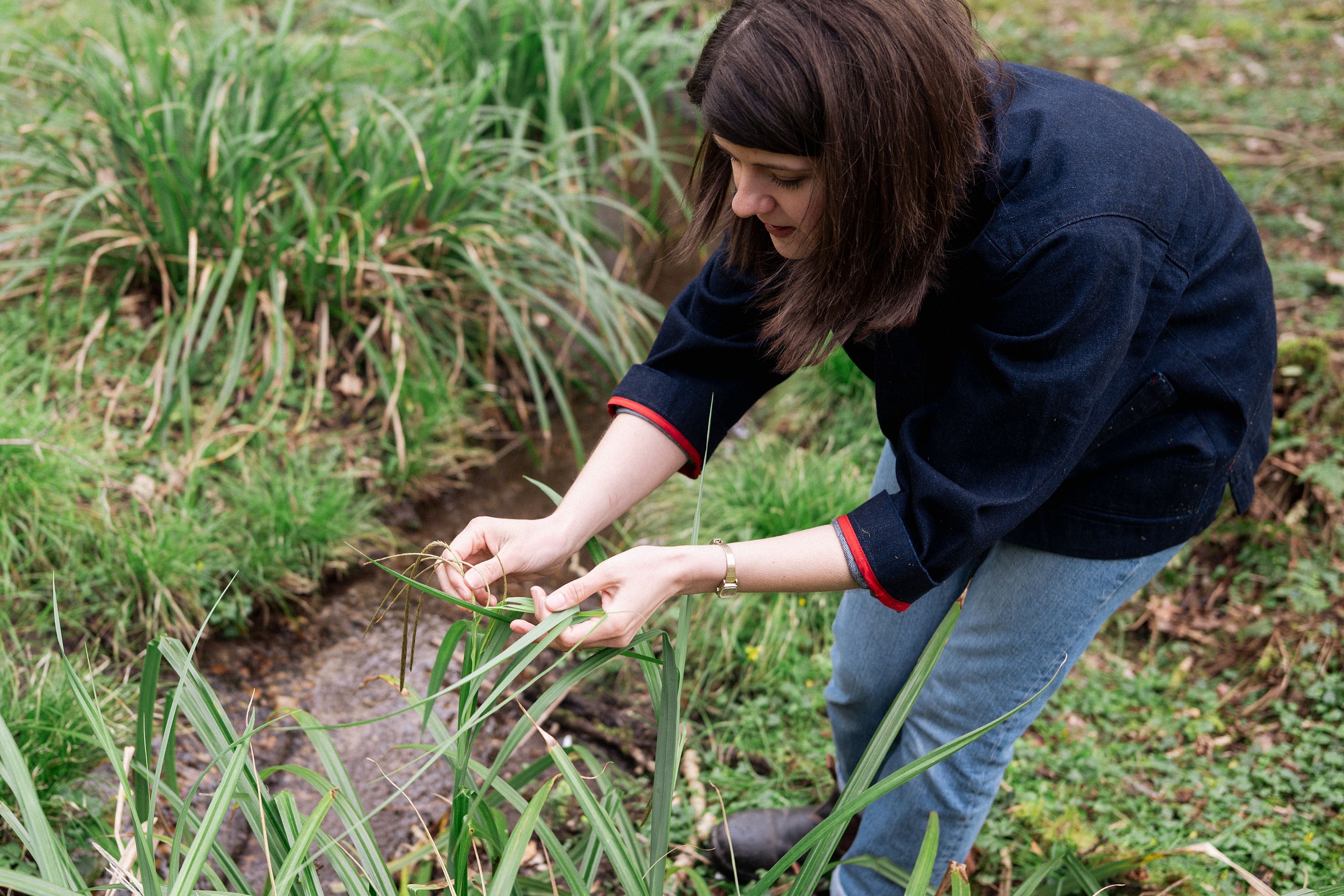
Carex pendula growing by a stream

Greater Stitchwort (Stellaria holostea)
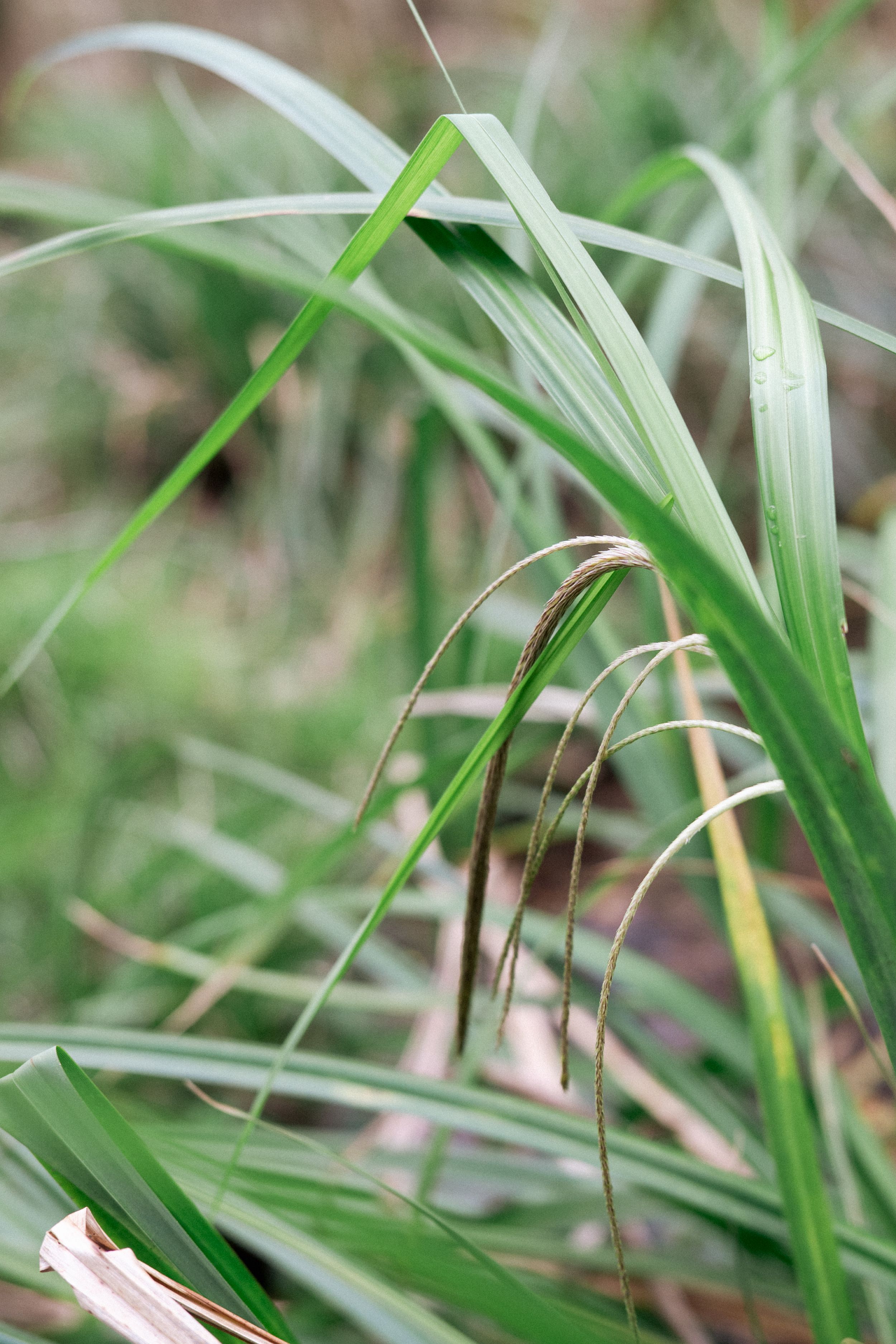
Pendulous Sedge (Carex pendula)

Wood Spurge (Euphorbia amygdaloides)
Neither of us really knows where we’re going, but undeterred we stray off-road and head deeper into the wood, discovering patches of greater stitchwort (Stellaria holostea), some pretty dog violets (Viola riviniana), native Euphorbia and many more native species, many of which will feature in the garden. Bluebells will be over by late May, but Ashleigh is taking a very practical approach to this problem – she will display them as seed heads instead, offering visitors the chance to appreciate their structure instead of their famous blue flowers. More delicate architectural detail will be offered by the rare Paris quadrifolia (herb Paris), while red campions and herb Robert (Geranium robertianum) will supply pops of colour. Ferns, from small species to larger Osmunda regalis, and grasses – Melica uniflora, Carex pendula – with drifts of Silene dioica complement the palette: it sounds naturalistic, but Ashleigh assures us it will all be clearly, deliberately composed with clear intention.
Taking a circuitous route back to the car, we take a moment to enjoy some turkey tail fungus, streaked with bands of vibrant orange, while we discuss previous subjects of Niwaki Road to Chelsea, specifically Tom Massey and Je Ahn. Ashleigh reflects, with a slight hint of longing, how effective design partnerships can be, and wonders aloud whether her next show garden could involve joining forces with another designer. After this Chelsea, we suspect she’ll be inundated with inspired gardeners eager to be a part of her world.
Visit Ashleigh’s garden at RHS Chelsea Flower Show, then drop by our stand at “Niwaki Corner” aka 512 Eastern Avenue for some great stuff from Japan.


