The Hunt for Red December
In which Alex (Niwaki Field Report Editor) visits:
Suzaku Garden
Demachi Myō-on-dō Temple
Renge-Ji Temple
& others
Kyoto, December 2026
Horticulturally minded tourists often visit Japan in the spring, between March and May, for a taste of the hanami (cherry blossom viewing) fever that sweeps the country, or else in autumn, from September to November, to admire the rich, saturated yellows and reds of the ginkgo and maples. December is slightly overlooked, which, on the evidence of this year’s weather, seems a shame. If, like me, your time is not always your own but you find yourself with the chance to visit in December, there’s still plenty to see. In fact, if you’re averse to crowds, it might actually be preferable.
We were in Tokyo to put the finishing touches to a forthcoming but as-yet top-secret Niwaki project (if you’re visiting us at one of the trade shows, like Top Drawer, London, or Shoppe Object, New York, in January and February, expect a sneak peek; otherwise you’ll have to wait until the 2026 catalogue is released in spring – sign up here for your copy).
Busy days and long nights didn’t leave much room for mooching about in gardens, but there was a window of opportunity to race to Kyoto and back at the end of the trip which was too good to pass up. If you’ve wondered where Simon from Niwaki Chiltern Street has gone, he is now living in Kyoto, gardening in temple gardens and guiding tourists around some of the city’s lesser-known treasures. As I was to discover, Simon is a really great guide: he combines the insight of a resident (with a little extra help from his Japanese wife, Chie) with all the enthusiasm of an outsider. His offer to show me around his favourite spots was too good an opportunity to pass up. Not only that, but Simon agreed to augment my photos and videos with audio field recordings, which I’ve used in place of the audio on some of the videos. I’ve had a lot of pleasure from closing my eyes and listening to these since my return, and I hope you will too.
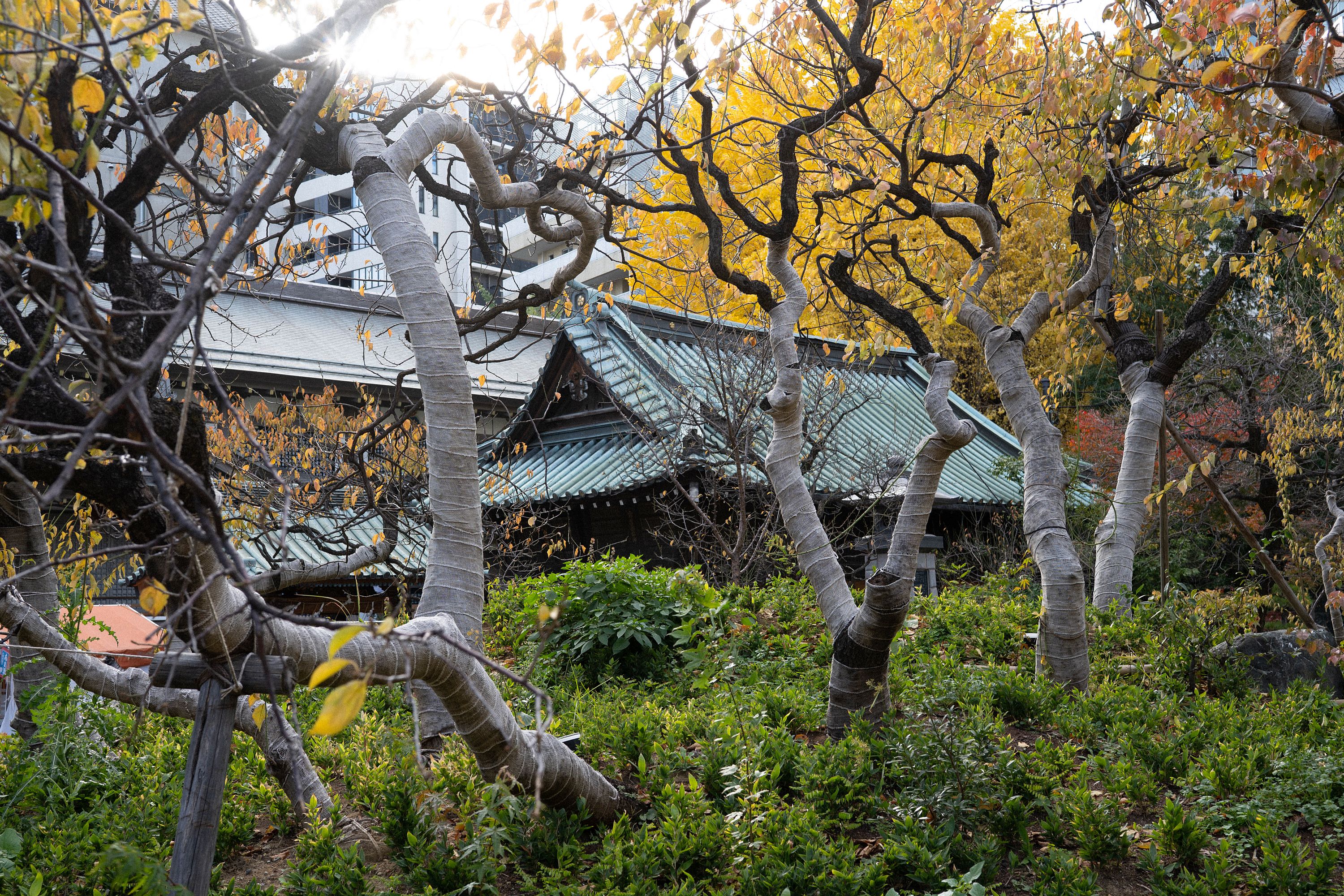
Plum trees, wrapped for the winter, at Yushima Tenjin
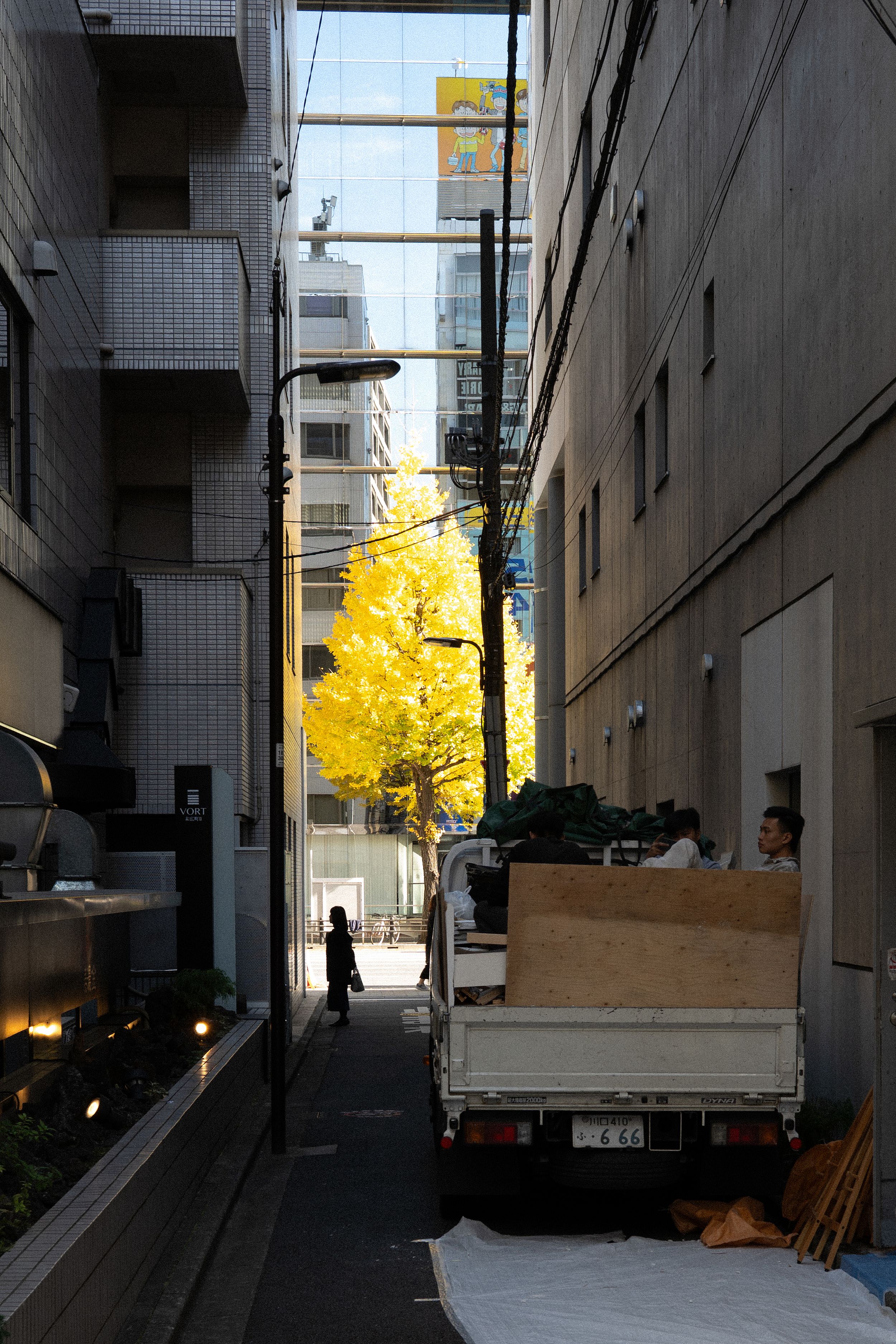
Sneaky peek of gold in Ueno
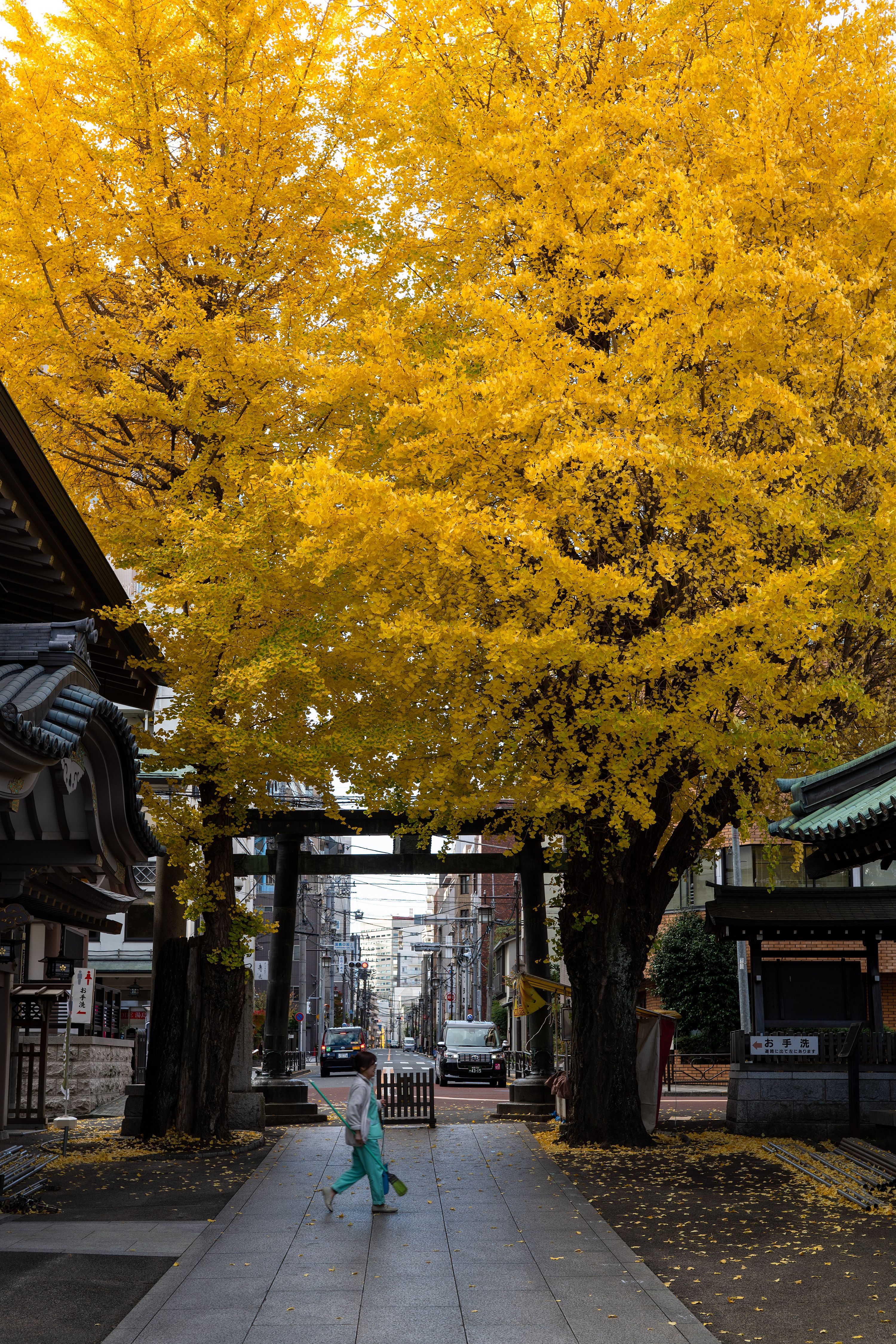
Yushima Tenjin, Tokyo
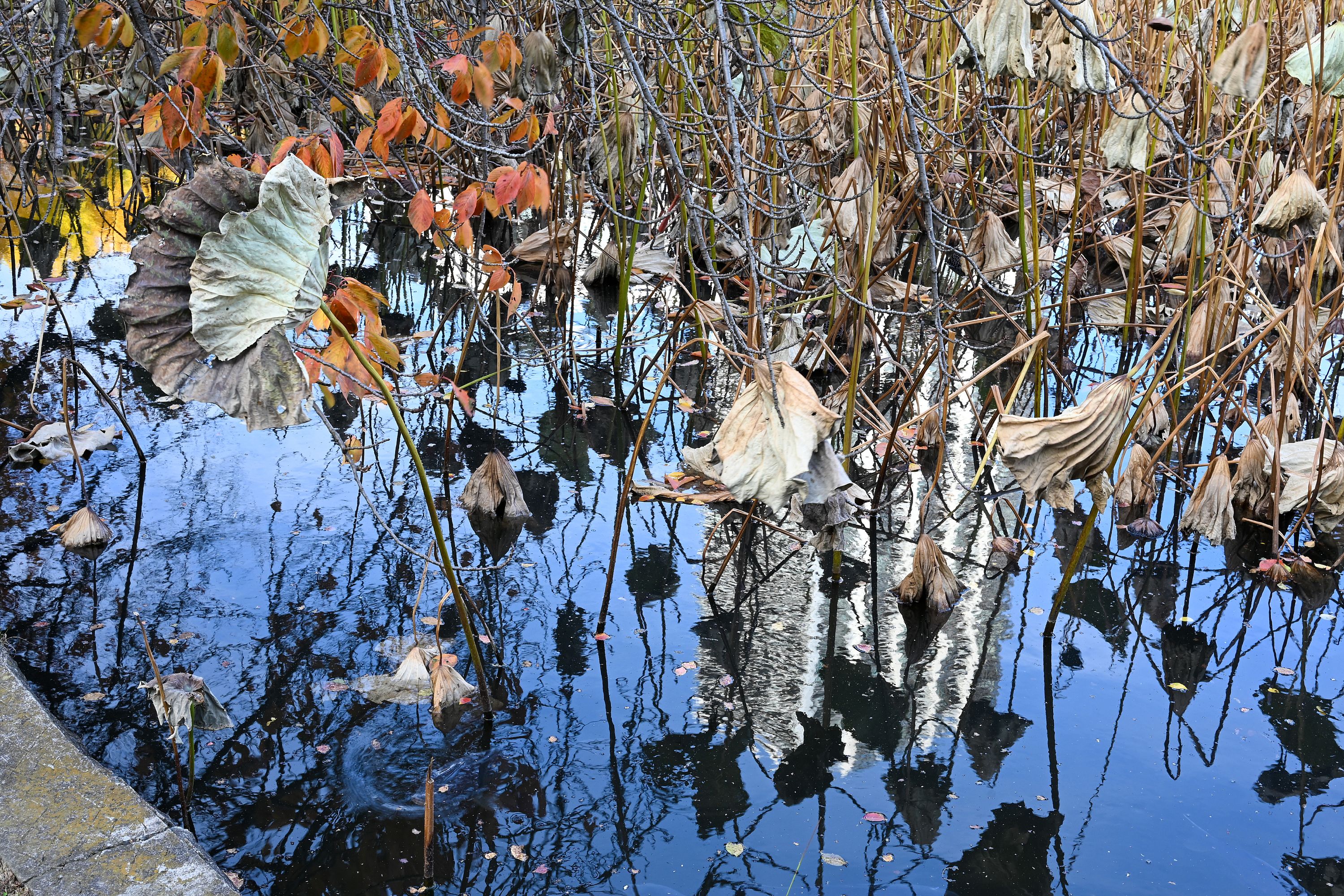
The lotuses in Shinobazu Pond.
Escape from Tokyo
First things first: escape Tokyo. Not that Tokyo in early December is totally without plant-based charm — far from it. The lotuses in Shinobazu Pond, Ueno, had died back but were still a spectacle worth visiting, with their own decaying charm offering a reminder of the importance of “winter interest” when you’re planning your borders — i.e. what will look good and maintain structure when dead. Ginkgo leaves smothered pavements and steps — nature’s own footlights, reflecting daylight and streetlights — and those more sheltered trees that still had their leaves were bright enough to stop anyone in their tracks, especially when the low winter sun picked them out against the grey of the city.
Before I hopped on the Shinkansen at Tokyo Station, I went to the top of the relatively new Marunouchi Building (where you might find a few Niwaki greatest hits for sale in the Conran Shop) to look out across the city, towards the Imperial Palace and Edo Castle ruins, and to admire the ginkgos from a new angle. I read recently that Shinobazu Pond and Edo Castle are connected: apparently the former protects the latter against unspecified bad luck originating from the “unlucky” north-east. This is all in accordance with the principles of fūsui (the Japanese equivalent of feng shui), which is a whole subject in itself when it comes to garden layout.
Once again, I picked the wrong side of the Shinkansen (bullet train) to see Mount Fuji. Note to self, and anyone else booking a ticket: sit on the right-hand side for the best view on the outbound leg of the trip.

Watch: Ginkgo in Tokyo / Mt. Fuji from the Shinkansen
Kyoto is famously a very walkable city – the main bit is about 6 miles north to south and 2 or 3 miles across – but time was tight and we wanted to make the most of the short days, so I decided to hire a bike (basket included as standard) to try and keep up with Simon on his much sleeker racing bike. This turned out to be an excellent way to get around, with the added bonus of being able to stand up on the bike to peer into private gardens whenever a promising looking tree extended an enticing bough.
Did you know that, with some exceptions, you can’t buy a car in Japan without proving that you have somewhere private and legal to park it? Bikes rules are a little more relaxed, but you do still need to be careful to lock up in a designated spot or face the wrath of local law enforcement.
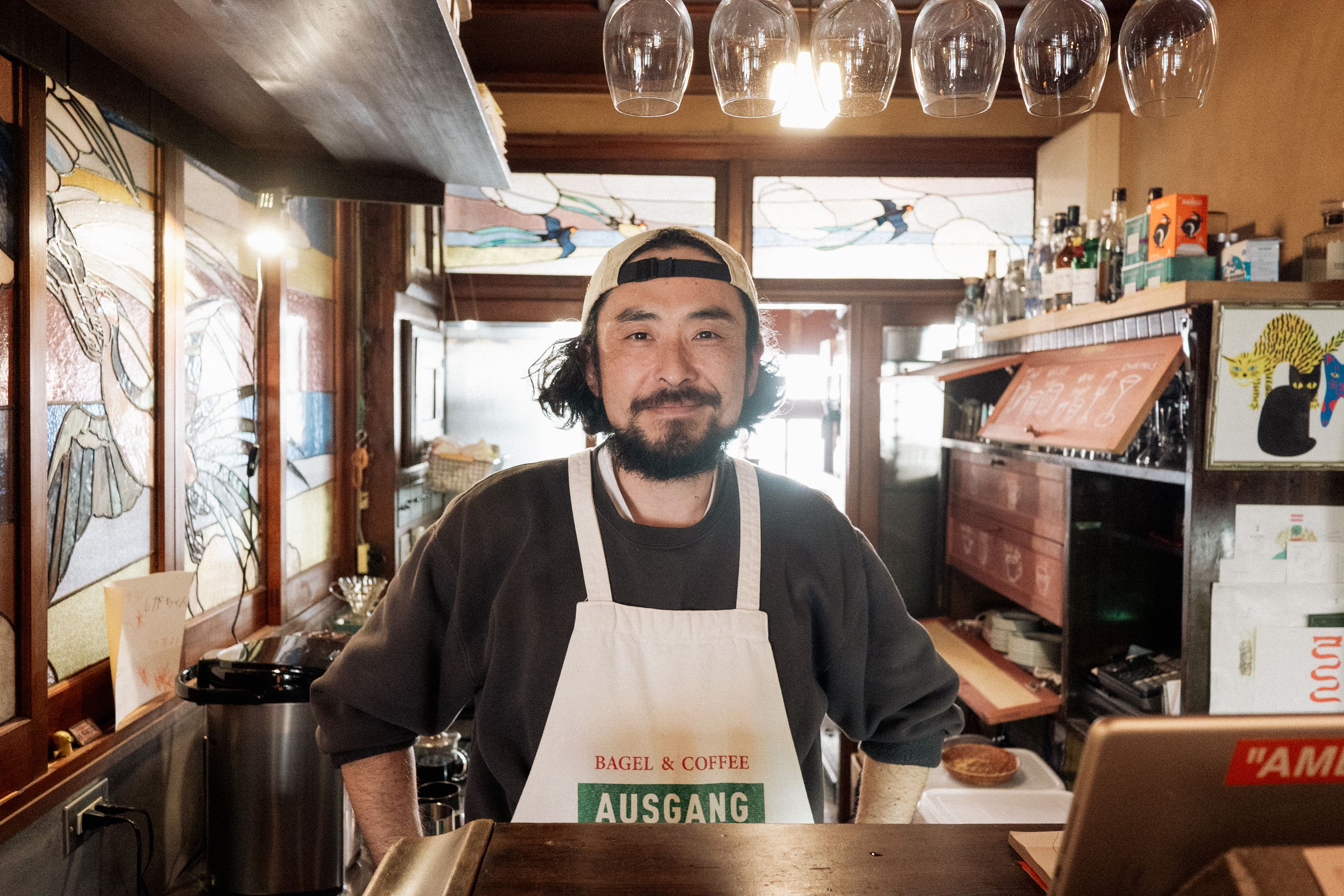
Shiga-san, the bagel boss
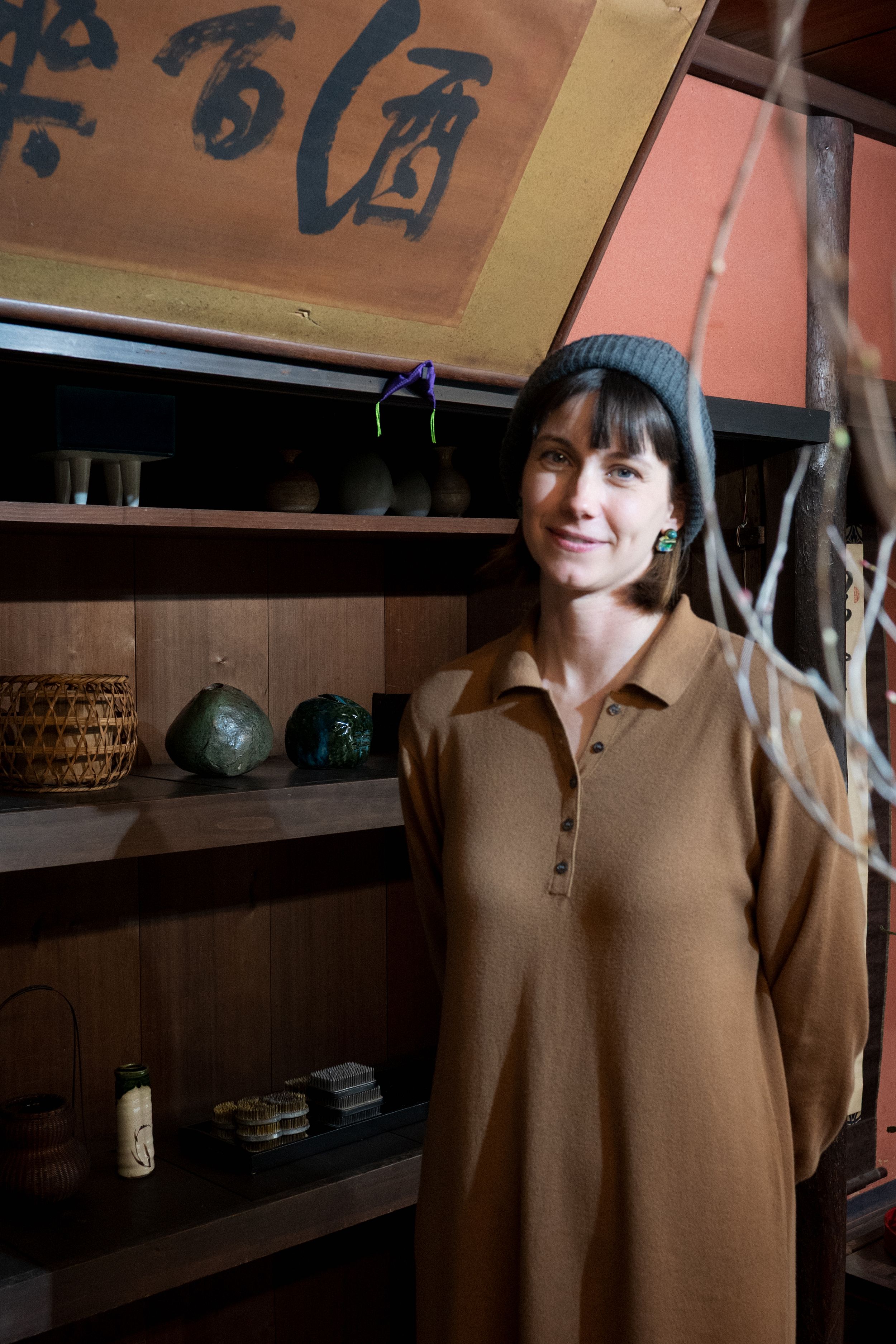
Seanacey, Kinse Ryokan
Bagels and ikebana
After the bike shop, our first stop was the intriguingly named “Ausgang” (“Exit” in German) for breakfast, in this case coffee and a bagel. Ausgang occupies one part of a very attractive traditional building – Kinse Ryokan Inn – which also houses an ikebana workshop. There were clues in the bathrooms and a glimpse of a central courtyard garden that had clearly been assembled with love.
Emboldened by caffeine, we went to investigate and met Seanacey Yabe, an Oregonian by birth who, together with her Japanese husband, now owns and cares for the building. Seanacey was kind enough to show us her serene, tatami-floored workspace, where she teaches ikebana according to the less didactic, more self-expression and relatively new practises of the Sogetsu School (2027 will be the 100 year anniversary of its founding). Seanacey had a class to prepare for, and we had gardens to explore, so we unlocked our (legally parked) bikes and headed for Suzaku Garden.
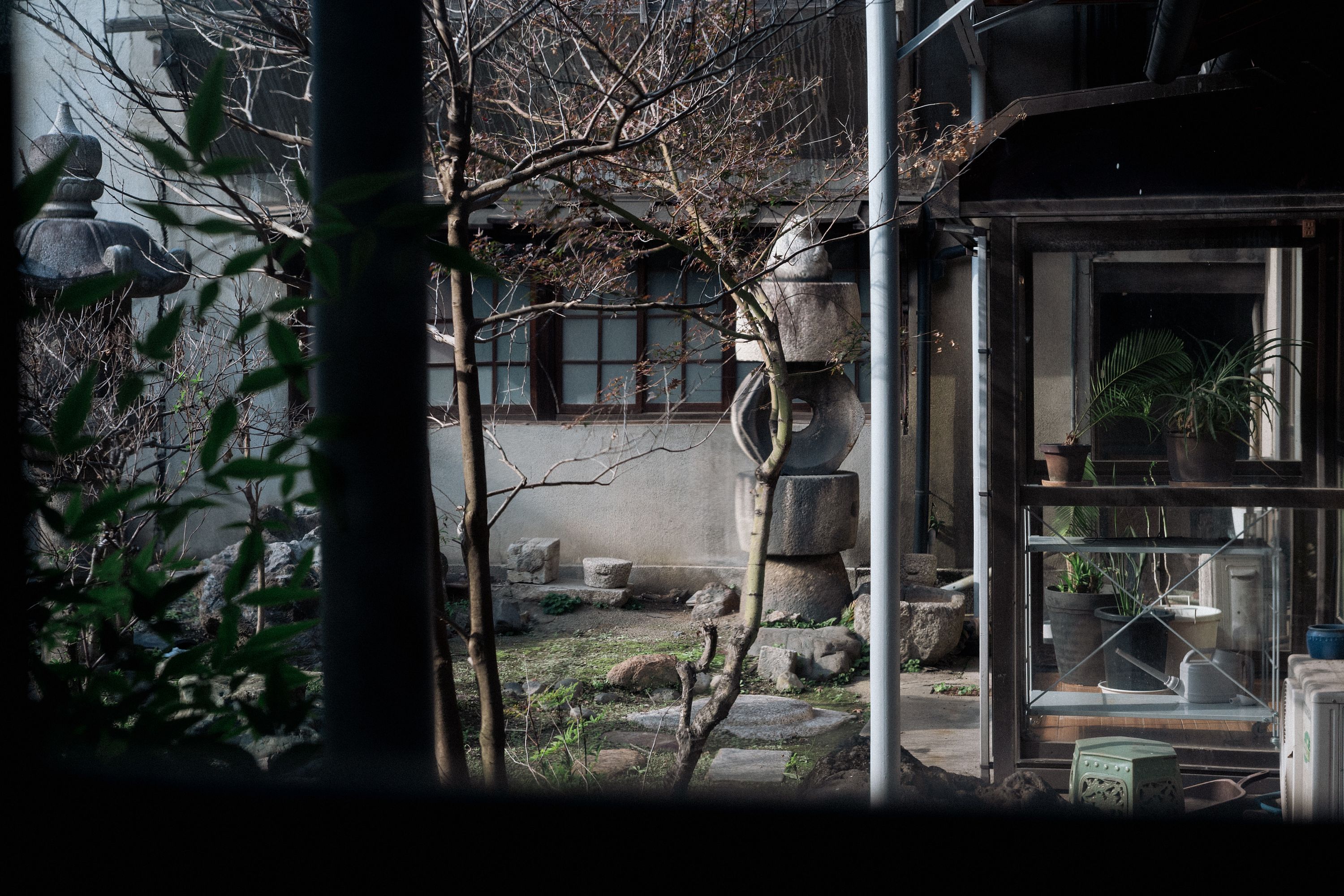
Sculpture in the courtyard at Kinse Ryokan
Suzaku Garden
Suzaku Garden is a spacious, wide-open garden with a very shallow central pond that reflects the sky and the surrounding foliage. Appreciation of scale is being tested here, with rolling earthworks – “nosuji” – suggesting a much larger lowland topography. A stream trickles down through the soft, interlocking mounds, fed by a partially hidden (visually, if not sonically) waterfall that crashes into the sort of larger, irregular rocks you’d find high up in the mountains. A wall of Cryptomeria Japonica (Niwaki Jake’s favourite “Sugi” tree) complete the illusion, implying a forest that extends far beyond the reach of the garden. On the opposite side of the pond, a grove of Acer Palmatum burns with reds and oranges.
The whole garden feels like a world within a world, and although it breaks the peace, the tannoys from the local school and from nearby Umekōji-Kyōtonishi Station somehow reinforce the ‘apartness’ of the garden. As if proof were needed that Japanese gardens are still evolving, a footbridge links the main garden to Inochi-no-Mori – Living Forest – a 30 year old project to restore, through nature, a former train yard and encourage biodiversity in the area. Tokachi Millennium Forest is often in my thoughts (see Niwaki Field Report No. 1) but the spirit of this project did strike me as analogous to Dan Pearson’s Hokkaido project.

Up the Kamo-gawa
We were heading north for the rest of the day, which meant a half an hour cycle upstream, ever so slightly uphill and into the wind along the banks of Kamo-gawa – the Kamo River. ‘Kamo’ means ‘duck’, as in “quack, quack” not “look out!”, and it is indeed teeming with bird life. The river has been tamed by deep concrete banks with a path slightly raised from the water’s edge and many stepping stones across to the other side. In the evenings it’s a popular spot for young people to hang out, but on a bright chilly day in December we only had a few dog walkers and joggers to dodge as we huffed and puffed towards Imadegawa bridge, where a smaller river – the Takano – joins its waters with the Kamo and subsequently loses its identity.
One of the few requests I made to Simon when he was putting together our itinerary was that we visited a Jazz Kissa – a uniquely Japanese coffee shop dedicated to the serious business of listening to jazz records on the best quality hi-fi equipment available to the owner. Often, this means huge speaker cabinets, perhaps salvaged from a cinema, that are way out of proportion to the cafe itself. To tick this box, Simon had selected his new favourite lunch spot, Lush Life, which boasted an intimate, family vibe, great music and a serving counter propped up by retired men who looked like they seldom ventured outside. When one of the patrons did leave, he returned 15 minutes later with bags of persimmon fruit for his mates and resumed the important business of drinking coffee and nodding along to bebop records. If we didn’t have gardens to visit I could have happily spent the rest of the day doing the same.

Lush Life Jazz Kissa, Kyoto
Demachi Myō-on-dō Temple
As is often the case in Japan, our next stop was a matter of pure chance: neither of us had heard of Demachi Myō-on-dō Temple, but we were enticed in by a “shide” (zig zag shaped charm, usually made from folded paper) that was flashing as the breeze moved it in low afternoon sun. I wouldn’t put this temple on the list for garden interest, although it does boast the mature Japanese bay tree (Machilus thunbergii) that supported the shide, as well as an attractive big leaf magnolia (Magnolia macrophylla) tucked away in a corner, but it’s still worth a detour.
At the heart of the temple is Myōon Benzaiten, the Blue Dragon deity, a feature since the Kamakura period (late 12th to mid 14th centuries, aka – a really long time ago). Since then, the shrine has been known as a place of Benzaiten worship – one of Kyoto’s Seven Gods of Good Fortune – and has long been visited by craftspeople, musicians and makers, drawn by Benzaiten’s reputation for inspiring creative types. The goddess’ messenger is a snake, and there is a diverse range of serpents painted and sculpted all around the temple. It struck me as ironic that we were charmed in off the street … to a snake temple.

Demachi Myō-on-dō Temple
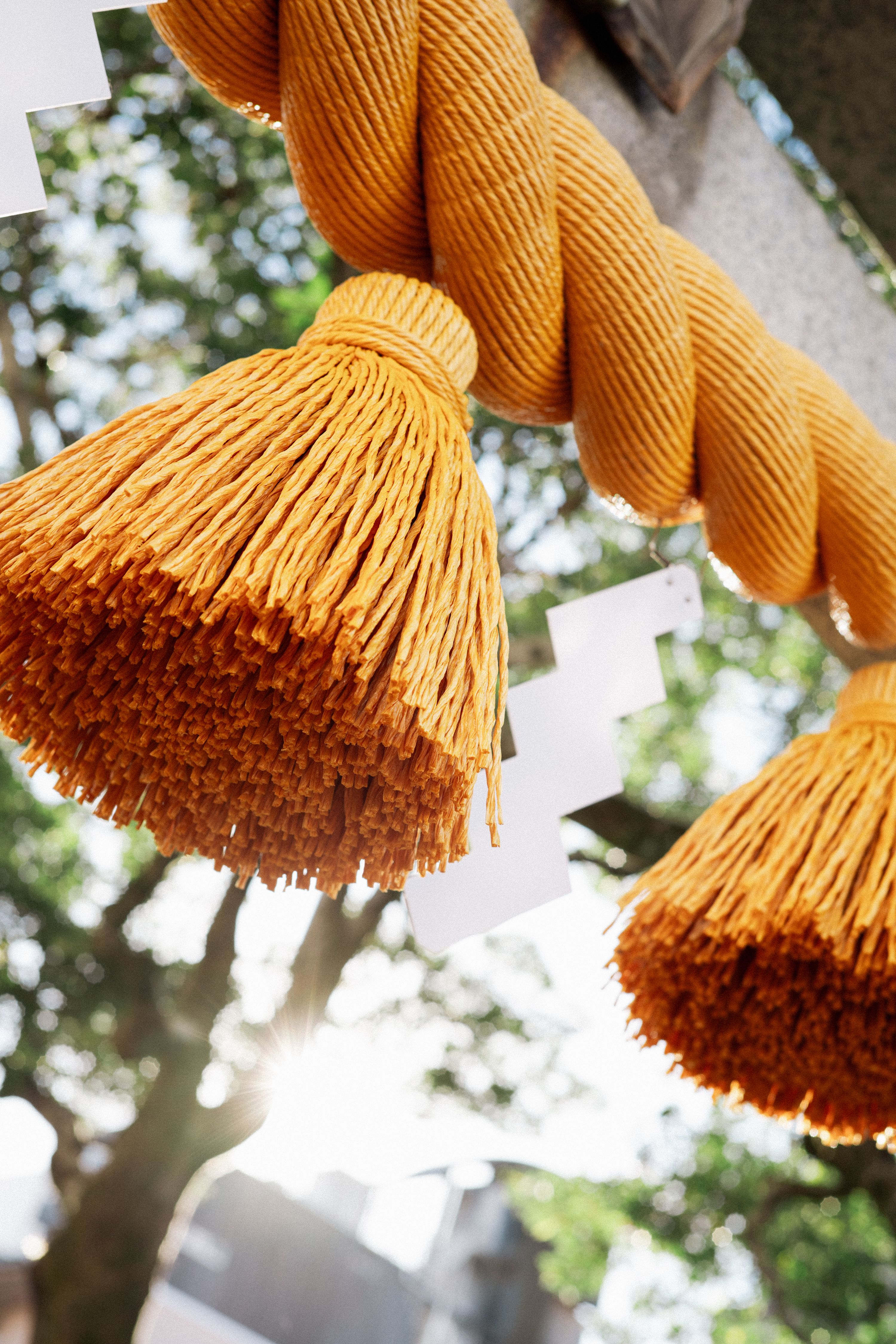
Shide at Demachi Myō-on-dō Temple

The Japanese bay tree at Demachi Myō-on-dō Temple
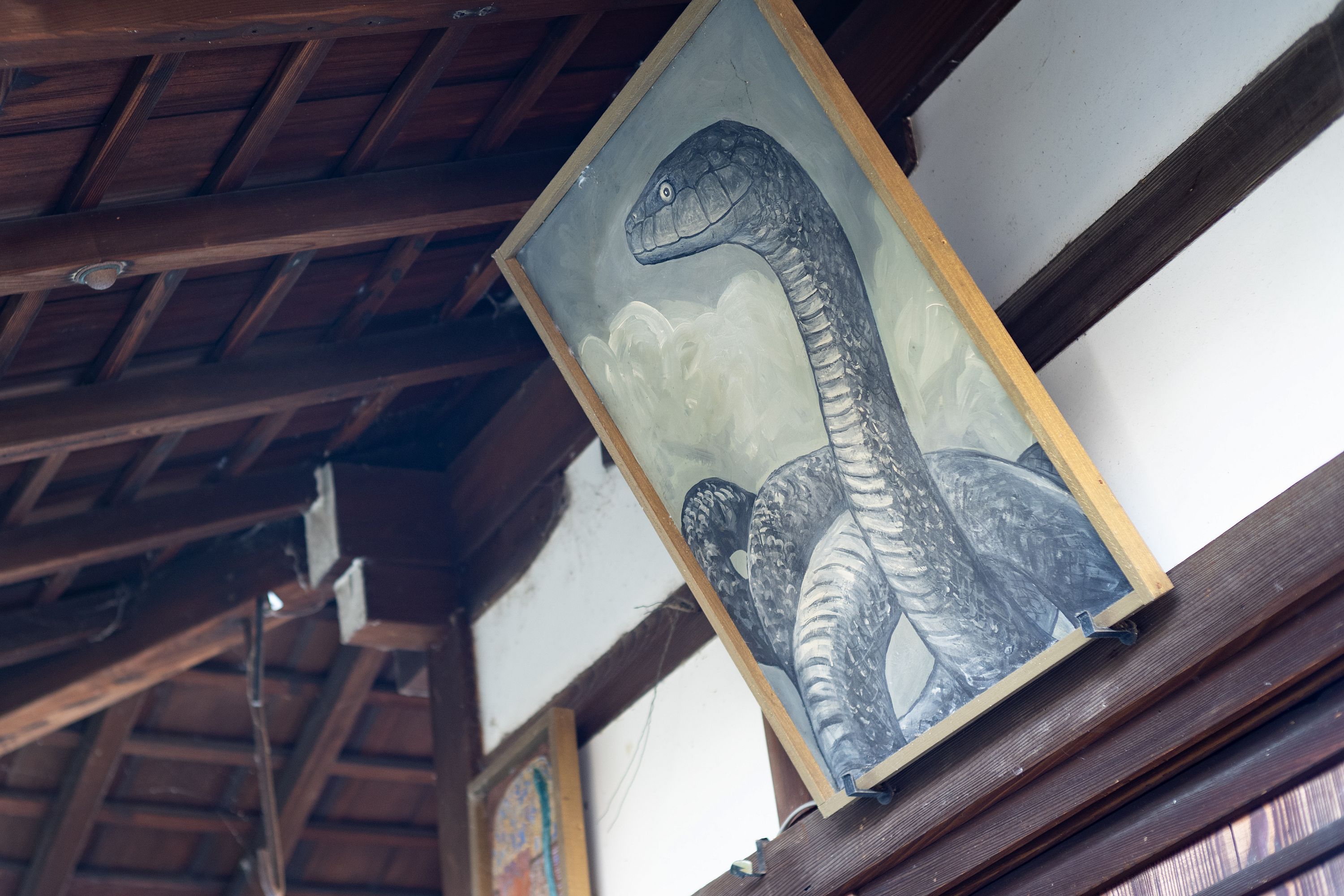
Demachi Myō-on-dō Temple Snake
On our way to Renge-ji
Passing through an old-fashioned covered shopping street – Demachiyanagi Shōtengai – we hopped back on our bikes to continue north, riding another twenty minutes or so to the very northern edge of the city for the highlight of the day (not counting the martini I had in the “Hello Dolly” cocktail bar that evening): Renge-ji.
I’m still trying to work out whether winter days are shorter or longer in Kyoto than in Dorset. Factors to consider: a) there’s no daylight saving in Japan; b) I’m bad at maths. In any case, the afternoon was progressing apace and the sun was sinking lower and lower, so we had to pedal with renewed vigour.
The journey to Renge-ji takes you from main streets to wiggly suburban backstreets and finally to narrow, winding alleyways. It seemed like even the humblest garden contained a cloud-pruned masterpiece of one sort or another, including more kusamaki (Podocarpus macrophyllus) than I think I’ve ever seen in my whole life (admittedly I wasn’t really paying attention until about 5 years ago).

Simon on the wiggly backstreets

Renge-ji Temple, Kyoto
Renge-ji at dusk
Somehow, we’d timed our arrival at Renge-ji to perfection. Aside from the monk who took payment at the entrance, the garden and temple were deserted. Well, not quite deserted: three large koi swam lazily about in the pond, a heron dropped in to spook them and, we supposed, settle down for the evening, and somewhere amongst the spectacular acers a family of black kites shrieked at each other. I wondered for how many centuries different herons and koi had been warily circling each other in this very pond. Clearly the kites have been around for a while: there’s a faded painting of one on the wall of the main hall, overlooking the pond.
The ageless tranquillity of the scene lifted me up and out of the present moment, and if it hadn’t been for the slight drone of traffic from the nearby road out of town and into the mountains, it could have been any moment in the last 600 years.
The trees at the back of the garden have been left to grow more densely, creating a rising wall of colour behind the pond that begins almost at the water’s edge, while those in the garden to the side of the main hall, around a rickety wooden path that leads to the second hall, have had their crowns lifted to let more light in and to allow appreciation of the graceful shapes of the trunks and main branches (or perhaps they’ve just grown this way in response to a lack of light?).
Renge-ji is rightly famed for its autumn colours, but you could probably say that about a lot of gardens in Kyoto. What distinguishes it for me is the air of antiquity and neglect that permeates the place, especially at dusk in early December — effects amplified by the fading autumnal colours of the trees and the dense blankets of leaves.
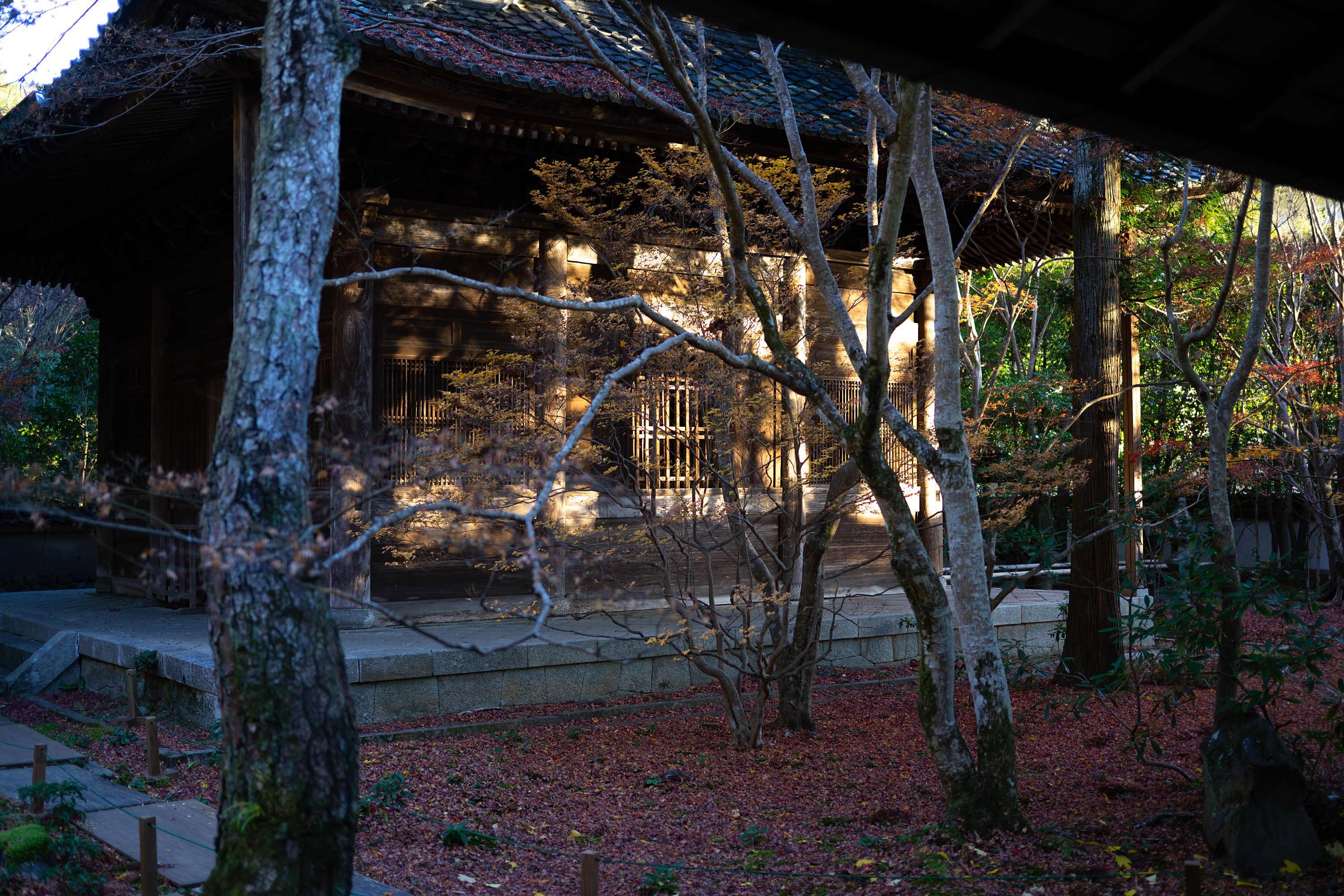
Renge-ji, looking across the garden to the second hall
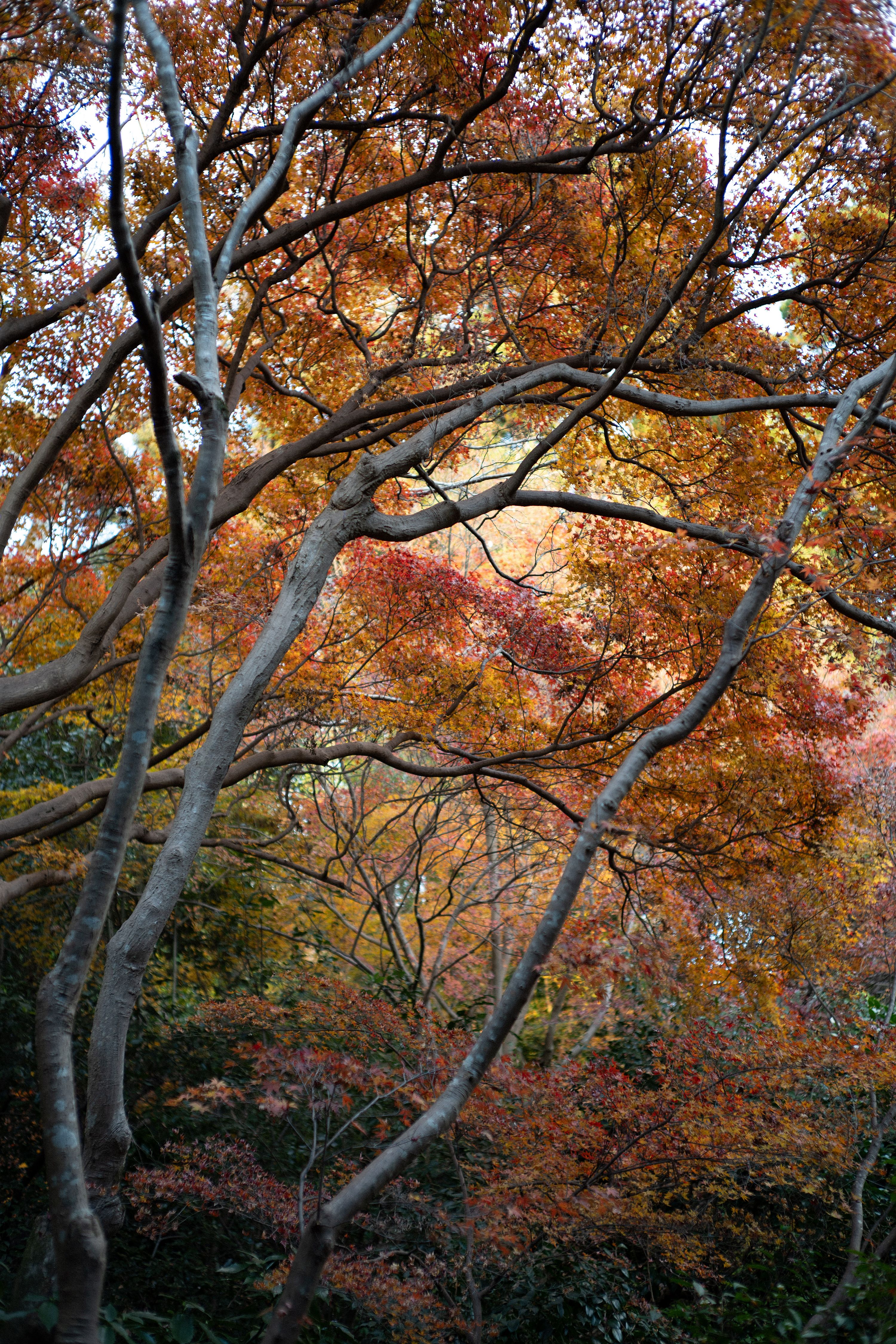
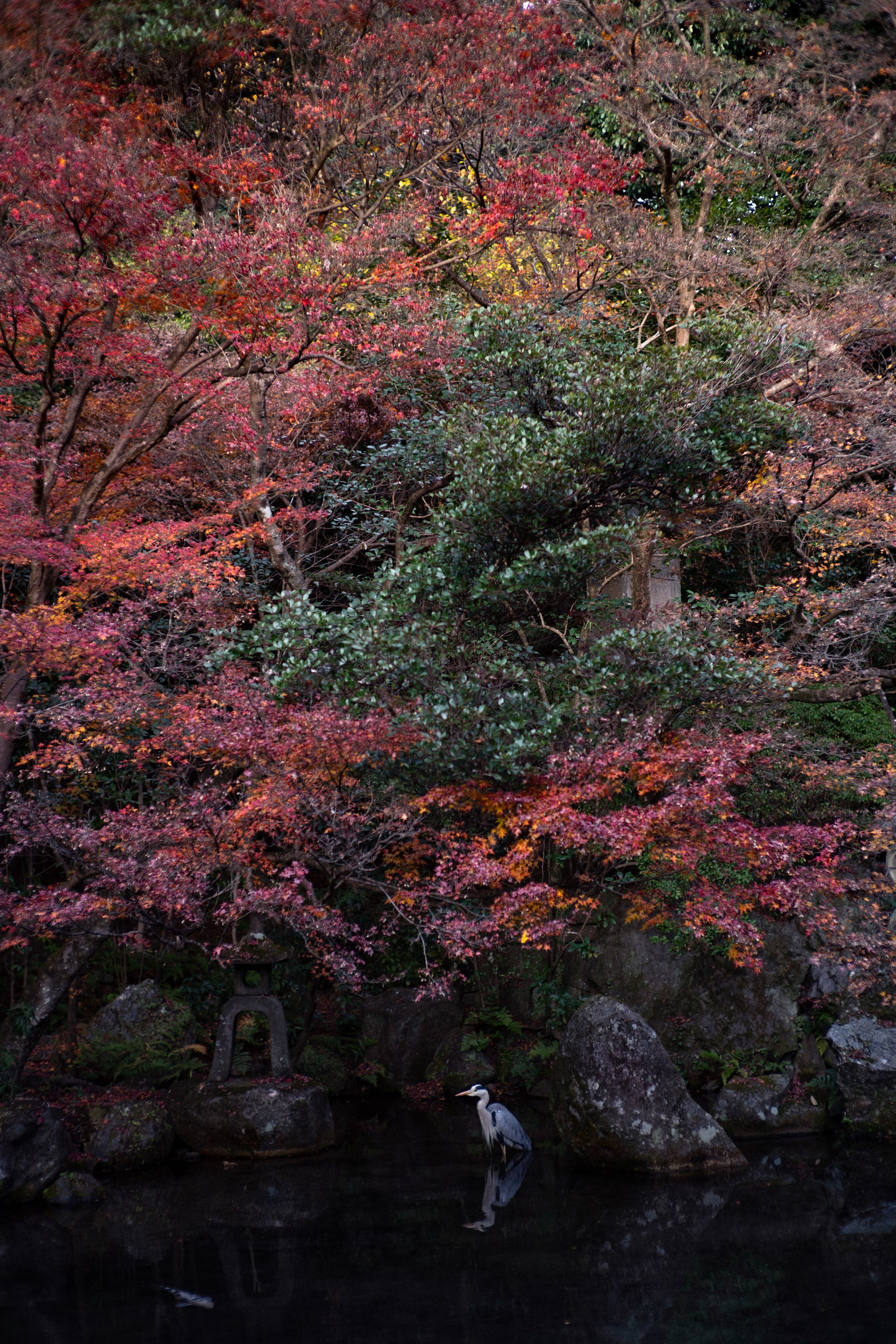
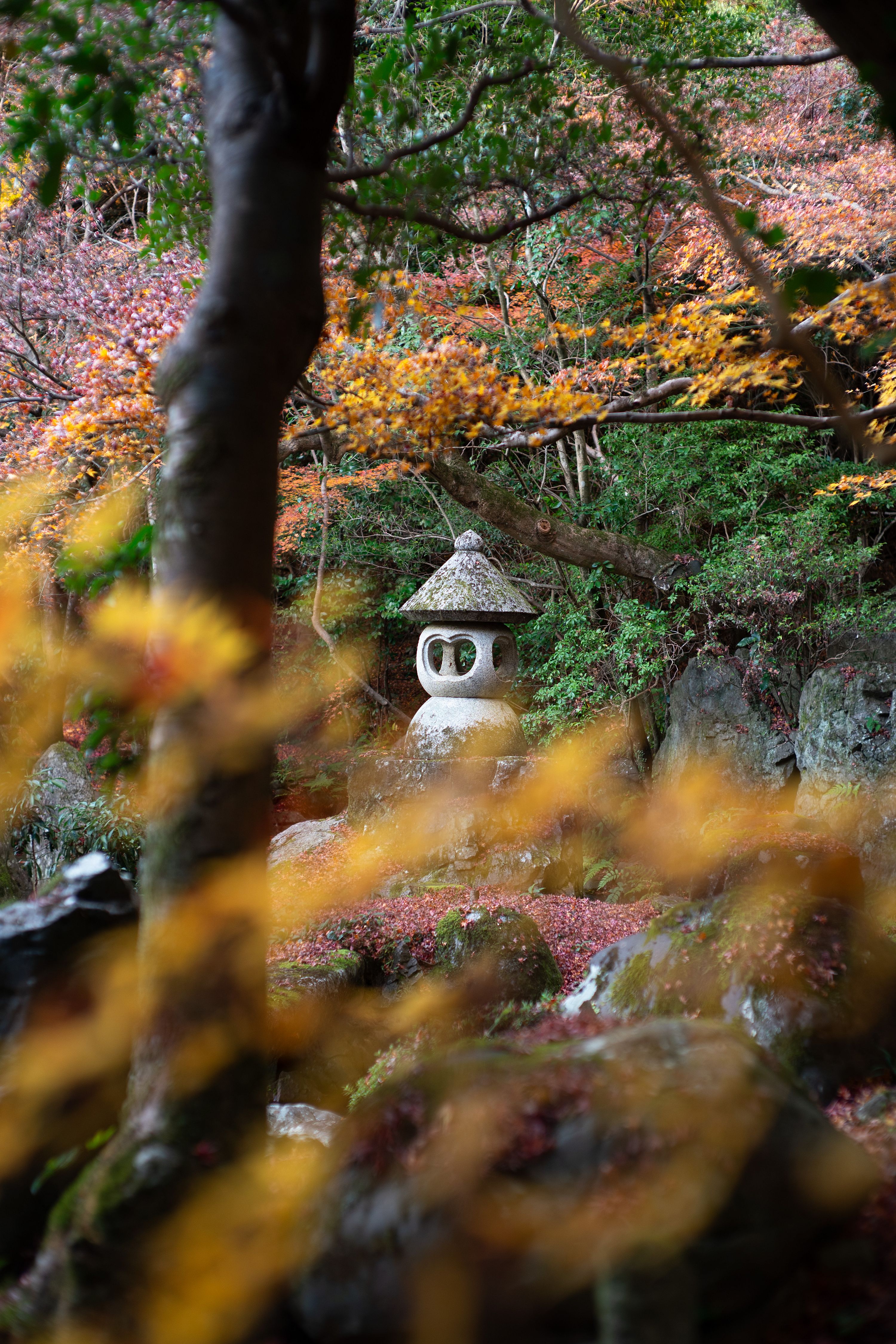
Nobody seems quite sure when Renge-ji was founded. There’s a suggestion that it was moved from a few miles south following war in the 15th century, and it seems the current garden was designed by the warrior-turned-aesthete Ishikawa Jōzan in the late 17th century, at the transition into the Edo period. It’s a seminal moment in Japanese aesthetics, as the prolonged peace and stability of the dawning era saw the ruling classes fill the time they’d previously dedicated to killing each other with more artistic, peacetime pursuits, including garden design and appreciation. The British Museum’s Samurai exhibition (from February 2026) looks set to examine many of the assumptions that have been made about samurai, and hopefully we’ll be treated to some garden knowledge too.
We lingered as long as possible, soaking it all up, before the attendant ushered us out into the evening, locking the gates behind us. We cycled back into town together, sorry to leave Renge-ji behind but glad to warm up in an izakaya (basically a pub) and then later, the aforementioned cocktail bar for a nightcap.
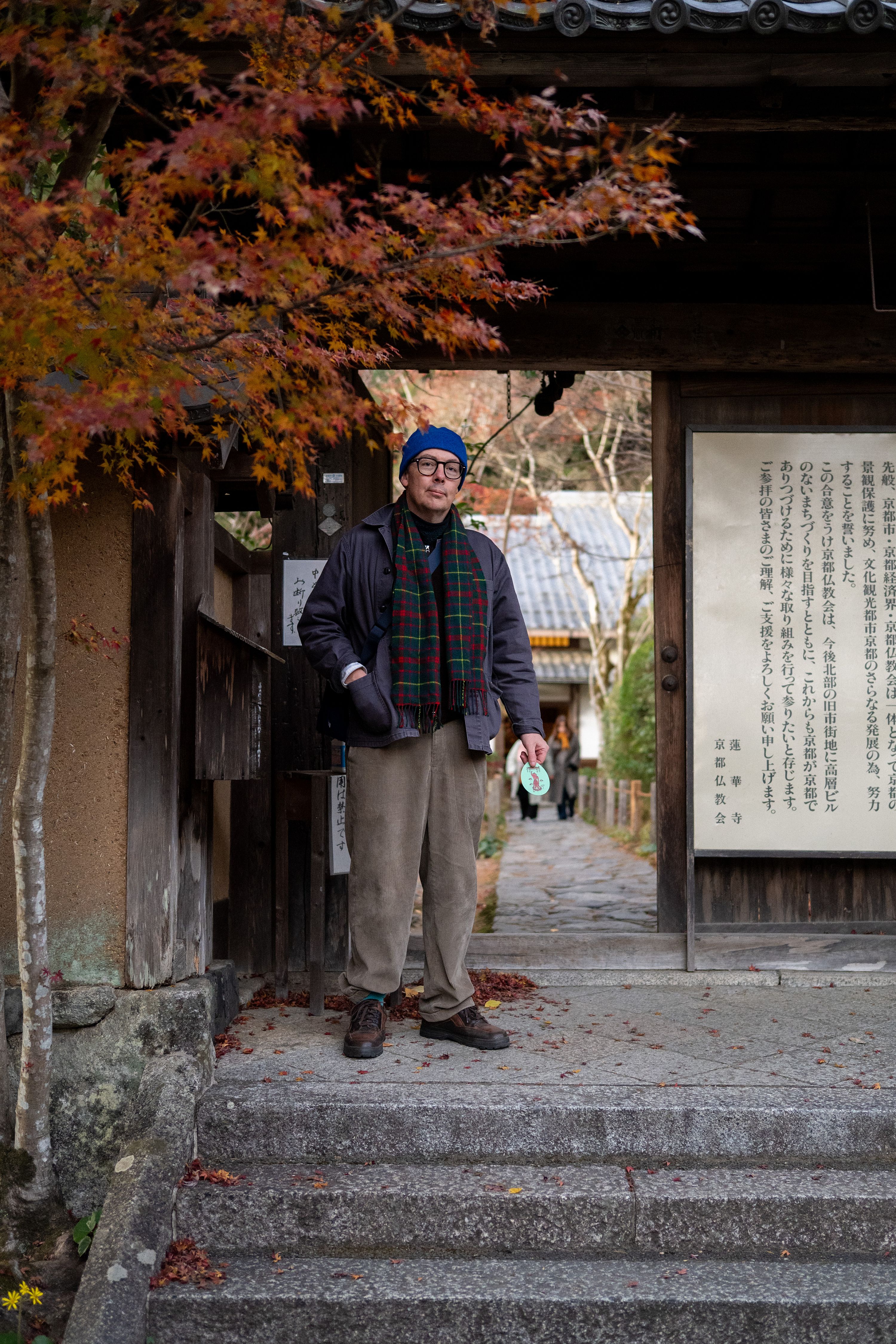
The face of a satisfied autumn colour hunter in Kyoto (being turfed out of Renge-ji)
Spooky coda
Having rented the bike for two days, I woke up early the next morning and headed out to make one last stop. Since I knew this article would be read at Christmas, I wanted to bring a kwaidan (ghost story) back with me. When I mentioned the British tradition of telling ghost stories at Christmas to a Japanese friend, she was surprised. In Japan, ghosts are a summer phenomenon, with spooky tales passed around during the Obon festival in August, when the heat and humidity reach unbearable heights. The idea is that the chill from a good ghost story helps you cool off, which actually makes a lot of sense. Undeterred, and with time to kill before my train to the airport, I headed for Ichijō Modoribashi Bridge — “the Bridge of Return” — to see if I could drum up some sort of supernatural coda to the trip.
For a bridge so short, it has an awful lot of legends associated with it. You could probably leap the Hori River (no relation to Hori Hori, as far as I could tell) that it crosses with a good run-up. Even so, over approximately a thousand years it’s been the site of a father returning from the dead for one last hug, a demonic woman who gets her arm chopped off, real-life executions and, bizarrely, anti-Christian earlobe removals, to name just a few notable incidents.
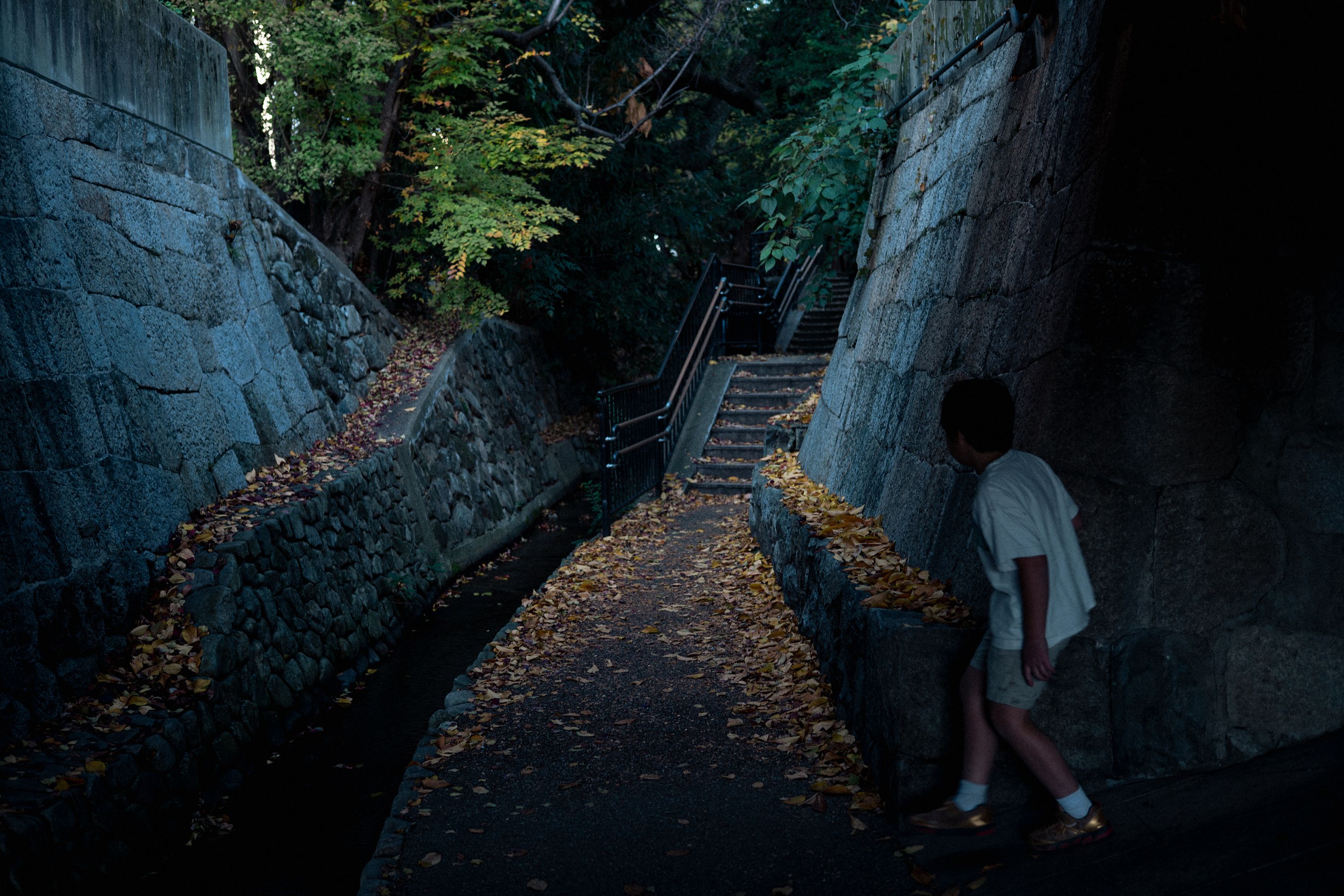
My favourite story involves Abe no Seimei (the first person I’ve ever read about to be described as both a civil servant and a sorcerer), who is said to have parked his shikigami — a ragtag group of demons and spirits who did his bidding — under the bridge. Venturing down there myself, I found a child hiding, waiting to jump out on a friend who was chasing him. Not especially scary, though I suppose a strange Englishman showing up might have given the kid a bit of a shock.
Perhaps the fact that the original bridge has been replaced with a modern structure has something to do with it. For some genuinely unsettling Japanese ghost stories, read Lafcadio Hearn’s 1904 collection of well-researched kwaidan, which fuse traditional tales with the author’s Celtic sensibilities and gift for storytelling. I’ll stick to gardens from now on.