
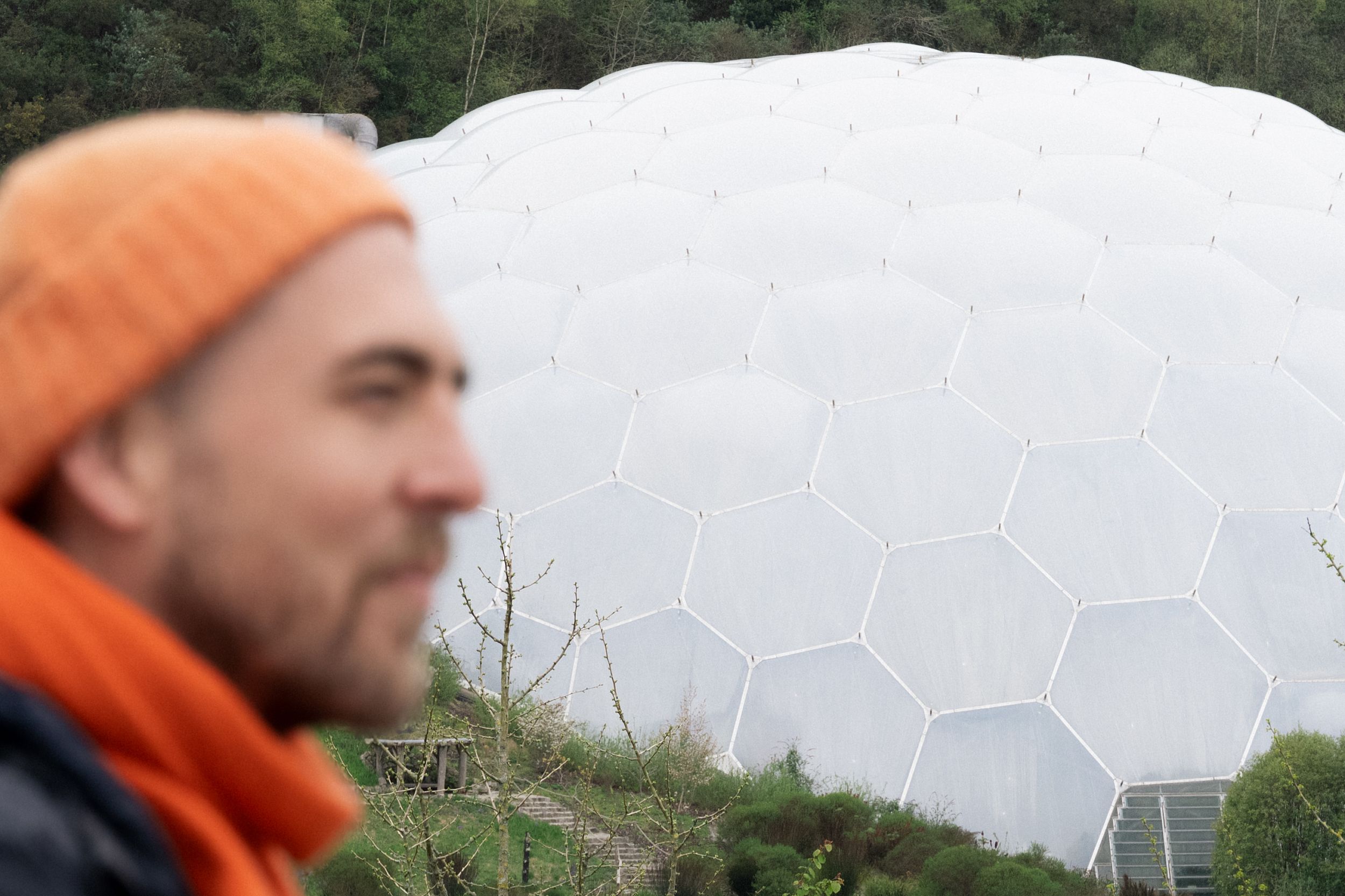
Harry Holding at the Eden Project in Cornwall
The Eden Project: Bring Me Sunshine Garden
“Come and see the babies – they’re growing up nicely!” says Flo Mansbridge, who heads up the propagation team at Eden Project, Cornwall, leading us – that is, Harry Holding and me – through the geo-thermally heated nursery tunnels, hidden from sight of the main ‘crater’ that contains the famous biomes.
It’s early April – RHS Chelsea Flower Show is just a short month and a half away – which means Harry and his team are starting to see their best laid plans burst into life. He’s just established a WhatsApp group for the planting team to which he is firing photo after photo to reassure them that Flo’s hard work is paying off.
We think of Chelsea as a brief moment, but when you visit a nursery in the months beforehand, you realise that every garden starts to grow long before the big day(s) – and not just in the designer’s imagination or the rows of spreadsheets required to bring everything together. It’s already a tangible proposition, and Harry appears reassured as he runs his hands across a chorus line of cheerful-looking dill in 2-litre pots.
“It was a toss-up between woad and dill for one part of the garden,” he explains, pausing beside a tray of feathery seedlings, “but having noticed so much woad at last year’s show, dill is stepping in for texture, structure and smell.”
A tray of black salsify prompts a discussion about edible roots and pollinators. “You become incredibly intimate with plants during Chelsea,” he says. “In a normal garden, things can find their own way over time. At Chelsea, it has to look right from day one.”
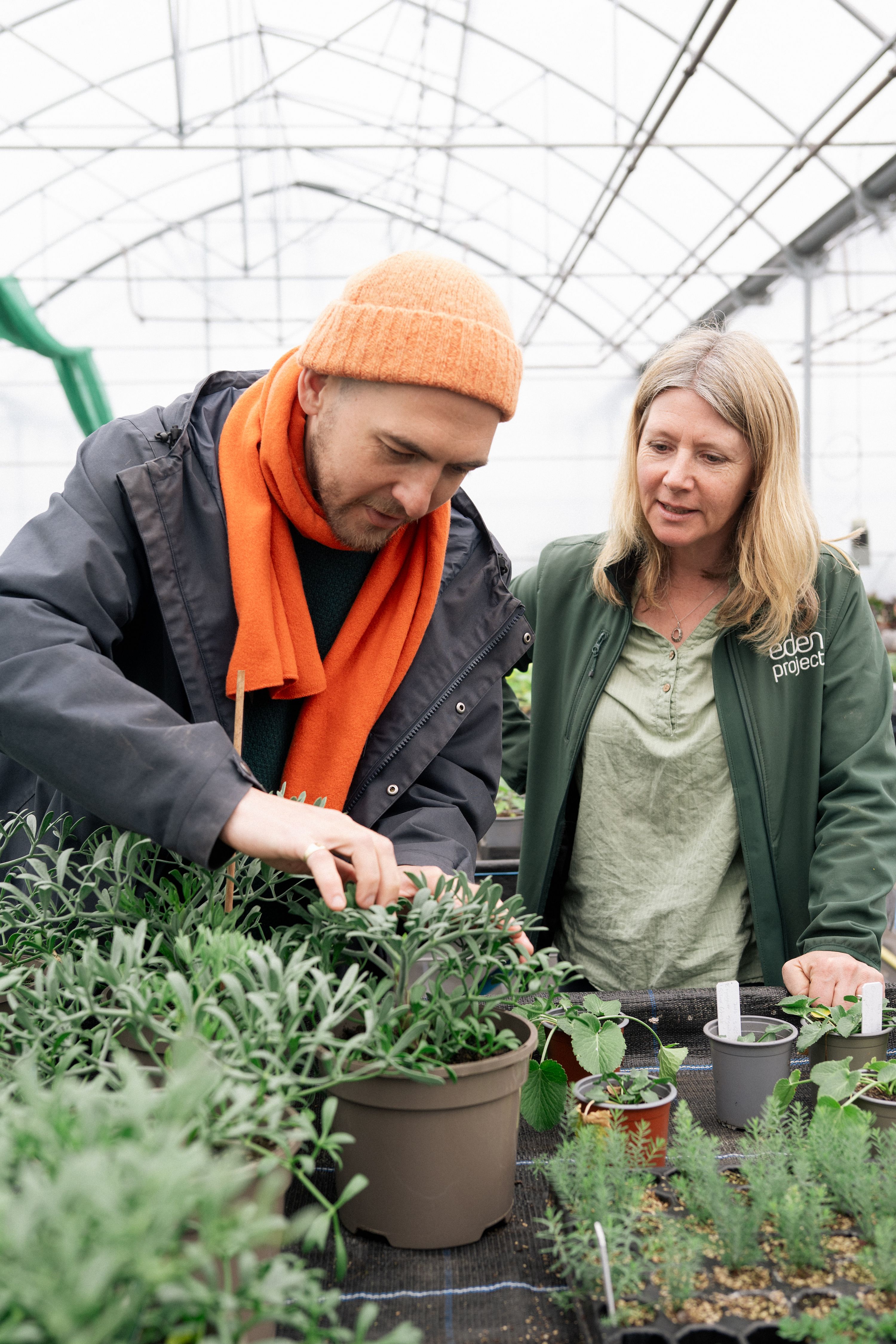
Harry Holding and Flo Mansbridge inspecting plants at the Eden Project in Cornwall.
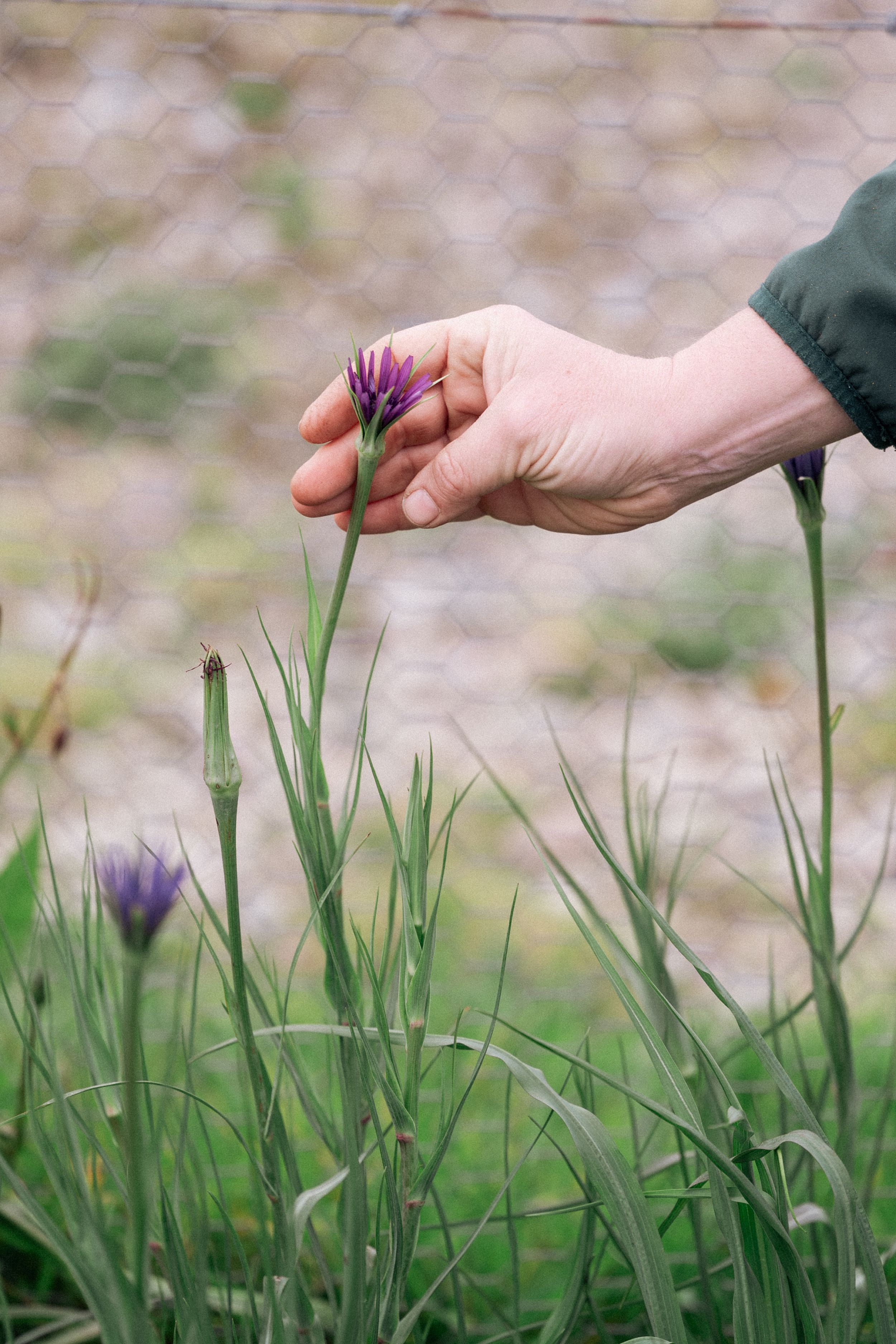
Salsify (Tragopogon porrifolius)
In ordinary gardens, associations evolve slowly and naturally. Plants self-seed, compete, disappear and return. Chelsea compresses that entire process into a single frozen moment – a garden required to look simultaneously mature, spontaneous and perfect. “It’s a weird system,” Harry admits. “You’re trying to create something that looks completely natural, but also exactly right at one specific moment.”
Nearby are pots of Centaurium erythraea – common centaury – carrying masses of tiny pink flowers with yellow centres, alongside Echium vulgare – viper’s bugloss – with its rough stems and saturated purples. Both are native wildflowers associated with the Morecambe coast, and both play a role in the wider atmosphere Harry is trying to create.
“I mean, this is not going to be a showstopper,” he says of the centaury, “but it’s part of the storytelling. I think it’s really important not to have a whole cast of plants that are all showstoppers in the scheme, all vying for attention.” It is an interesting way of thinking about planting, less as a collection of standout specimens and more as a cast of supporting characters that help establish mood, rhythm and context.
“It’s bringing a contrast, textural sort of foliage compared to that dill,” he continues. “Quite a delicate pink flower. It’s beautiful in its own right, but it also helps to tell the story.”
The story in question centres on regeneration, which is familiar territory for the Eden Project team. The original Cornwall site transformed a former china clay pit into one of the most recognisable horticultural destinations in the country. The proposed Morecambe development aims to perform a similar role for the Lancashire coast, with shell-inspired biomes overlooking the bay and a wider programme focused on community engagement, education and environmental connection.
The project has, however, taken a long time to materialise. Planning, funding and politics have all slowed things down over the years and, inevitably, local optimism has fluctuated. At first, there was excitement. Businesses quickly began incorporating Eden into their names, and house prices rallied. Then came the long wait.
“Eden fatigue,” Harry calls it. “People just stopped believing it was happening.”
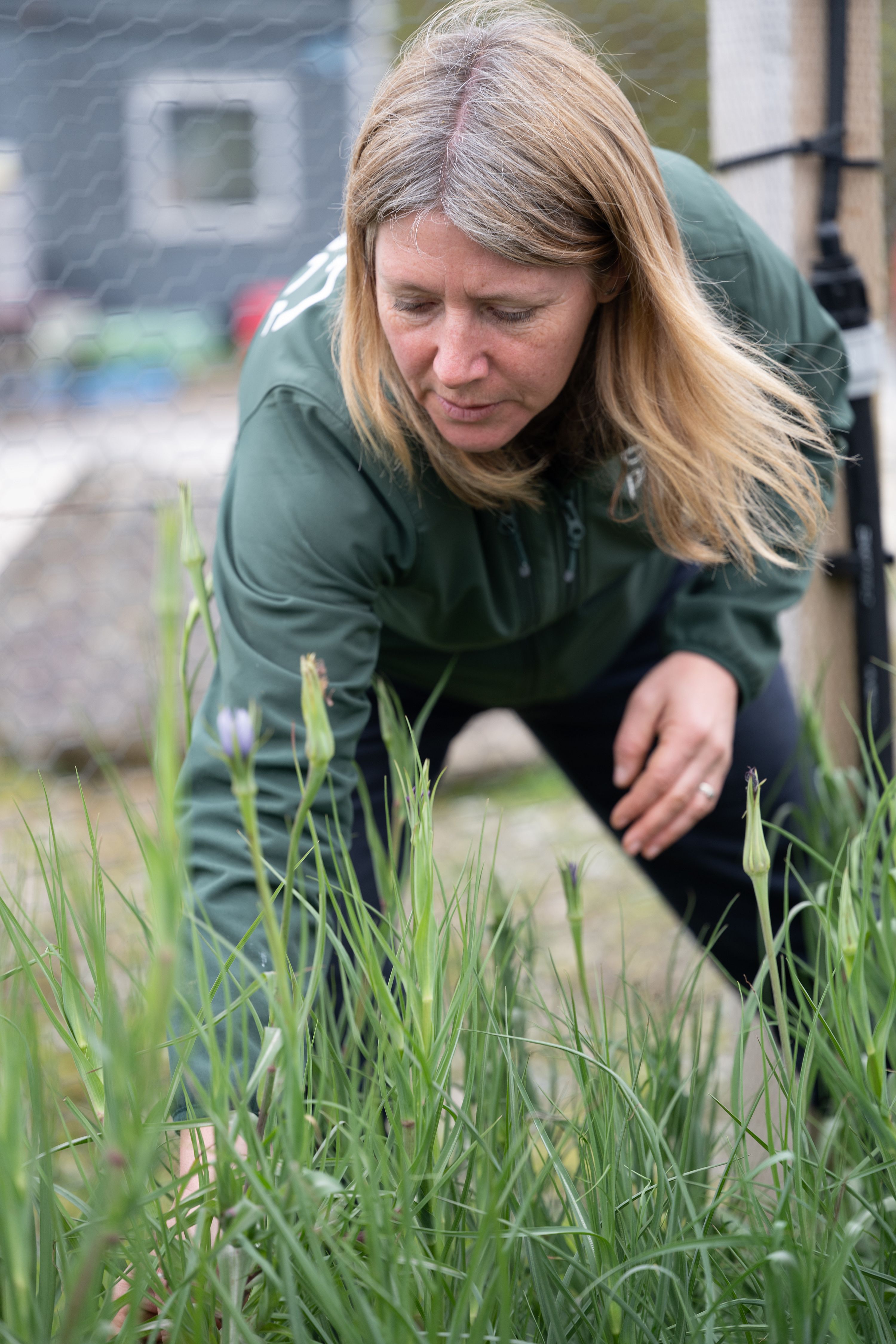
Flo Mansbridge: Head of the propagation team at Eden Project, Cornwall
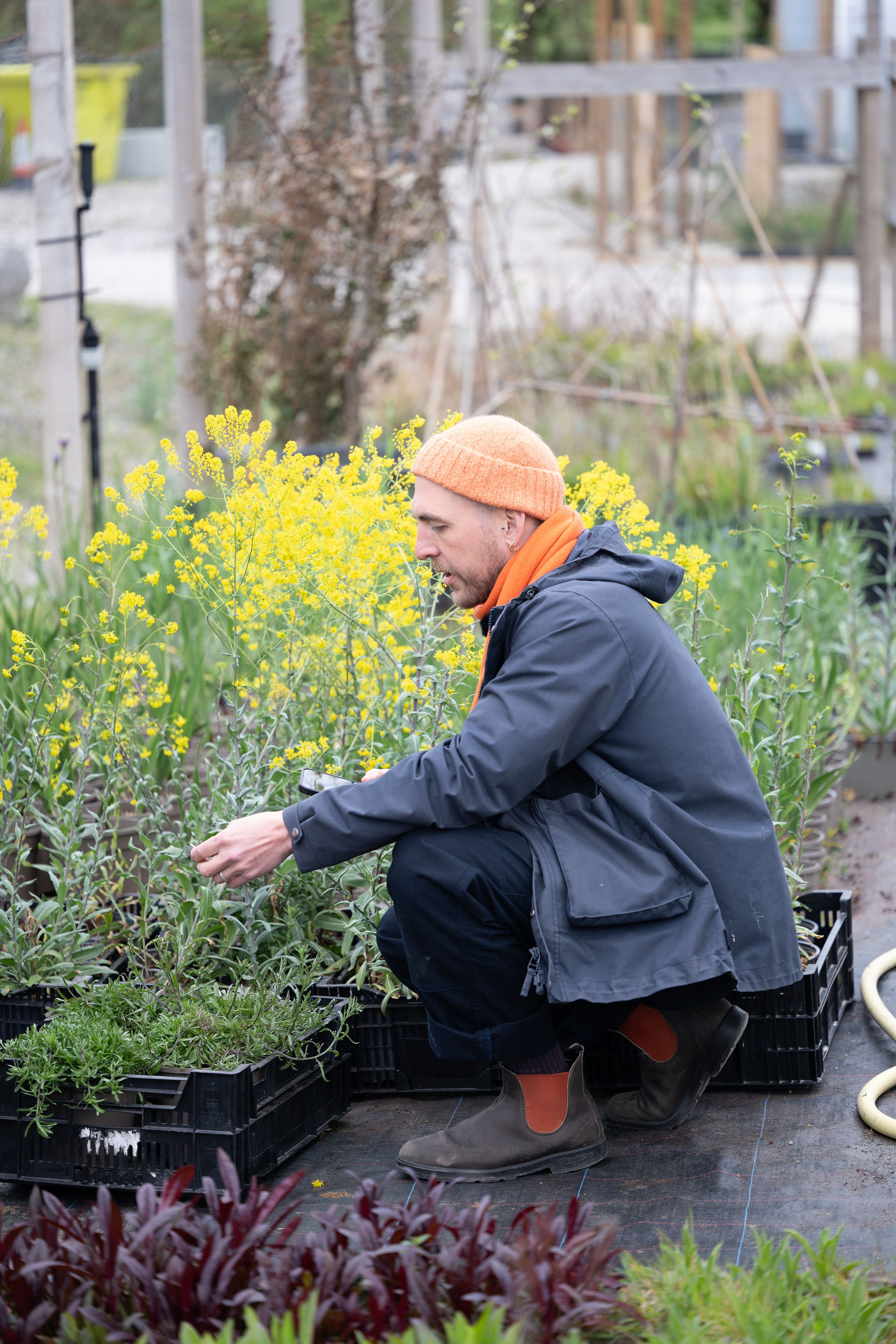
“It’s a weird system,” Harry admits. “You’re trying to create something that looks completely natural, but also exactly right at one specific moment.”
The Chelsea garden should placate these fears once and for all. The garden acts as a visible sign that the project is progressing, while also allowing Eden to begin communicating the visual language of the Morecambe site before construction is complete.
“This is visible action,” Harry says. “The Chelsea garden is a spearhead to the relocation of it – a real moment of hope. This is happening now.”
Later, we stop in the connecting space between the two biomes beside a scale model of Eden Project Morecambe, complete with tiny shell-shaped structures and miniature public gardens. Harry points out the areas visitors will eventually pass through on arrival – landscapes the Chelsea garden previews in condensed form. Even at this miniature scale, you can imagine the huge impact it will have on the site. Despite the actual scale of projects with which Harry is now involved, there remains very little sense of somebody interested in design for design’s sake. He talks more readily about ecology, edible planting and land use – never about spectacle – and there is a practical, slightly self-effacing quality to the way he describes his own career.
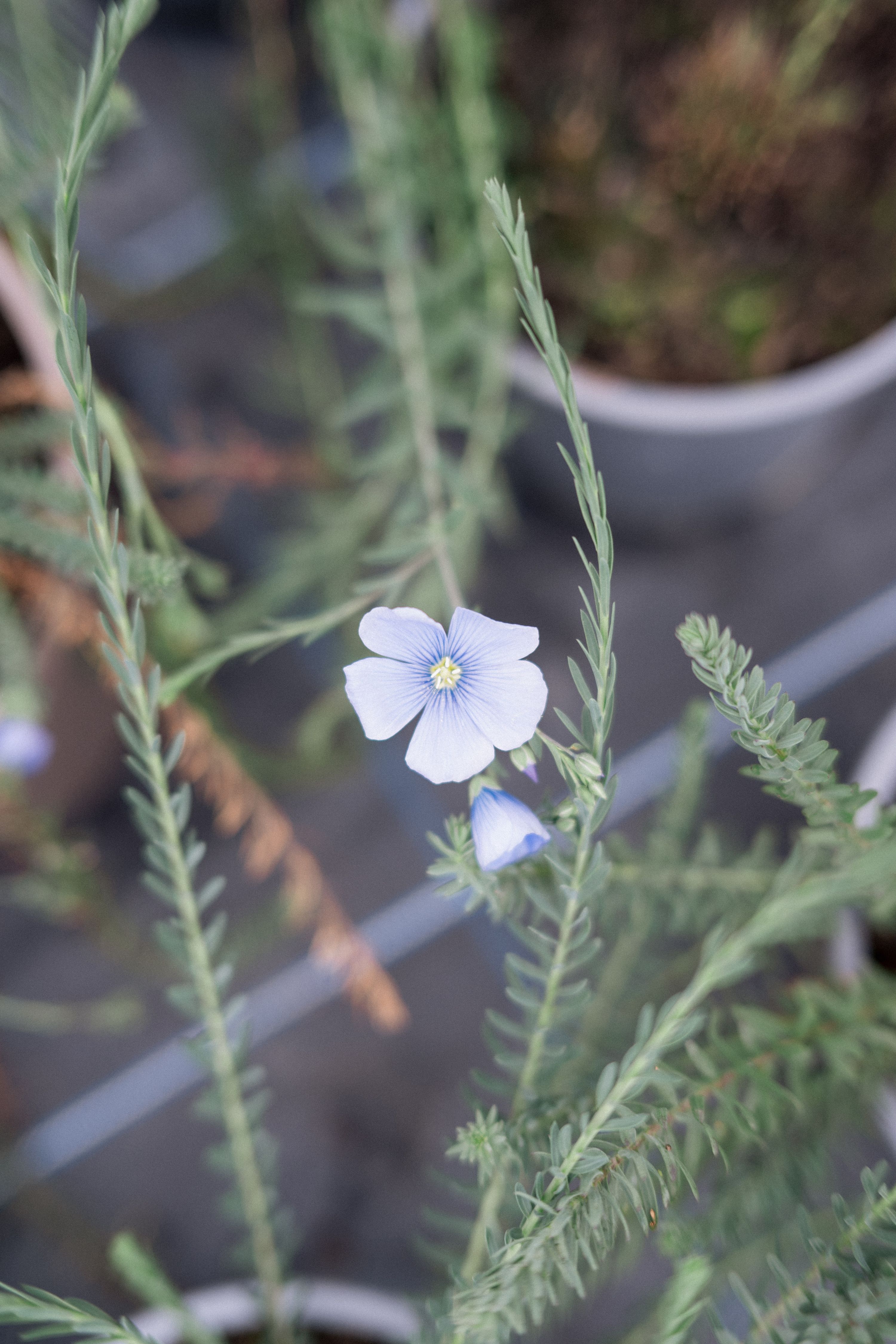
Perennial Flax (Linum perenne), often referred to as Blue Flax.
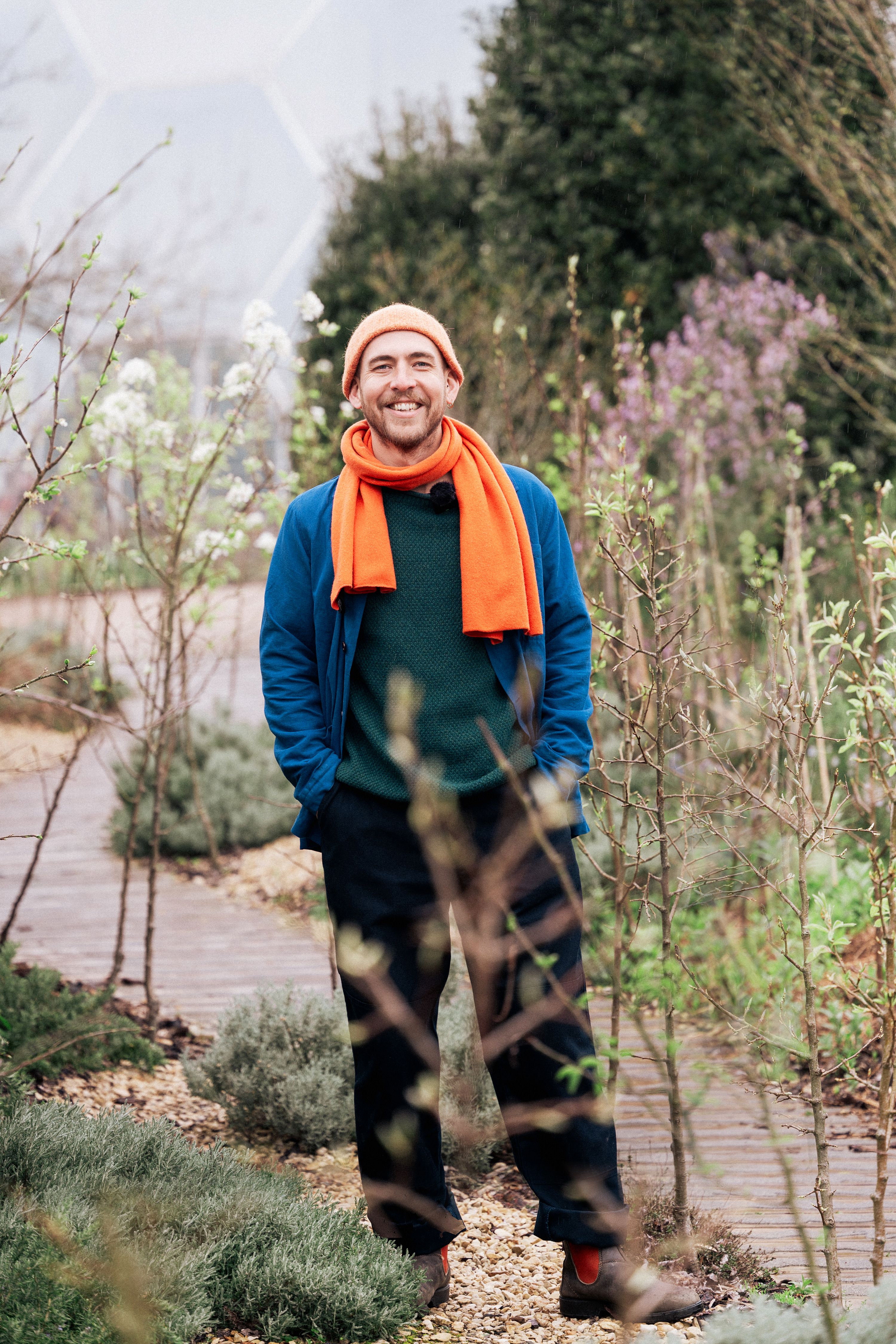
This year marks ten years of Harry Holding Studio, which is impressive considering he is still only 33. He originally worked much more on the maintenance side of horticulture before realising a career in the design side of the profession was within his reach. Working alongside established designers helped open that door further, and he won a scholarship to study at the London College of Garden Design, Kew, to formalise his training. These days, he returns regularly to teach studio sessions there himself.
There is also a noticeable fascination with plants that do more than simply look good. During the course of the day, we discuss rock samphire growing around Jack Scout (a nature reserve) on the Cumbrian coast, edible species suited to exposed sites, and the category Harry charmingly refers to as “edimentals” – i.e. ornamental plants that are also edible.
Those ideas have recently found an outlet in Harry’s first book, Eat Your Garden, which will be published in the week after Chelsea, and which expands on many of the themes that emerged naturally during our conversations. As if that wasn’t enough, once Chelsea is dismantled, and the garden has begun its journey to Morecambe, Harry and his wife are moving from London to Wales. On an 8.5 acres site near Hay-on-Wye, they have planted what Harry describes as a food forest – including a ‘nuttery’ of 3,000 trees – where they will live and work, experiment and educate.
For now, Chelsea, briefly and unofficially twinned with Morecambe, is the focus, offering a taste of the hope and ambition that is building momentum at Eden Project Morecambe.


