Cutting back Cornus at the Horniman Museum and Gardens
On the whole, we humble desk dwellers enjoy our days at Niwaki HQ, but when the sunshine appears, the call of the garden is hard to ignore. Especially when that garden is South London’s Horniman Museum and Gardens. Joining Jack and Victoria, our colleagues from Niwaki Chiltern Street we were eager to see what Head of Horticulture Errol Reuben Fernandes had in store.
In early March, we were fortunate to arrive in fine weather – perfect for visiting the Xerophytic Garden, which, set against the neoclassical mosaic and warm sandstone of the main building, was more reminiscent of a Mediterranean holiday than the entrance to a London museum. The substrate – made from recycled rubble – is clearly doing wonders for the plants that live here, including a large, feathery Ferula communis (giant fennel) that is showing signs of flowering this year. Hugh, who has been looking after this area of the Gardens has been carefully attending and observing what is a valuable self-seeded xerophyte, and what is an unwanted weed. Although, as Errol is quick to remind us, a weed is simply a plant in the wrong place: he’s a keen proponent of Beth Chatto’s “right plant, right place” philosophy, not just for the plant’s sake but for the wide range of wildlife and visitors who enjoy them.
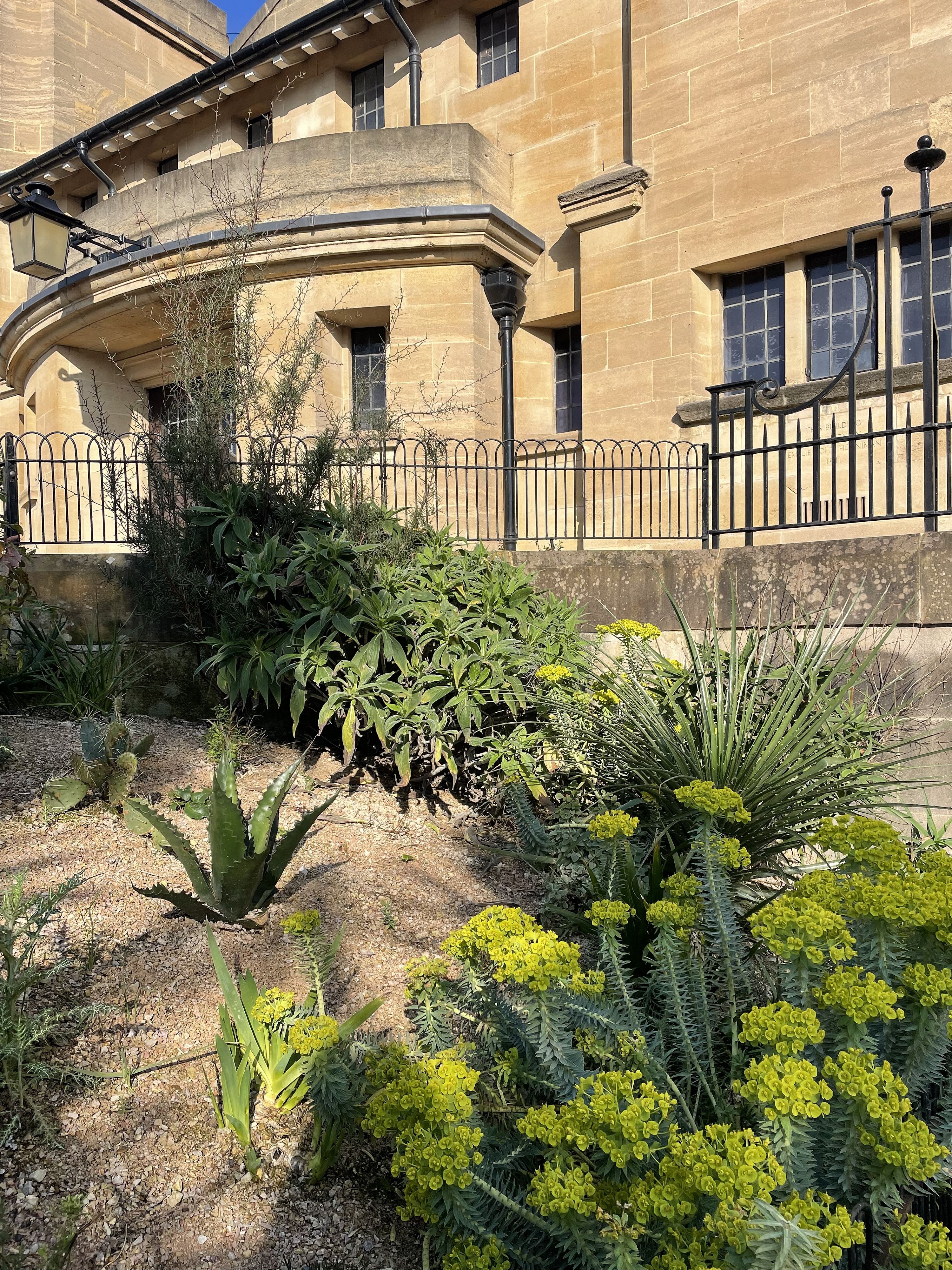
The Xerophytic Garden.
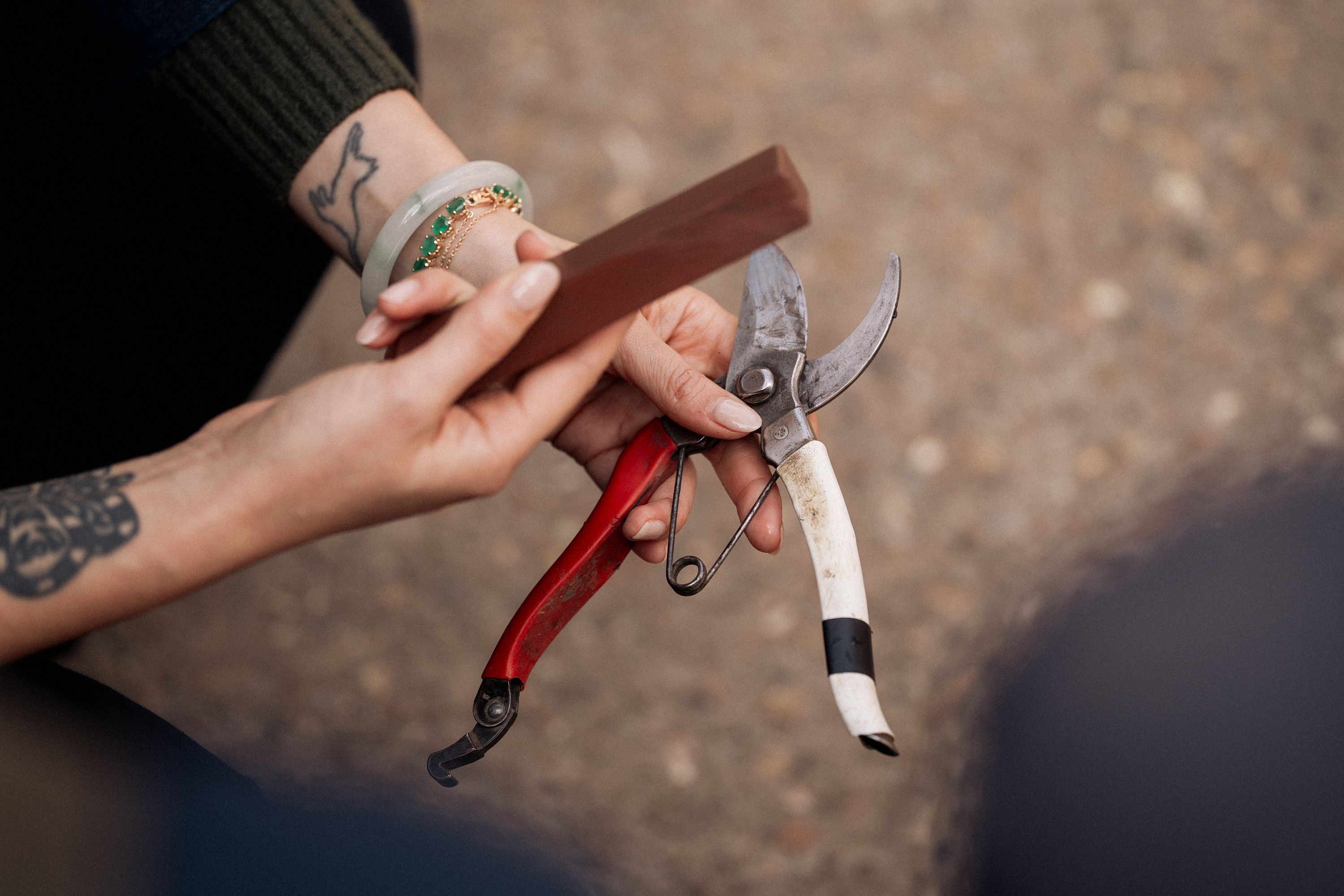
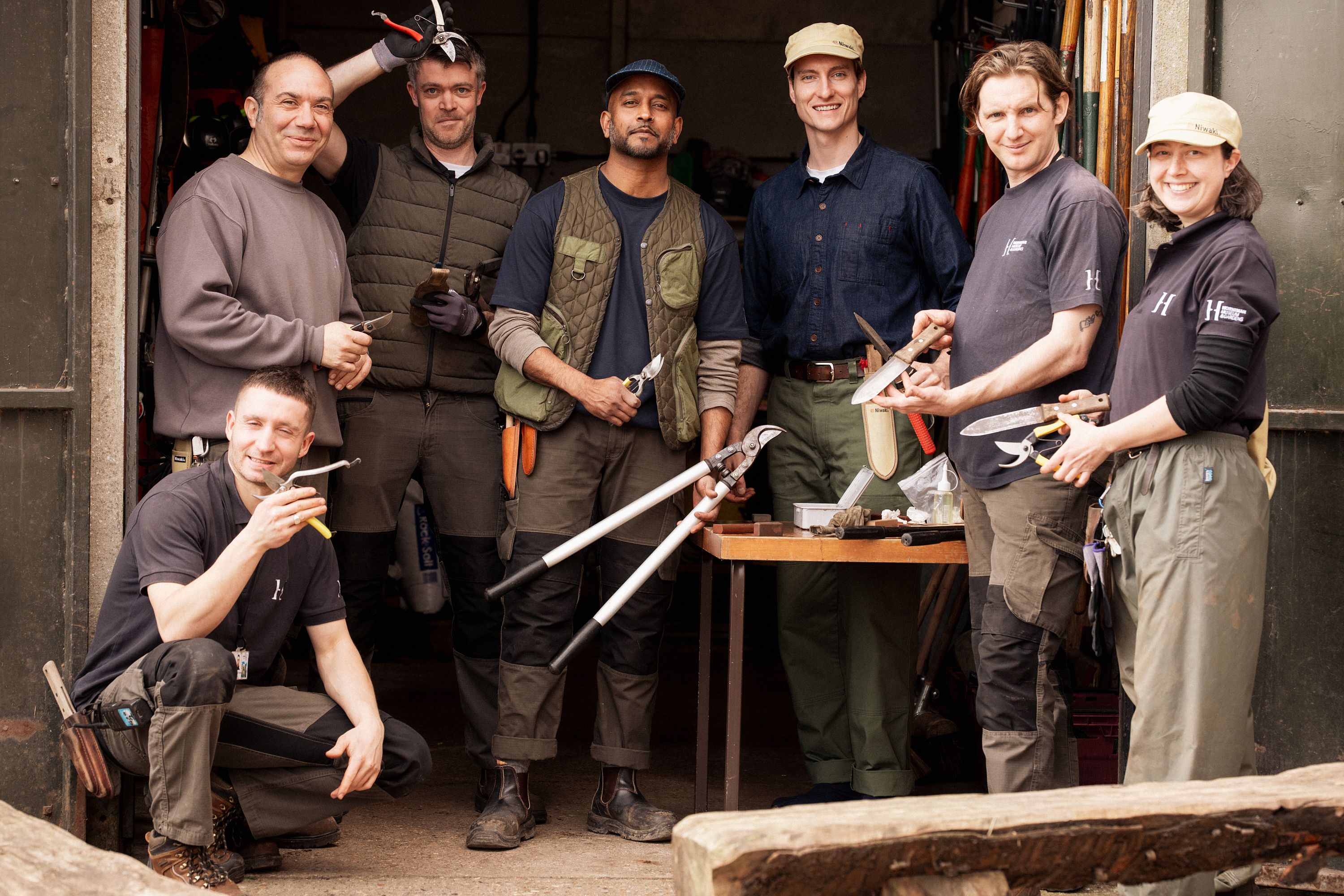
Horniman gardeners with their freshly sharpened tools.
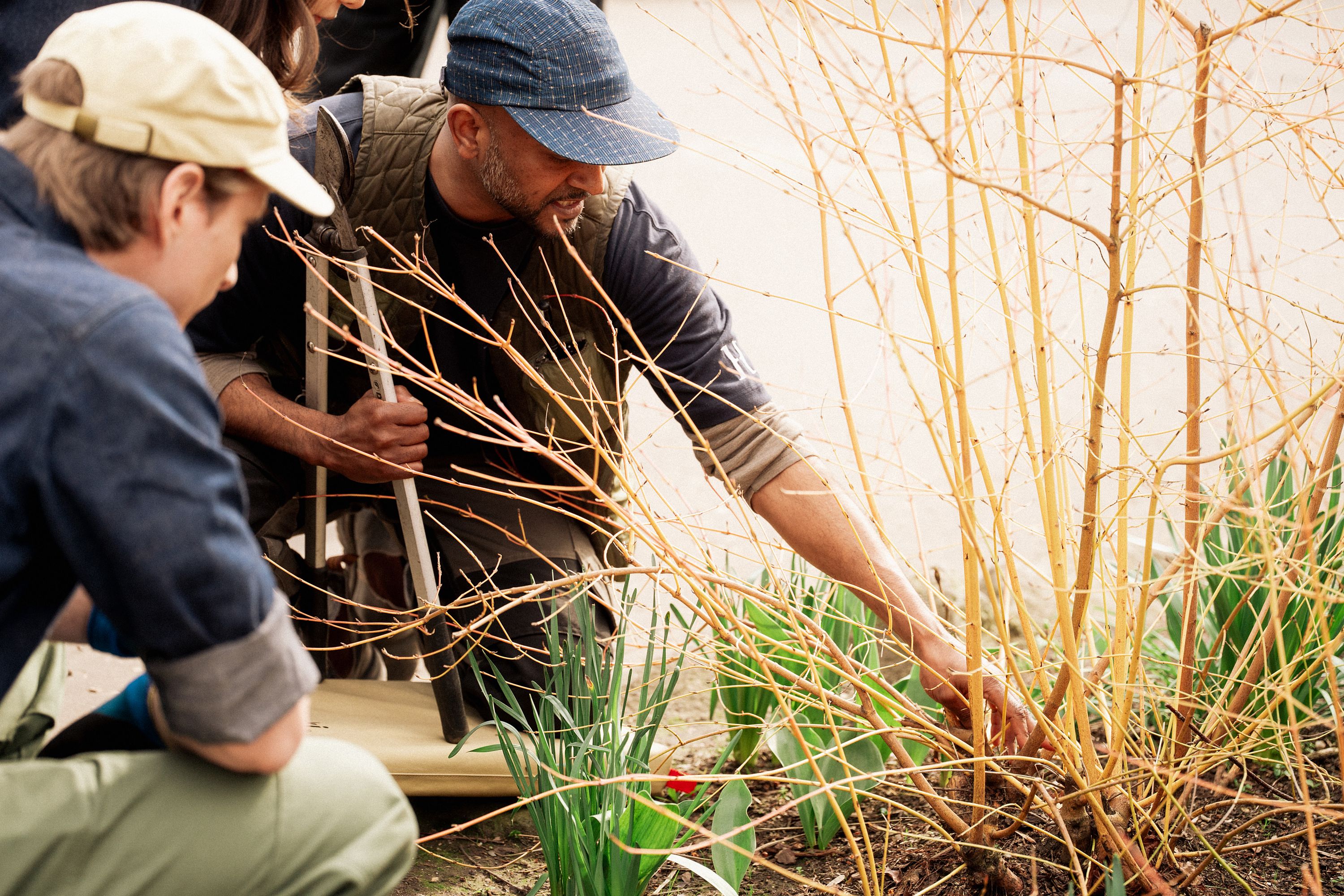
Errol points out the old growth and shows us where to make the first cut.
Today’s task was to help cut back Cornus sanguinea – a colourful red and orange-barked dogwood. Of course, we’d need the right tools to get started, so we headed to the ‘bothy’ (a misleadingly named suburban office building) to catch up with the team and pass on some sharpening tips. Jack and Victoria led the way, demonstrating how to use Niwaki Sharpening Stones and the miraculous Mini Clean Mate. Each gardener at the Horniman is responsible for their own hand tools, and soon there was a flurry of prized secateurs, sickles and Hori Hori on display.
Loppers in hand, and holsters on our belts, we headed back to the Cornus sanguinea, as Errol explained the logic behind the task that lay ahead. By mid-February, the Cornus starts to break bud and fade as new foliage comes through. The whole area could be cut back at once, but this would leave large swathes looking bare – and with so many dogs and school groups about, risk a hazardous, spiky run through. Instead, strategically removing sections of old growth encourages fresh stems to emerge, ensuring a vibrant display next winter while maintaining the shape and height of the bed. The cut Cornus could be added to one of the site’s many habitat piles, but thanks to its flexible nature Errol had more artistic ideas.
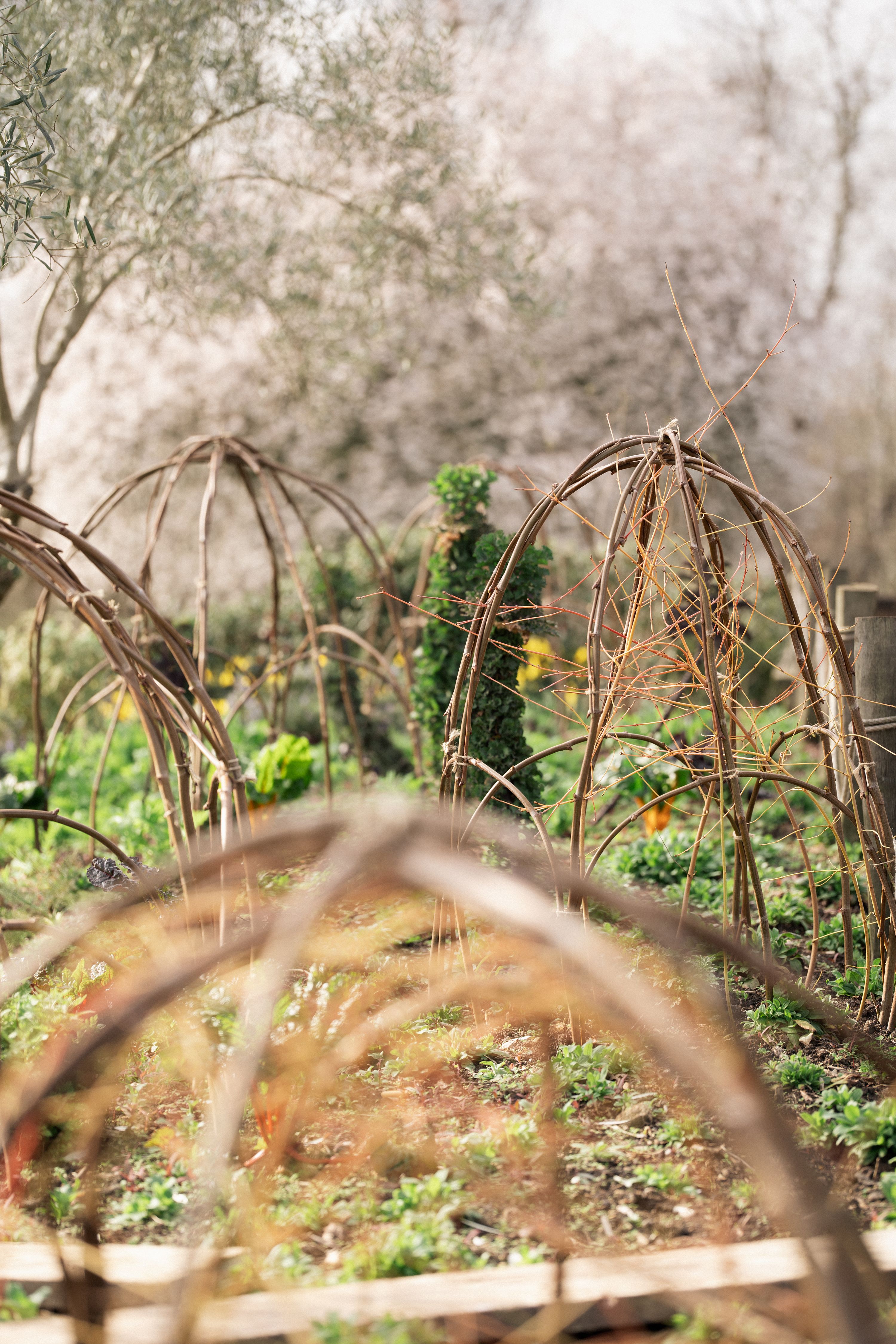
Natural domes made from pruned London plane trees.
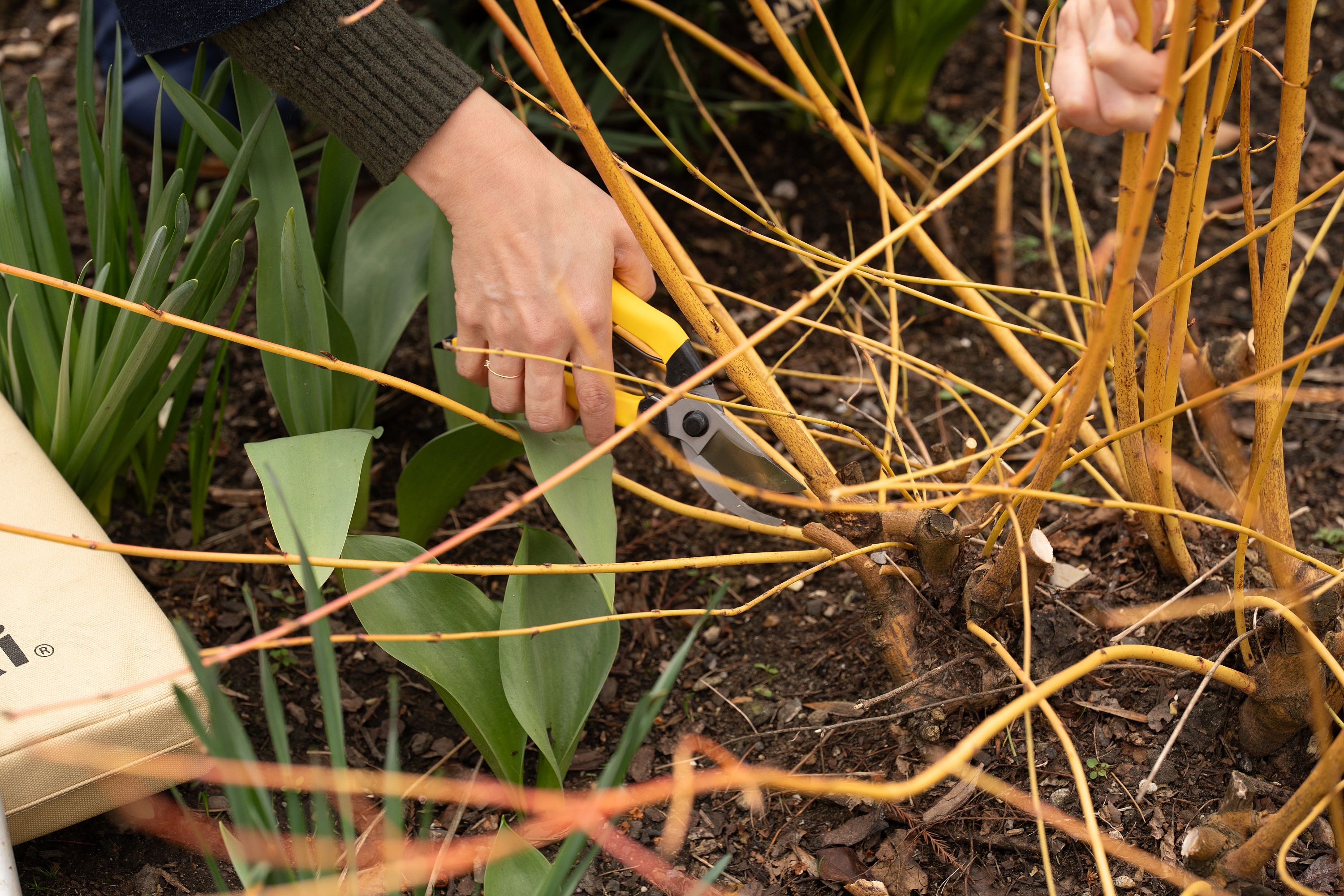
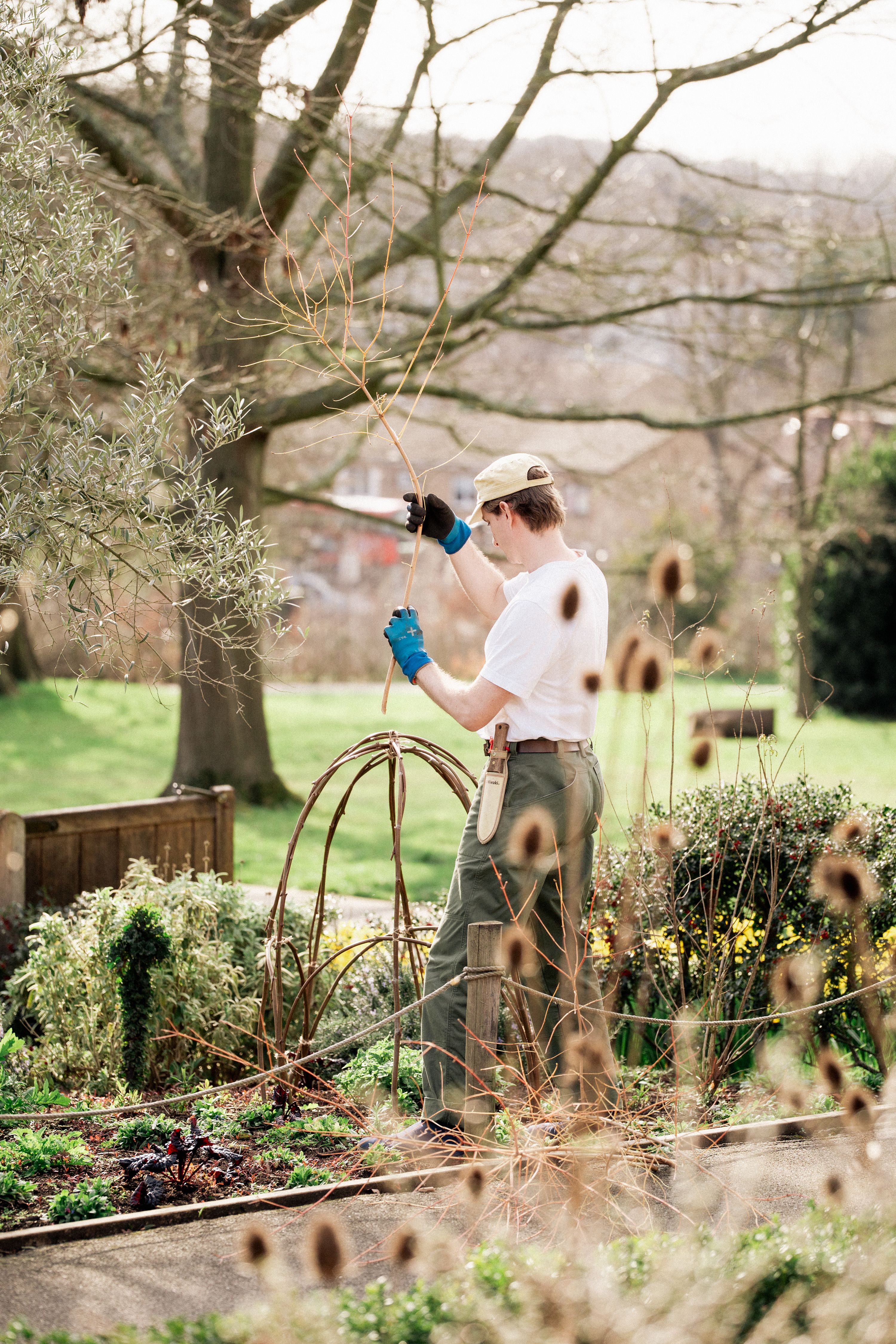
Working with loppers, we cut close to the base – saving secateurs for slimmer stems – and harvesting bundles to be wheeled over to the olive bed, just above the Prairie Garden we’d worked on the year before. Historically this area had been reserved for vegetables and kitchen herbs, but it had come to lack a clear purpose, and besides –it demanded intensive water use and cultivation, meaning it no longer aligned with the Gardens’ sustainable values.
The Edible border is now condensed into a smaller area with a focus on multi-seasonal interest – the Gardens are open 364 days a year – and currently feature some architectural cavolo nero and vibrant red chard, glowing survivors of last summer’s display. Horniman gardener Robin would soon be planting some lesser-known veggie varieties as part of their Future Foods gardens exhibit, which Errol hopes will demonstrate what we could – and perhaps should – be growing in the UK with our fast changing climate. Contenders include Cassava (a South American root vegetable), Amaranth (colourful leafy greens) and Chirata (a medicinal South Asian herb).
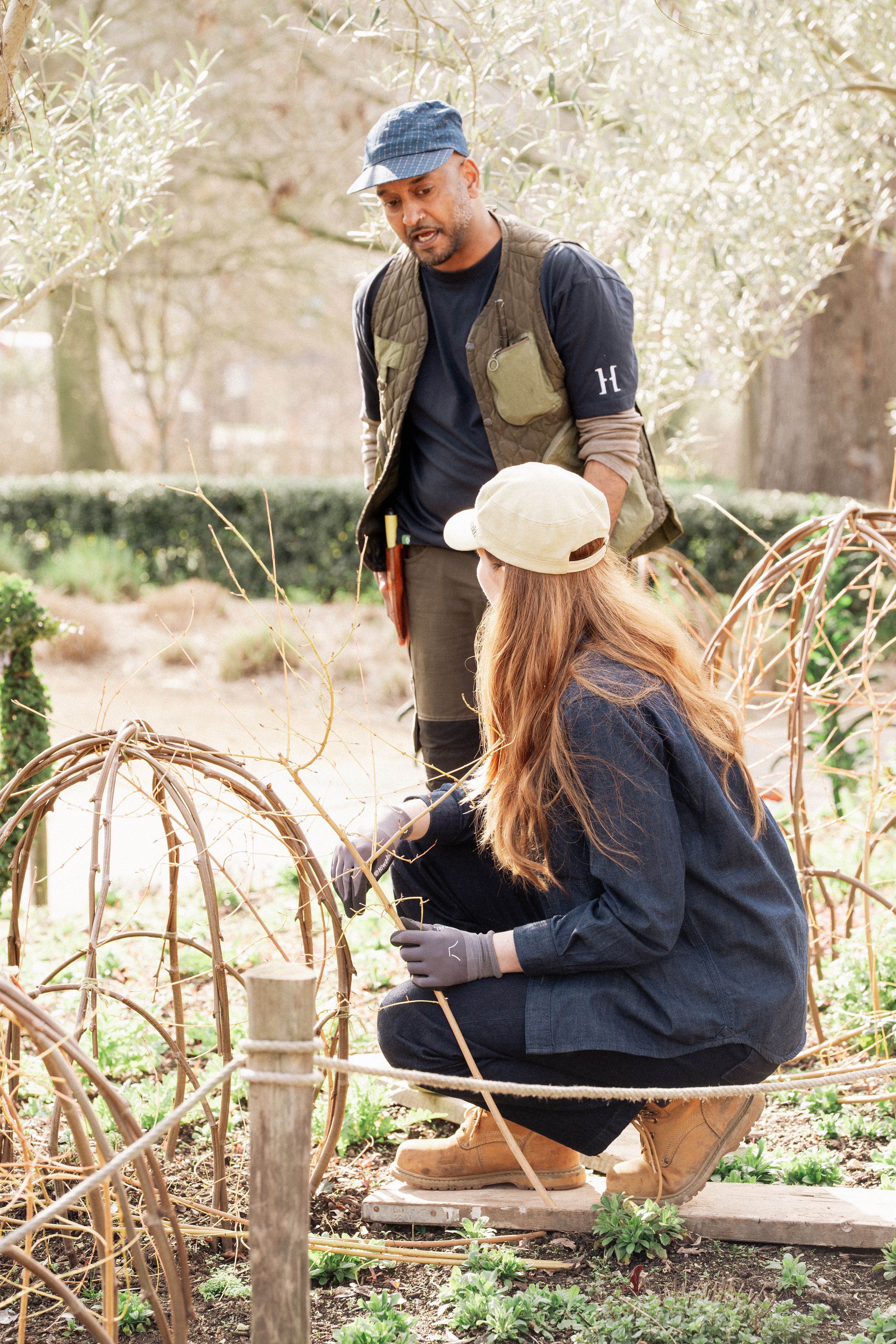
Robin has also been busy making structural dome plant supports from the London plane trees they pruned back in November. His domes were initially designed to support pumpkins, but are now stationed above emerging Chrysanthemums, which won’t be in full bloom until autumn. These hardy perennials are striking, but their large flowers can get a bit floppy – which is where the Cornus comes in. By staking and weaving the cut stems throughout the domes, we would provide extra support for the flowers and add interest to the garden beds.
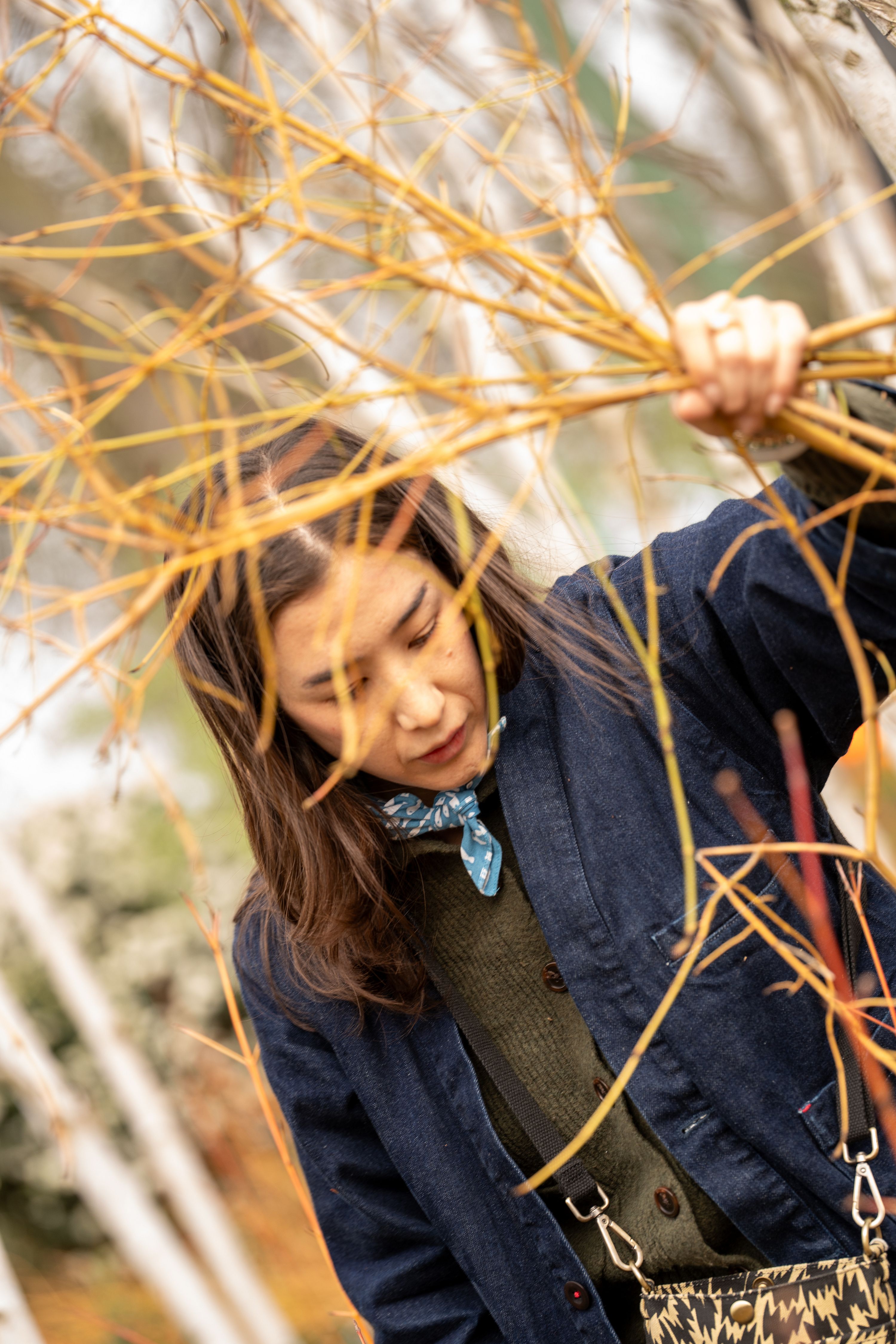
Working our way through the beds, paying close attention to where we planted our steel-toed Tabi feet so as not to disturb new growth, we pushed the Cornus deep into the soil, weaving the stems into the structures to create a colourful mesh: not so tightly crowded that the flowers wouldn’t be able to grow through, but also tight enough to offer support. This alone was an innovative reuse of material – easy to replicate at home – but Errol goes further, explaining that the Cornus’s cambium layer would normally be stripped back, but they’re leaving it so that it will root, ready to cut and repot for the Horniman Plant Fair. These are a highlight of the Horniman’s calendar, bringing small, independent nurseries together, and we’re very proud to be sponsoring (and attending) two this year, on Saturday 4 April and Saturday 5 September.
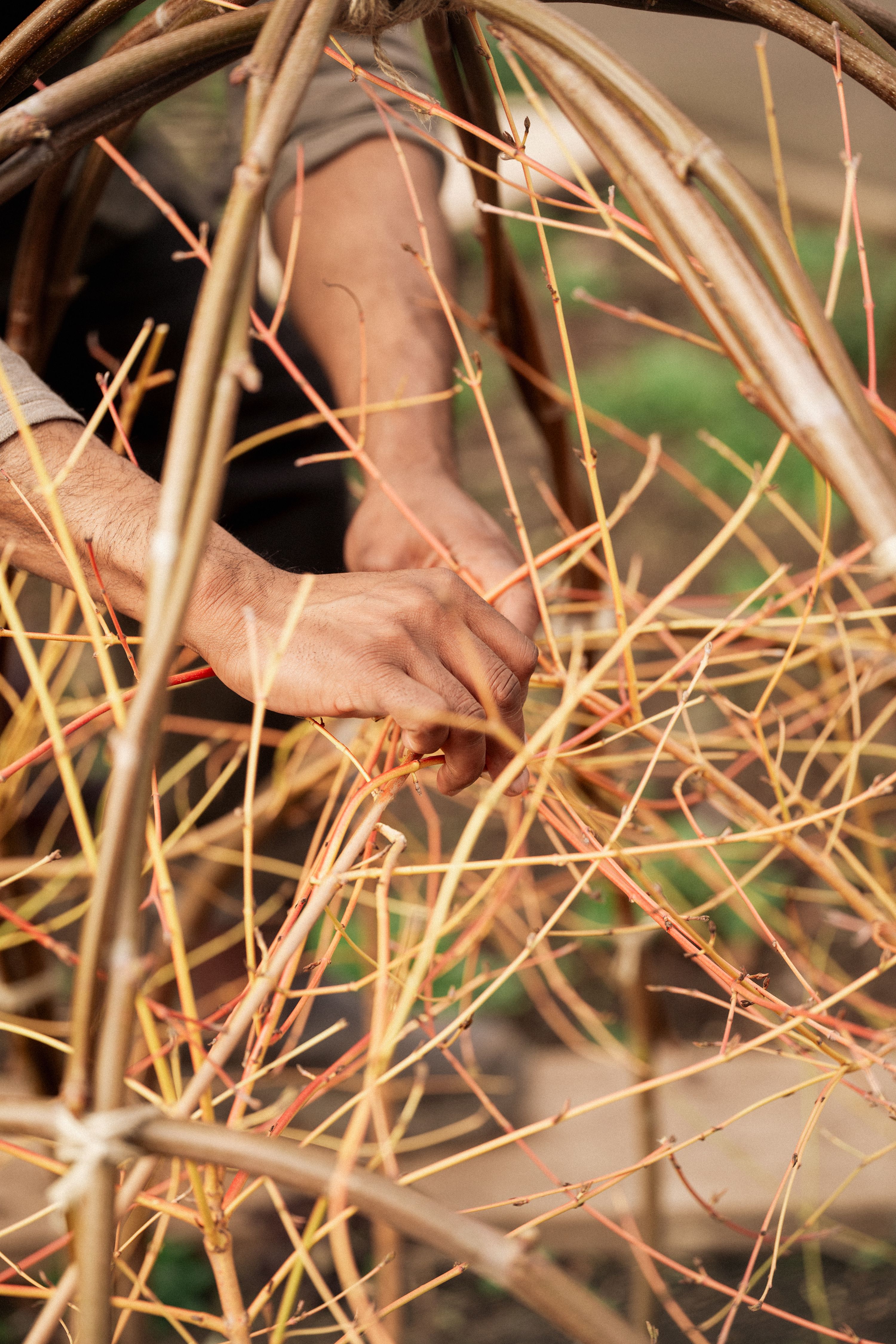
Errol demonstrates how to tuck the Cornus sanguinea into the domes
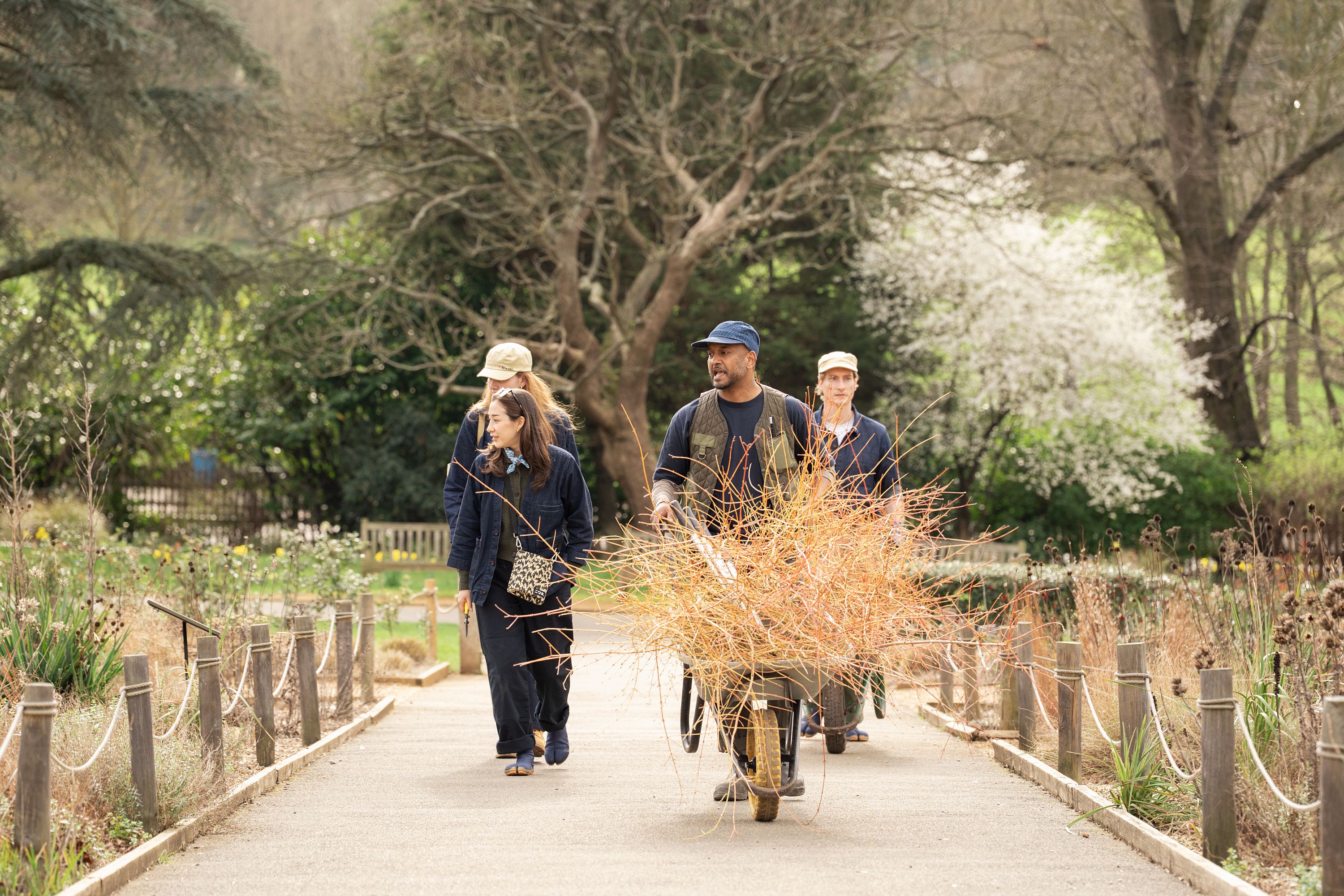
Errol wheels bundles of Cornus sanguinea through the Prairie Garden.


Echinacea pallida seed heads in the Prairie Garden
Pausing for a delicious lunch and Errol’s homemade cake, we learn more about Errol’s plans for the Gardens and the team that work here.
Despite reeling off Latin names as easily as coffee orders, we were surprised to hear that horticulture wasn’t everyone’s first calling. Many of the team we talked to had retrained over the past 10–15 years, coming from backgrounds in landscaping, architecture and design, while Errol had started out as a psychotherapist and fine art painter. These transferable skills and creative crossovers have proven invaluable: for example, Errol’s experience working with galleries and museums has helped him to understand the struggles these institutions face in drawing people in – particularly if, historically, they’ve felt like the preserve of the privileged few. Breaking down those barriers is key to sharing the Gardens with its community and keeping them thriving.
We marvelled at the scale of there gardens: 16.5 acres is a lot to manage, and would be unachievable without the support of local volunteers, whose numbers have grown from a mere handful when Errol took over to 40 regulars. Whether they join to gain skills or simply to spend time outdoors, the collaborative effort is hugely rewarding and allows the team to expand what the Gardens can do.
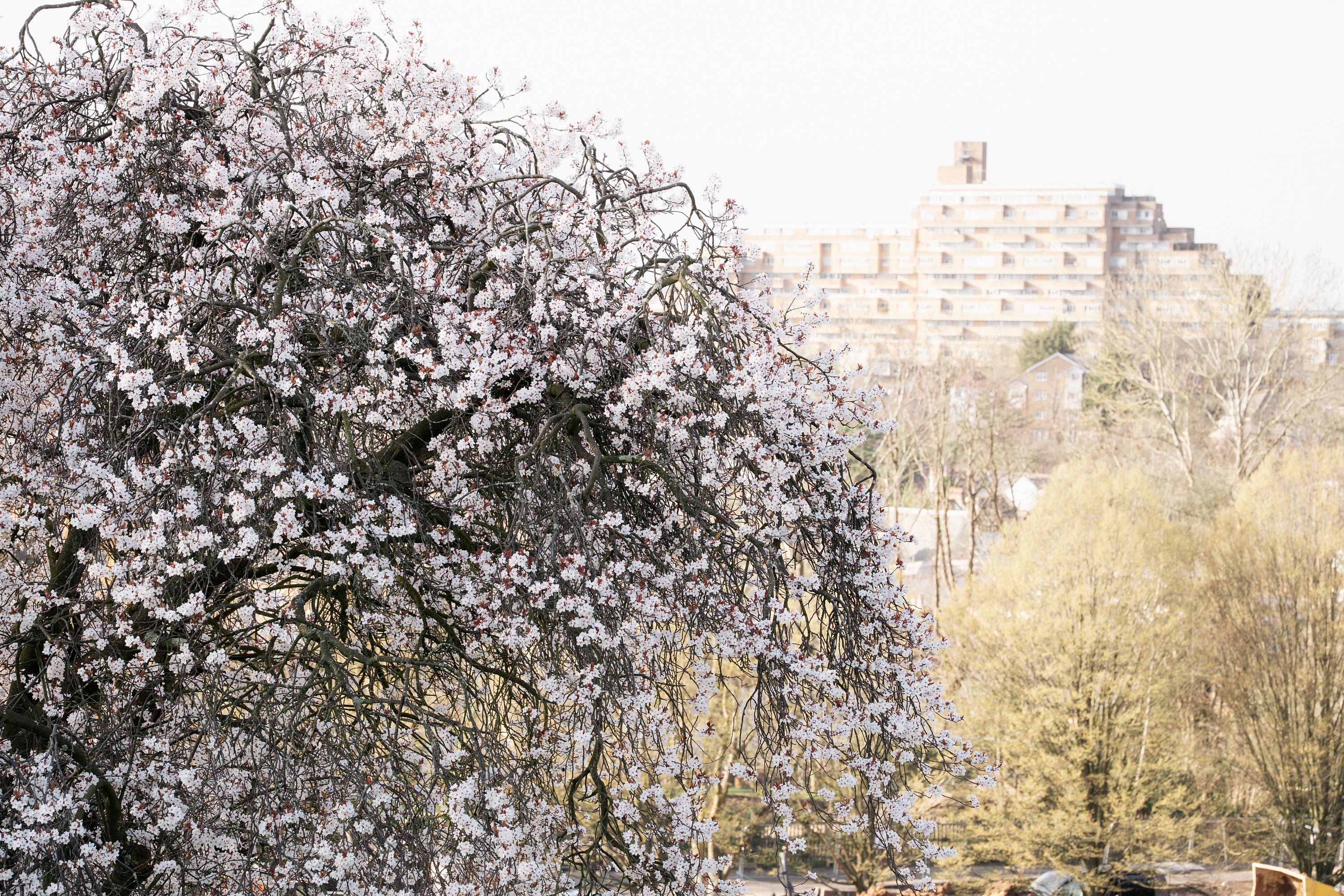
Looking out over the city from Horniman Museum and Gardens.
One of many noteworthy examples is the Miyawaki microforest, planted along a narrow 400m² strip bordering the busy South Circular Road. Established during the pandemic in January 2022, it has already grown into a dense thicket of 900 trees reaching up to 25 feet tall. Together they form a natural screen, absorbing carbon while shielding the Gardens – and its visitors – from air and noise pollution. This is a popular deployment of the Miyawaki method, which was developed by Japanese botanist Akira Miyawaki in the 1970s to replicate the complex nature of indigenous forests on wasteland. The idea is to plant a variety of native trees close together (3-5 per square metre), which compete for light and grow faster. After the first year, the trees’ roots become interconnected by the fungal mycelium network – sometimes referred to as the “wood wide web” –creating a symbiotic relationship that aids the nutrient and water uptake of the whole forest and aids the trees in fighting off pest and disease.
Apart from early weed control, these forests require very little to no maintenance and quickly become a haven for birds and insects. The increase in biodiversity indicates the success of the team’s efforts, and, for entomophile Errol, provide frequent moments of personal delight: at one point in the day he suddenly became hugely excited and broke off mid-sentence to pursue the first hawk moth of the year. Errol isn’t the only one keeping track – the Horniman has commissioned a baseline study of biodiversity in the Gardens, with new recordings every three years.
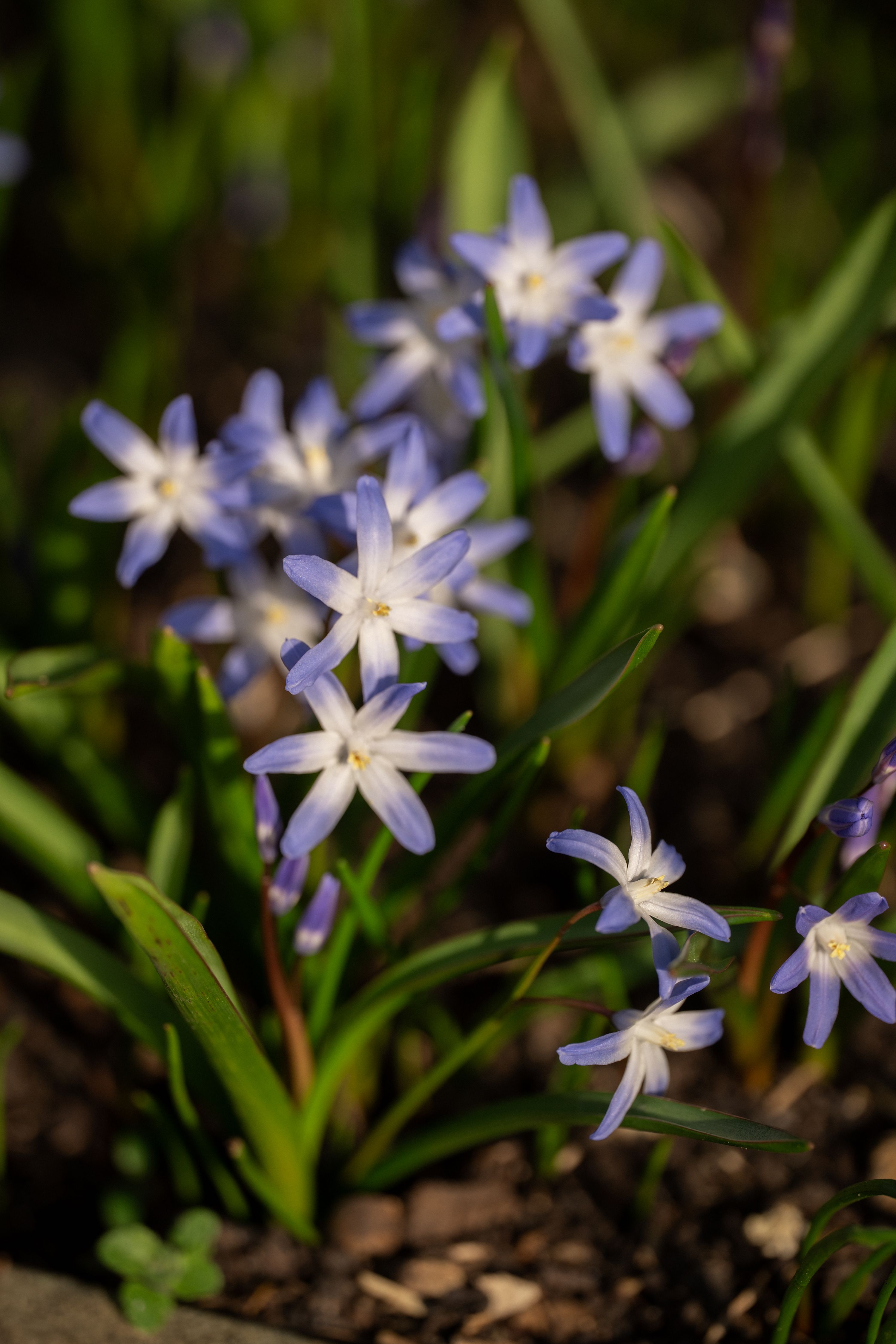
Glory of the Snow (Scilla luciliae).
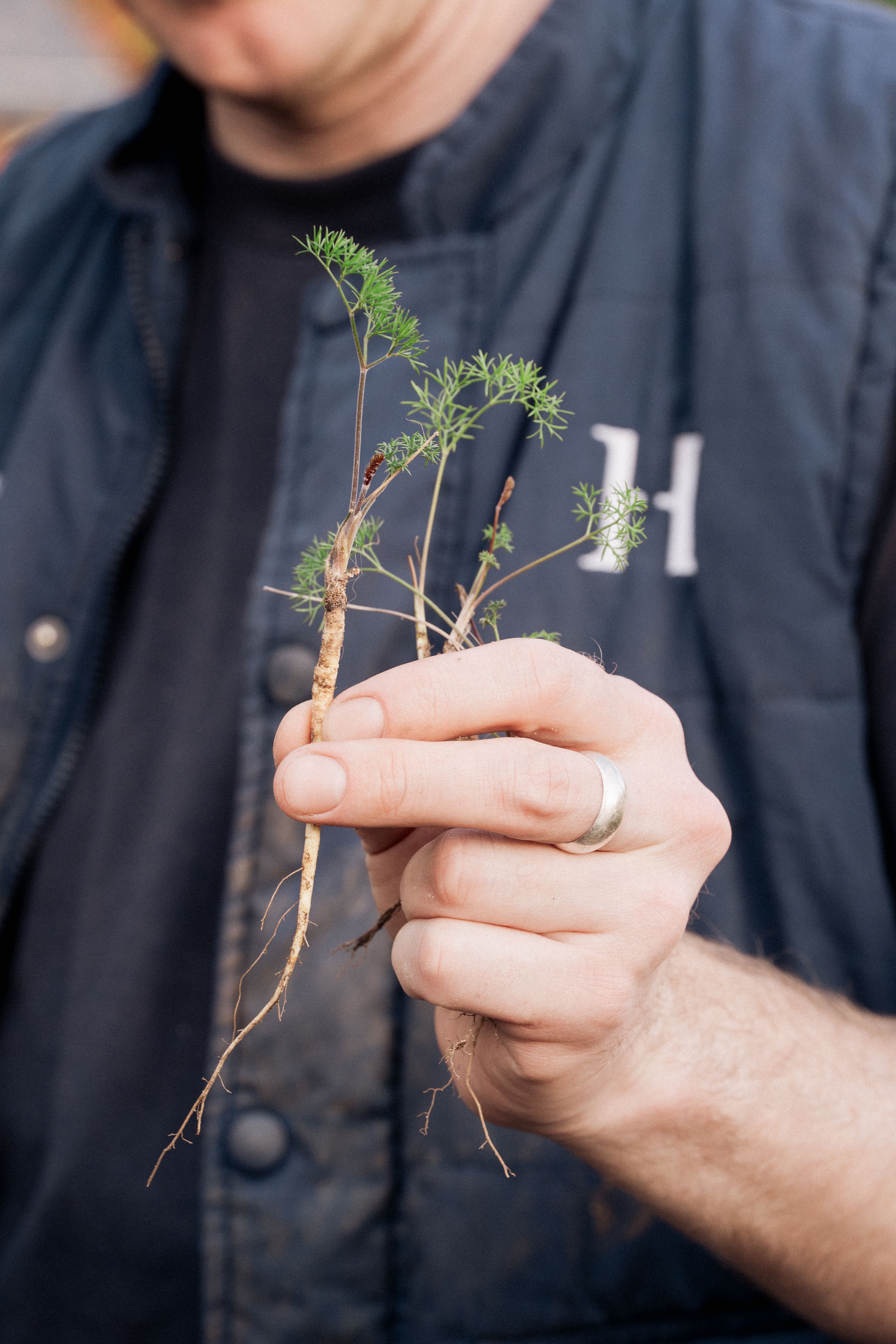
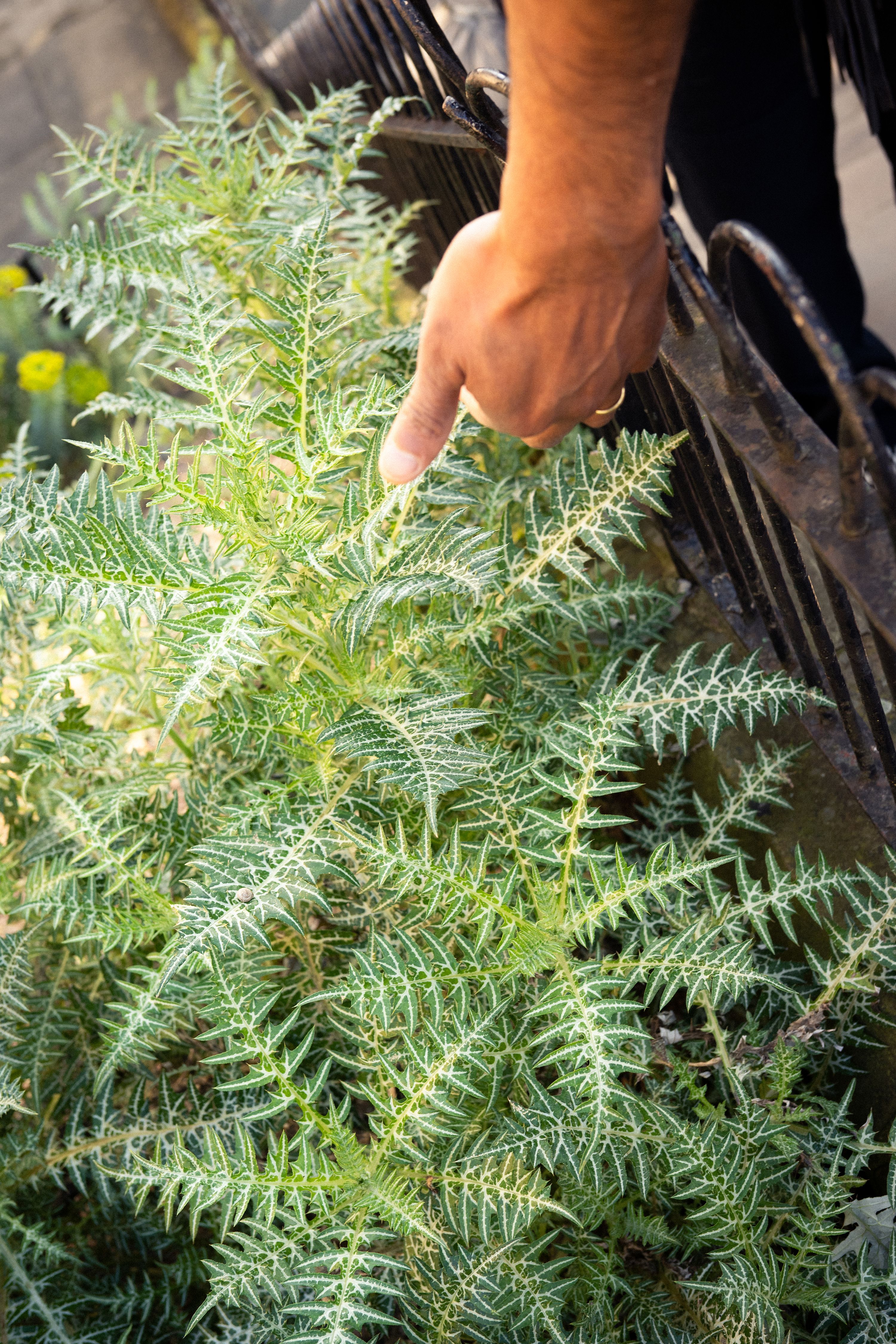
Gardener Hugh finds some seedlings of Athamanta turbith
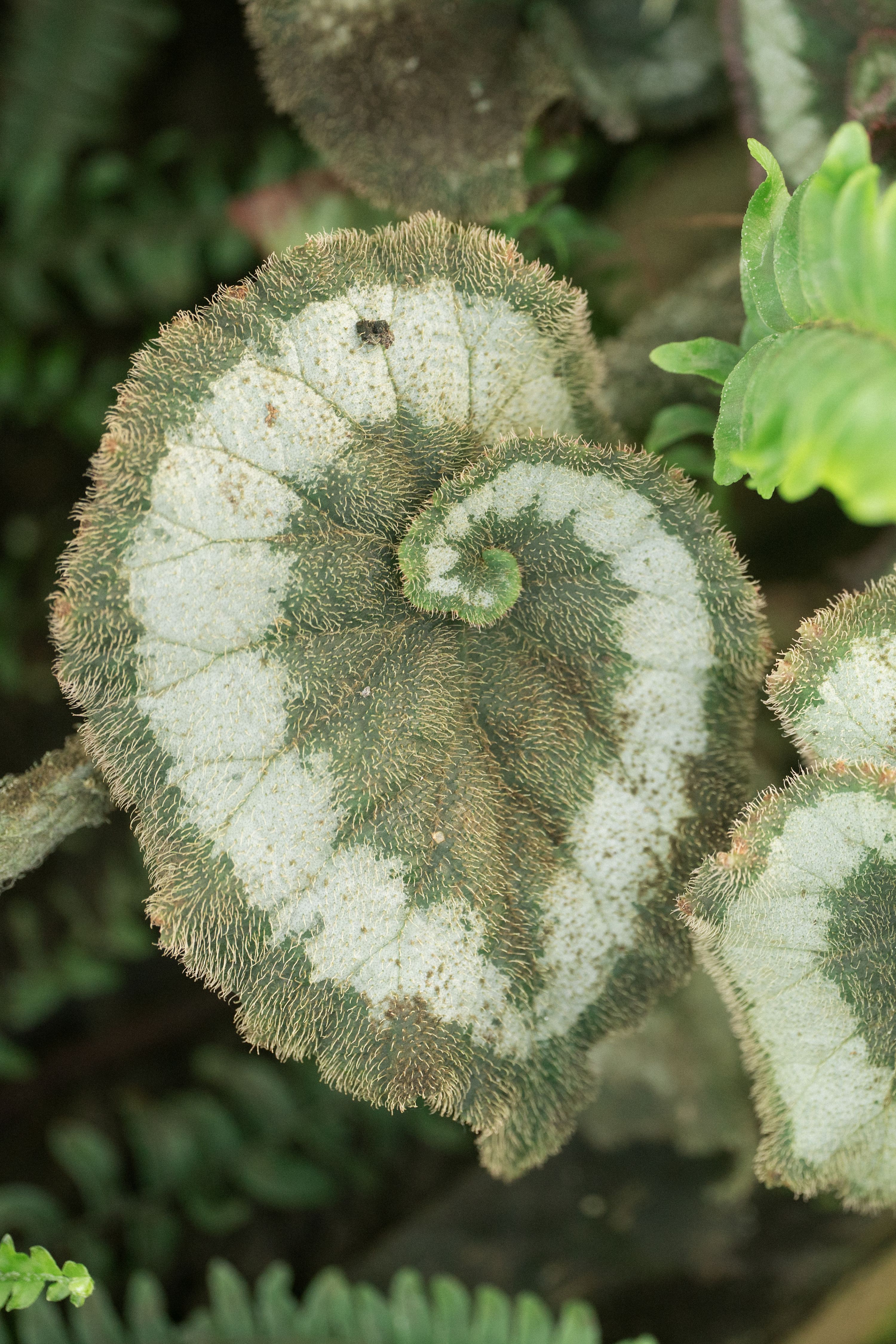
Spiral shaped Begonia ‘Escargot’ at the Butterfly House.
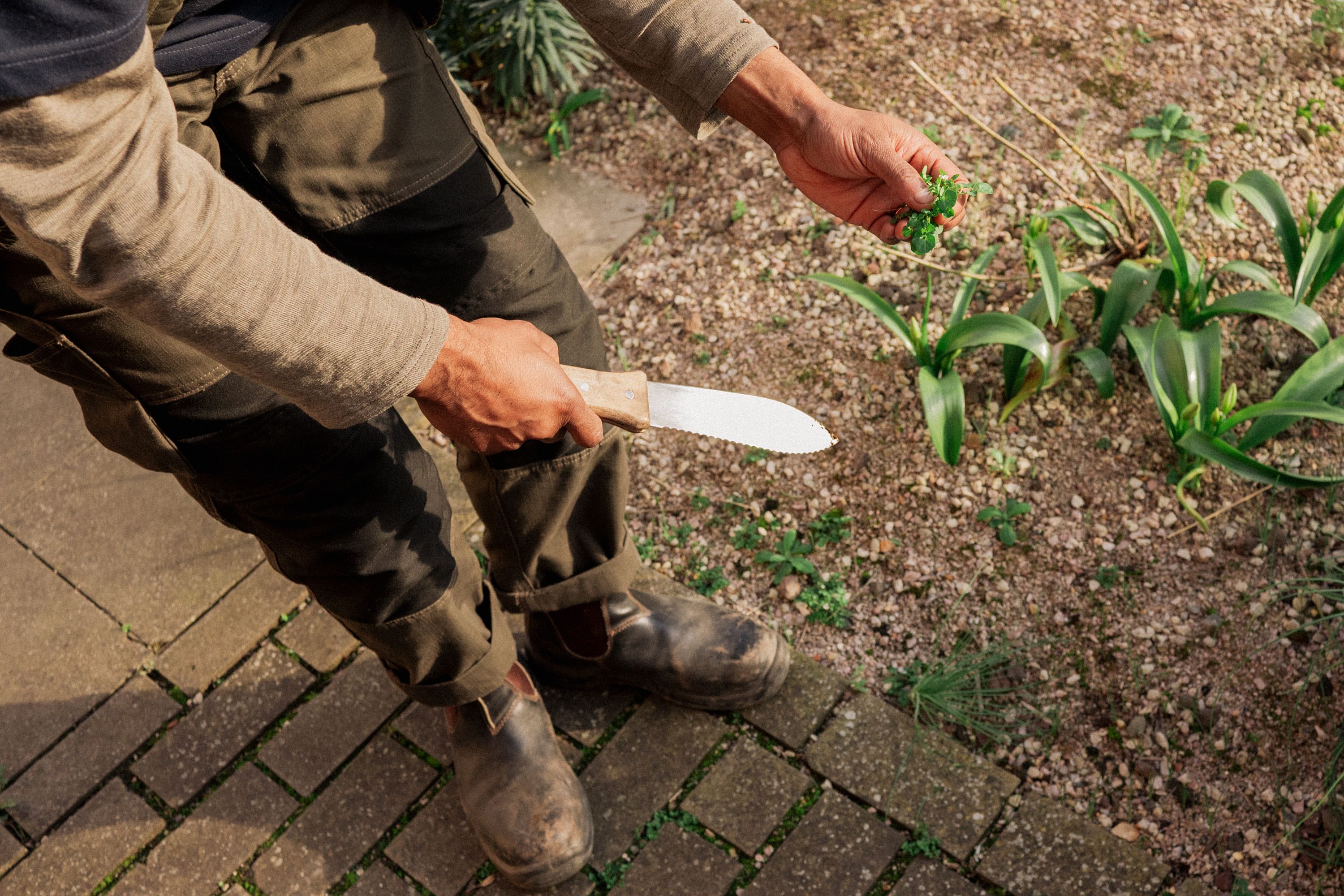
Errol digs up a self-seeded xerophyte in the Xerophytic Garden.
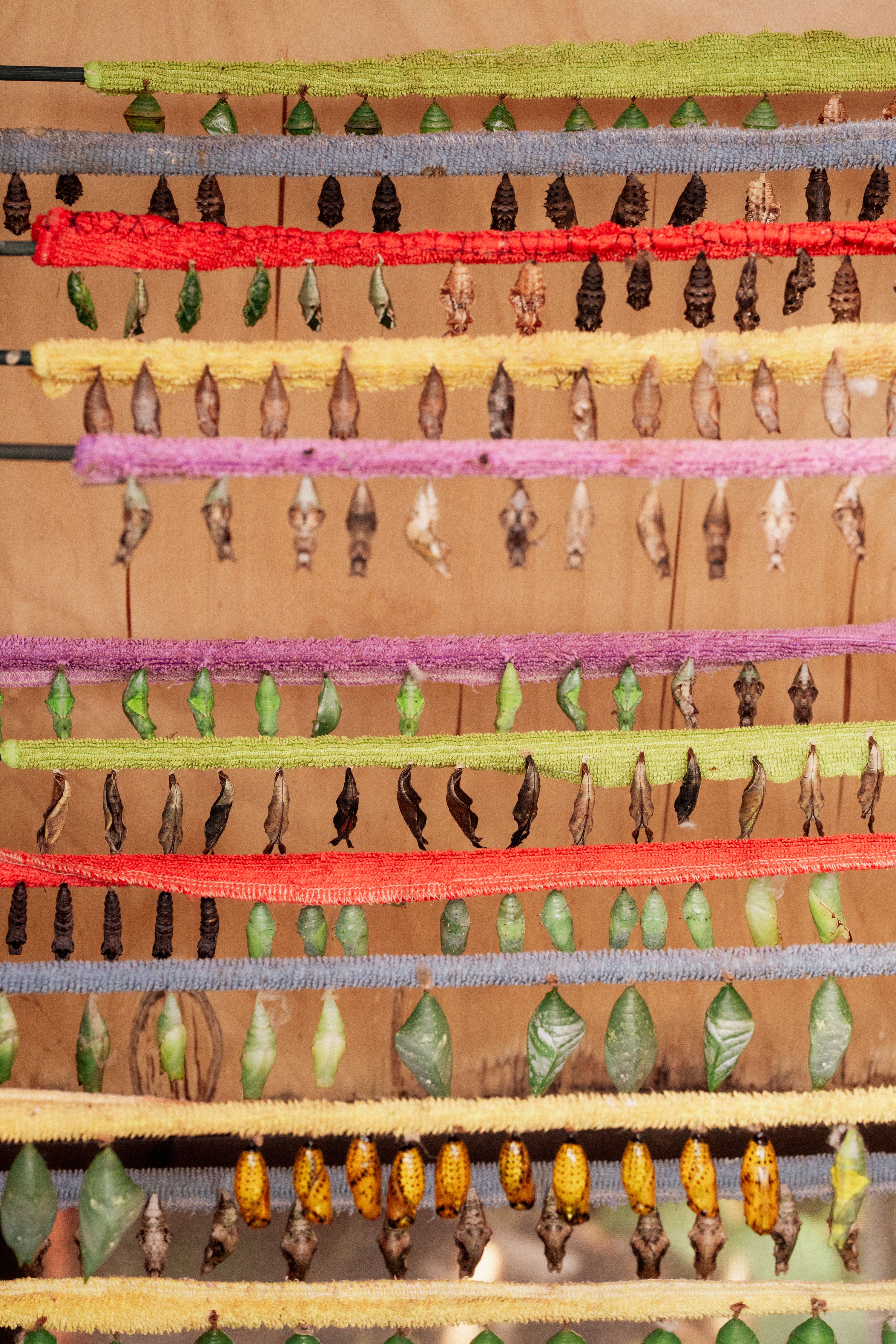
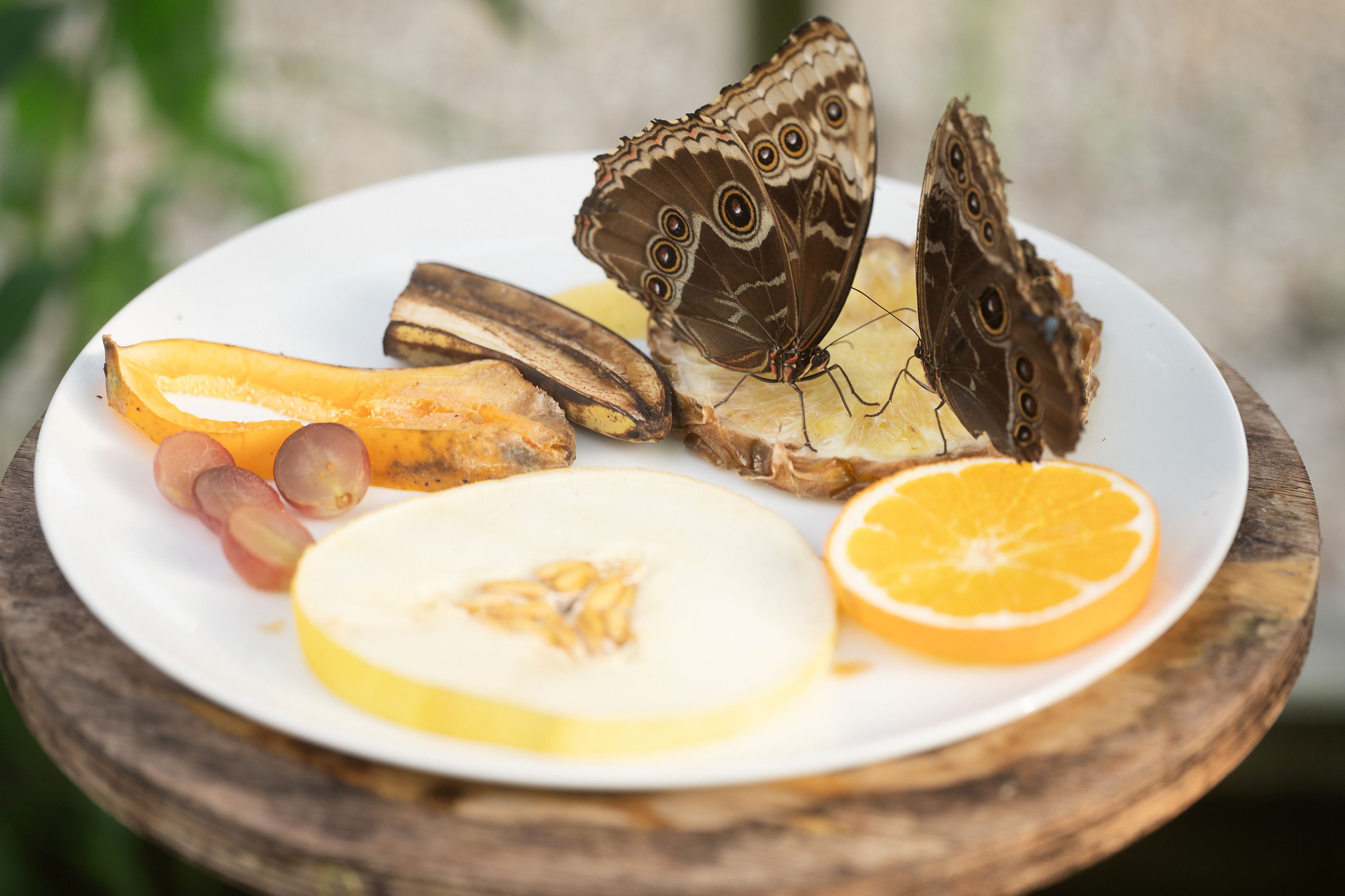
There are plenty of other exciting projects underway, including a state-of-the-art nursery with air-source heating and light-sensitive blinds which they hope will be finished in time to sow chillies and tomatoes – as well as a series of five new rainwater gardens. But all this would have to wait, as we headed to our last stop – the butterfly house. Hot, humid, and packed with unusual plants, the tropical garden brimmed with life – especially the metamorphosis zone, where hanging pupae (chrysalides) waited patiently to emerge.
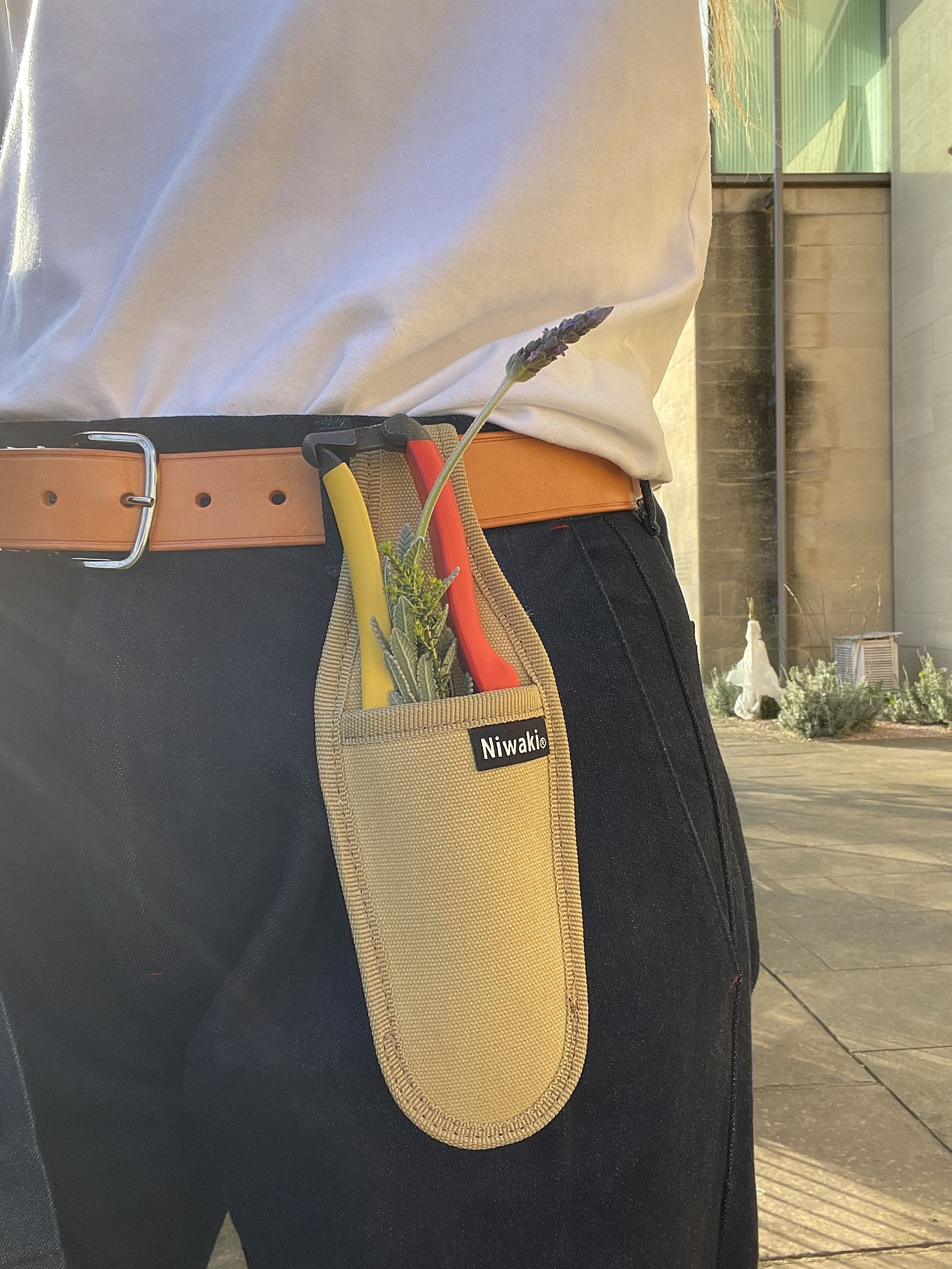
Heading back to the Xerophytic Garden to say our goodbyes, Hugh picked us a handful of Lavandula dentata (French lavender), Salvia ‘Allen Chickering’ and Agathosma, which together created a wonderfully fresh sandalwood scent – surely the beginnings of a bestseller: Eau de Horniman. I tucked the bouquet into my canvas holster and we headed home, determined to remember at least some of the new plant names we’d learned.
A big thank you to Errol and the team for having us. We look forward to seeing you again on Saturday 4 April 2026 for the plant fair.)