
The Wylding: floral studio
Is the Niwaki Landy too wide or are the Kentish country lanes too narrow? We’re on our way to The Wylding, but there’s no time to admire the quintessentially British summer views glimpsed between crowded hedgerows or to enjoy the anticipation of a day in the company of creative and interesting people in a beautiful setting. We’re far too busy keeping an eye out for early morning tractor manoeuvres, taking note of every passing place and praying we don’t need to reverse around any more hairpin turns. Just when we begin to fear we’ve taken a wrong turn, we pull into the driveway.
There’s the sneak peek of a red brick manor house through an intricate cast-iron gate, its delightfully shaggy borders spilling out towards sprawling lawns, and a woman striding toward us with a welcoming smile.
‘Welcome,' Riki calls out, with Stanley, the golden retriever, bounding along to reiterate the greeting.

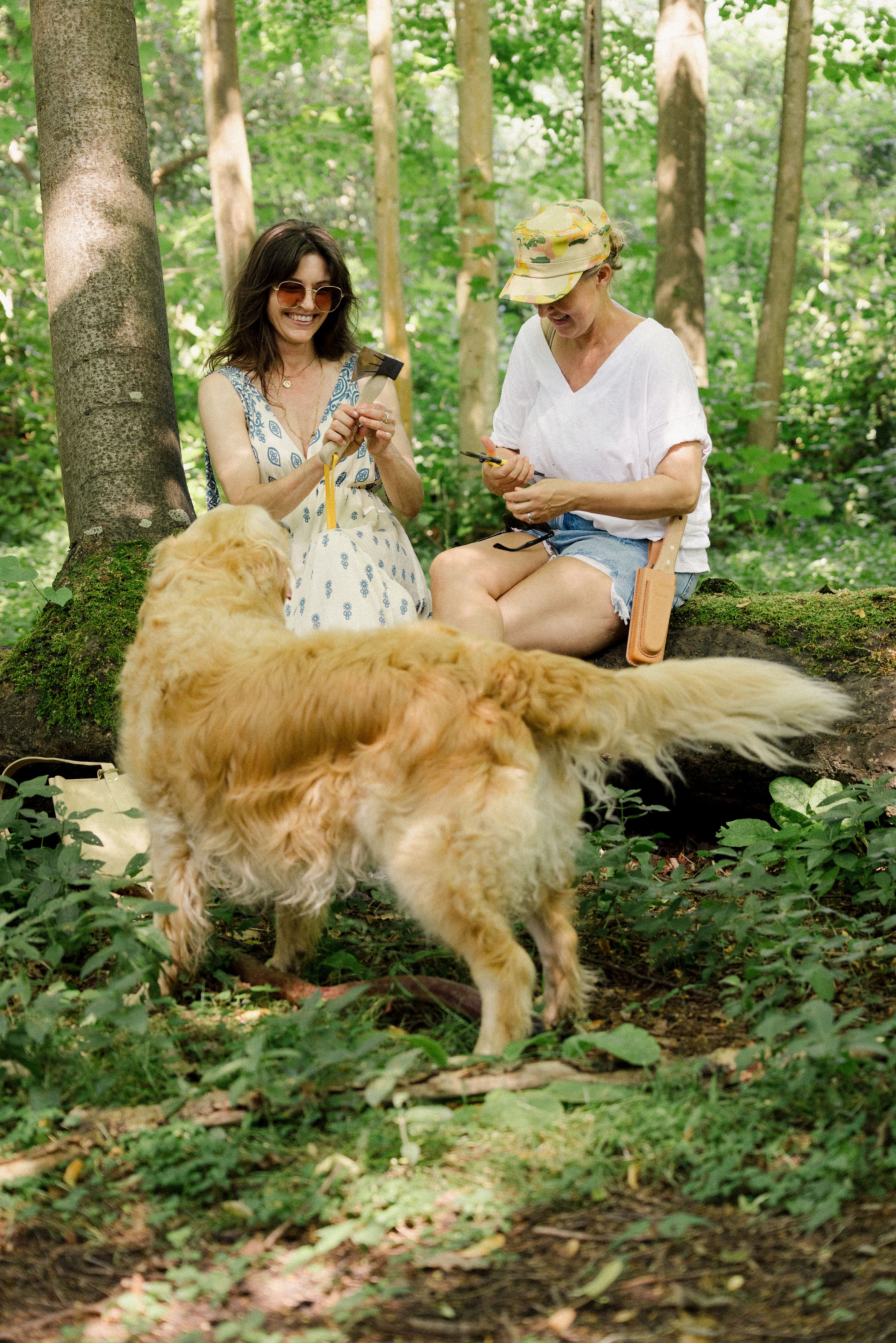
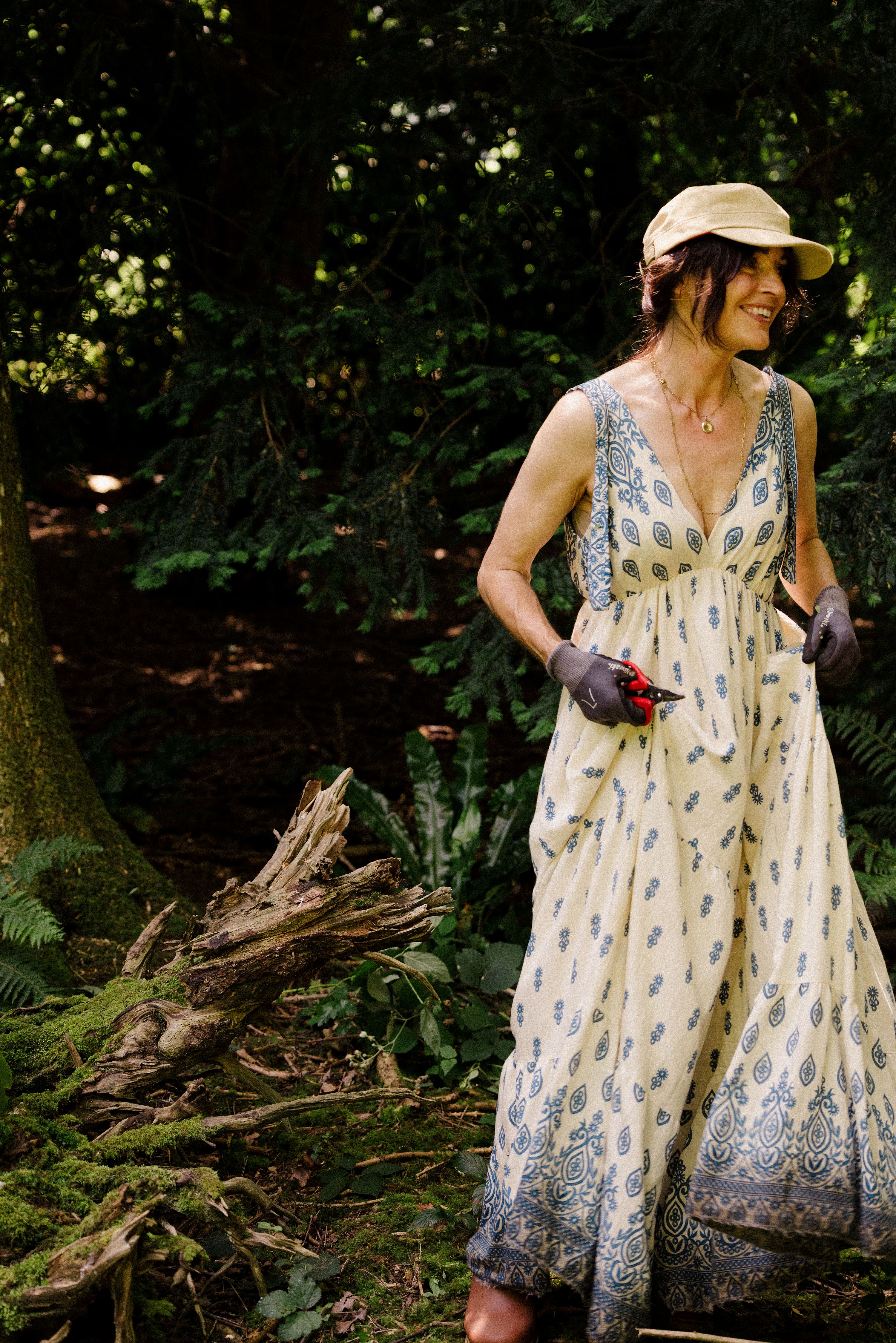
Tasha (left) loves the Mini Craft Hatchet – the perfect contrast to her floaty dress – but Stanley isn’t convinced and lets out a protective bark as it’s removed from its leather sheath
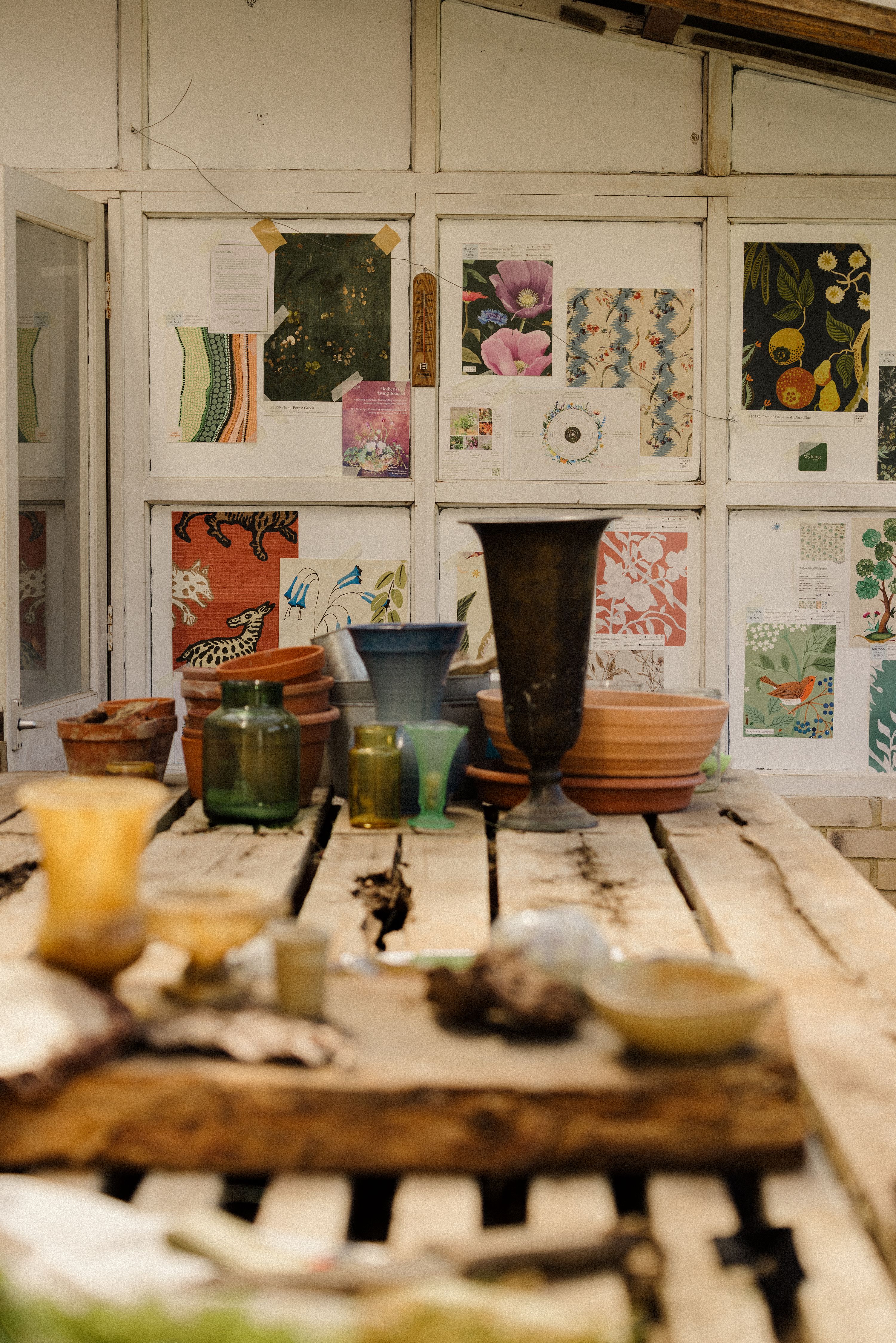
Wallpaper samples, vases, dried flowers and copies of the Celtic calendar fill the Wylding studio
‘The Wylding,' Riki informs us, is relatively new. Riki and Tasha, who appears in an enviably floaty dress (it’s already scorching hot at 9am), met doing the school run in North London, where they are also neighbours.
The Wylding isn’t the first time they’ve worked together. Before floristry, their separate careers (Riki, a documentary producer and Tasha, a branding specialist) brought them together on several projects, with their shared love of storytelling making them an effective team. Fast forward a few years, and Tasha had retrained in horticulture while Riki was spending more time at her husband’s family home – where we find ourselves today – getting to know the gardens and grounds.
When the pair volunteered to create the floral displays for a restaurant opening in London – and diners and curious passers-by began to admire their work – they realised they might be on to something.
‘We weren’t florists," Riki tells us, “but we got asked to do enough things that eventually we said, maybe we should be florists.'
And so they did. Today, The Wylding creates flowers for celebrations, farewells and private commissions, including work for The Guardian, BBC and even a wedding that featured in Vogue. But they’re not conventional florists. Nor is the old English spelling of Wylding a purely aesthetic one.
Riki – originally from Michigan – first visited the UK after working in Africa with the Peace Corps. There she met her husband, Nick, who was volunteering with VSO. After three years in Namibia with no electricity, no running water, and very little to do but talk, Nick had somehow neglected to mention his impressive family home.
‘Dude – you’ve got to warn people!' she remembers saying, the first time they visited on a cold December some years ago. Despite the initial shock – and the lack of central heating (since remedied) – it was easy to fall in love with the place.
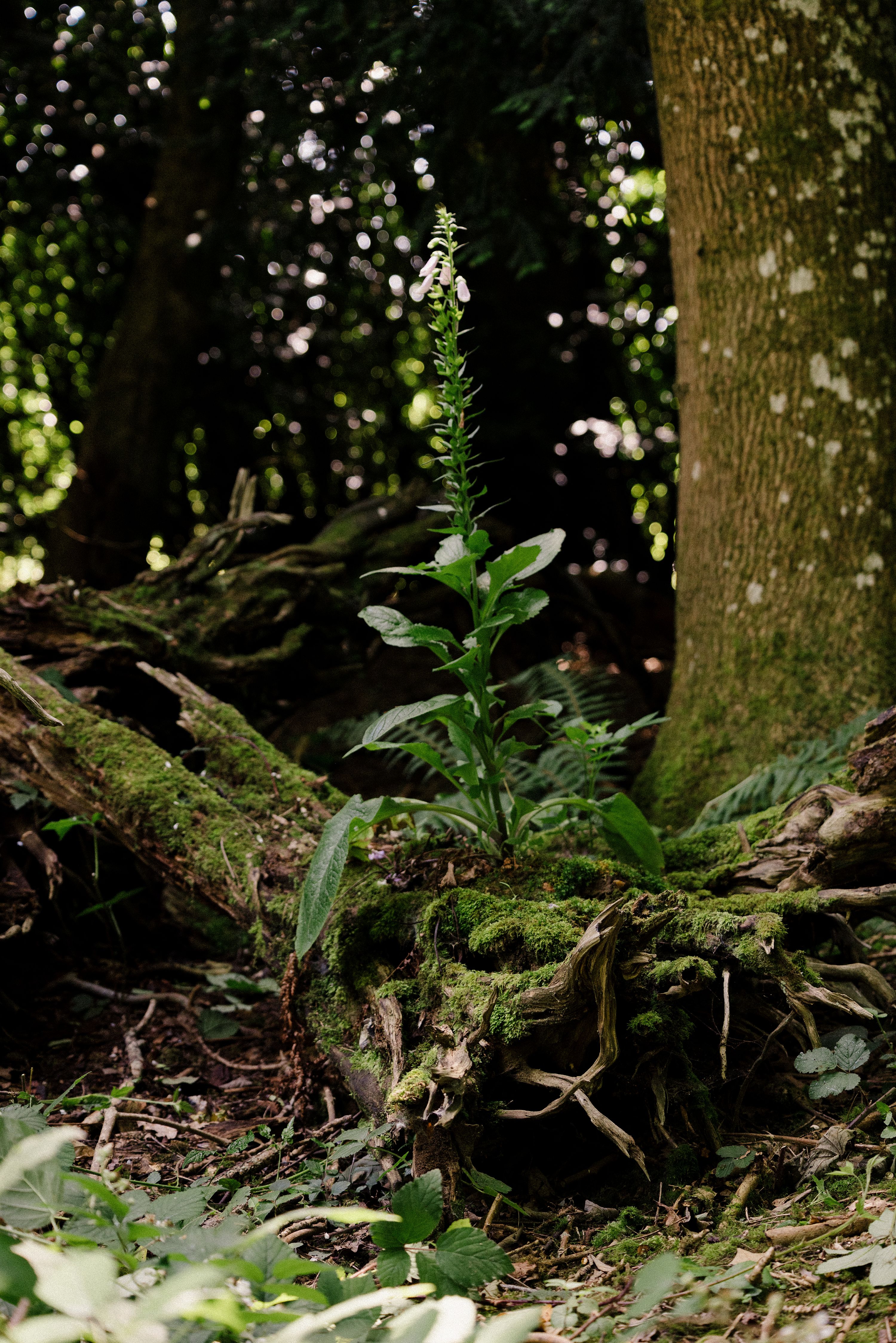
A lone foxglove growing from a fallen log in the ancient woodland.
Riki – ‘Before I set foot in this country, I probably could have told you three flowers. Then my mother-in-law, as a way of acclimatising me and making me feel at home, took me around the garden and taught me. She knew all the Latin names, too. That’s where I found my passion. It was 100% because of her.'
It turns out the gardens were also home to some very ancient woodland, which Nick and his family had always referred to as ‘The Wylding.’ As erstwhile English Lit. students, Riki and Tasha, were drawn to the name for its literary associations. This is Chaucer country, after all, and the Canterbury Tales even includes a reference to a nearby pub. ‘Wylde’ is a very Chaucerian word, Tasha explains, used to describe Alison, the carpenter’s daughter in the R-rated Miller’s Tale: ‘For she was wylde and yong’. Alison is unruly, impossible to restrain, and bursting with energy: characteristics that match their own approach to floristry – particularly in midsummer, when the whole estate is overflowing with green life.
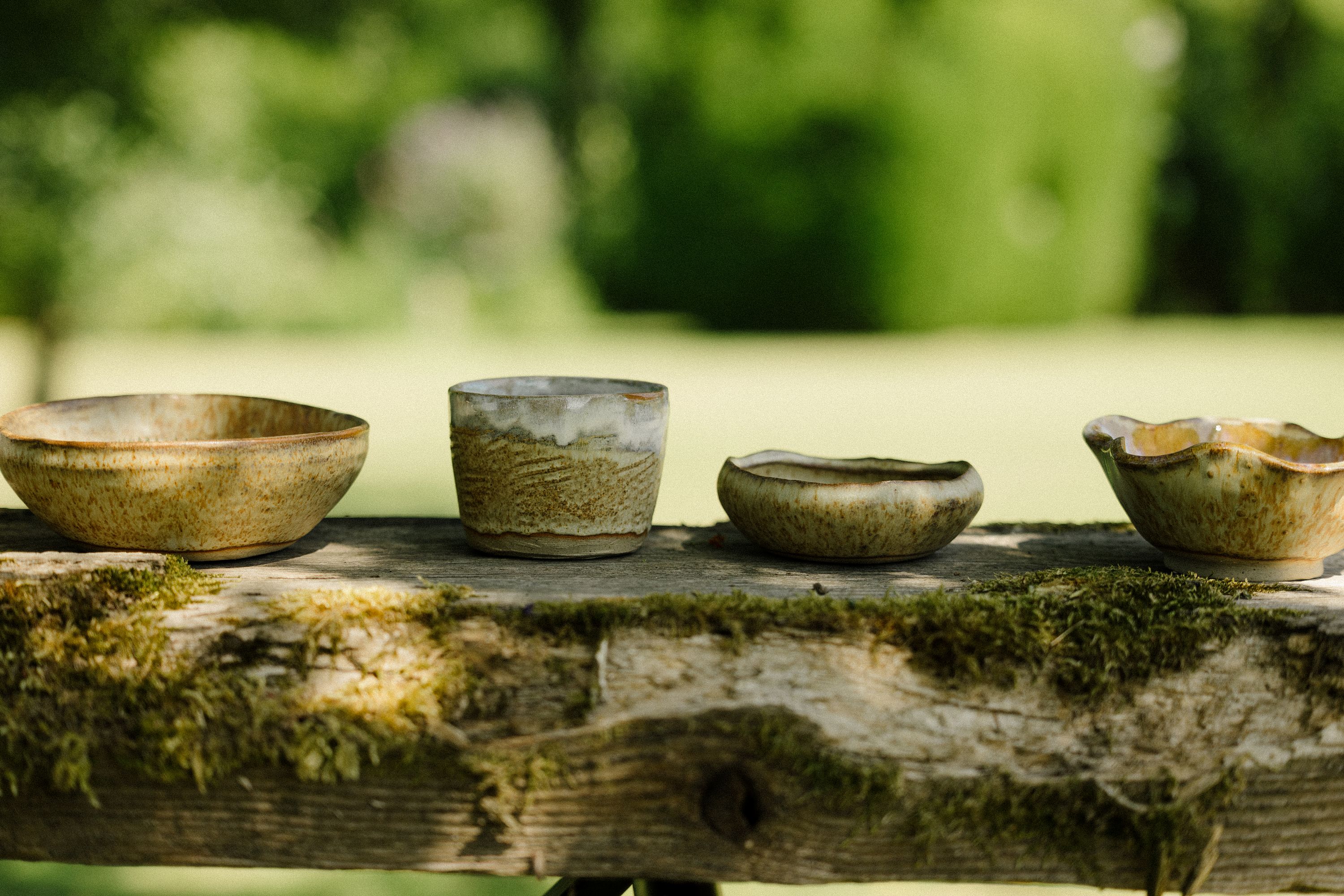
A selection of Tasha’s handmade kenzan bowls
From the house, we wander over to the studio. Pinned to a corkboard are wallpaper cuttings by Josef Frank (Tasha’s preferred form of anti-Pinterest inspiration) and a copy of the Celtic calendar, which helps to shape the rhythm of their floral creations. Tasha is currently experimenting with garlands for Midsummer’s Eve, traditionally displayed around doorways as a means of celebration – and a thank you to the faerie folk who hang about at this ‘thin’ time, when the bond between their world and ours is said to be at its weakest. The flowers she has chosen are symbolic: St. John’s Wart, to ward off evil spirits, and oak to honour the folkloric battle between the Oak King, who rules from midwinter, and the Holly King, who defeats him at midsummer, ushering in the shortening days. This additional layer of meaning and narrative is a thread in all of Tasha’s workshops, whether it’s an ikebana session built around asking yourself what to keep and what to let go of, or a non-traditional Christmas wreath.
‘Of course we want the work to be pretty, ’ she says, ‘but I always start the workshop by saying pretty isn’t enough. It’s going to be pretty, given what we’re working with. But don’t make that your goal.’ Instead, she encourages people to push themselves beyond the boundaries of what’s comfortable. “Not necessarily to think about nature," she says, “but about something in their lives. Or as a means of expressing themselves” The same approach extends to farewells, where every commission begins with a conversation. “It’s a difficult time for people to talk,” Riki explains, “but we try to find out what that person was like and what they loved, and then we always write a tribute saying what flowers we’ve picked and why. On one occasion, for an individual who loved pink, she describes a casket topper made from the hollow of a silver birch tree, overflowing with clouds of cherry blossom.
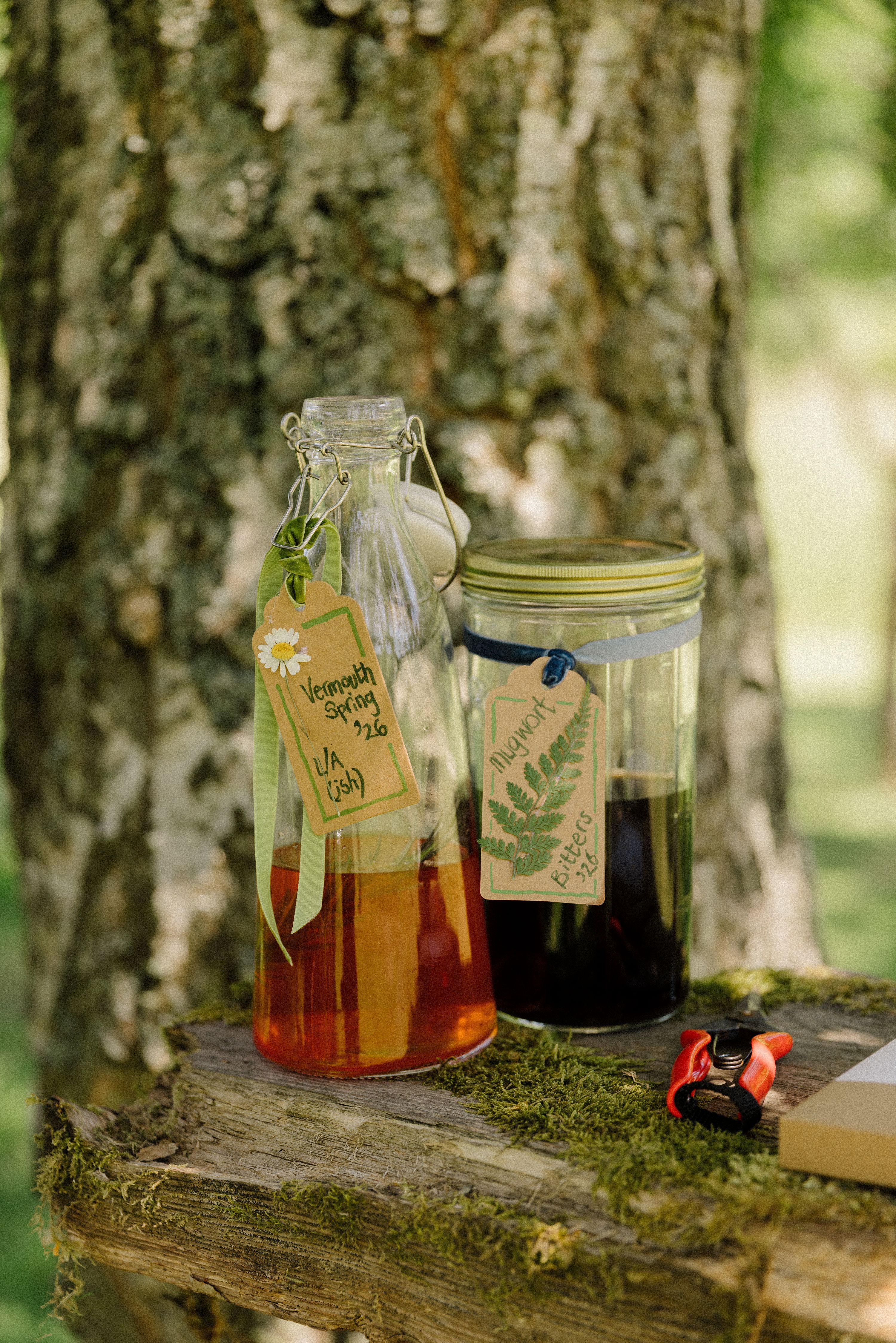
Homemade vermouth infused with seasonal botanicals
This style of floristry is also present in their living bouquets, where flowers are rooted within natural structures that can be left to decompose, or planted on. ‘We still have people sending us pictures of their Mother’s Day bouquets’ Riki says, pulling out her phone to show us some examples. Others hold hidden reservoirs of water, allowing stems to be refreshed while the vessel lives on. Keeping flowers alive this way requires careful mechanics – and plenty of experimentation – which is where Tasha’s scientific tinkering comes in.
Picking up one of her clay kenzan holders, she explains her recipe for moss milkshake. An earthy concoction that can be painted onto any porous surface (such as unglazed clay) and left in a dark, damp environment to grow quietly for four weeks. The same technique can be used to create moss-covered floral collars – rather like napkin rings – that sit on the rim of a vase, helping to direct the stems and hold water.
Another current obsession is mycelium – evident from a box of Reshi that she’s yet to open. ‘You’re meant to do it straight away,' she laughs, but a small mushroom has ignored the instructions and pushed through the cardboard anyway. Once cured, the mycelium becomes sufficiently waterproof to form biodegradable vessels. Or, she explains, it can be packed together with willow and clay – rather like wattle and daub –to enhance other natural materials (an artistically fallen log, perhaps).
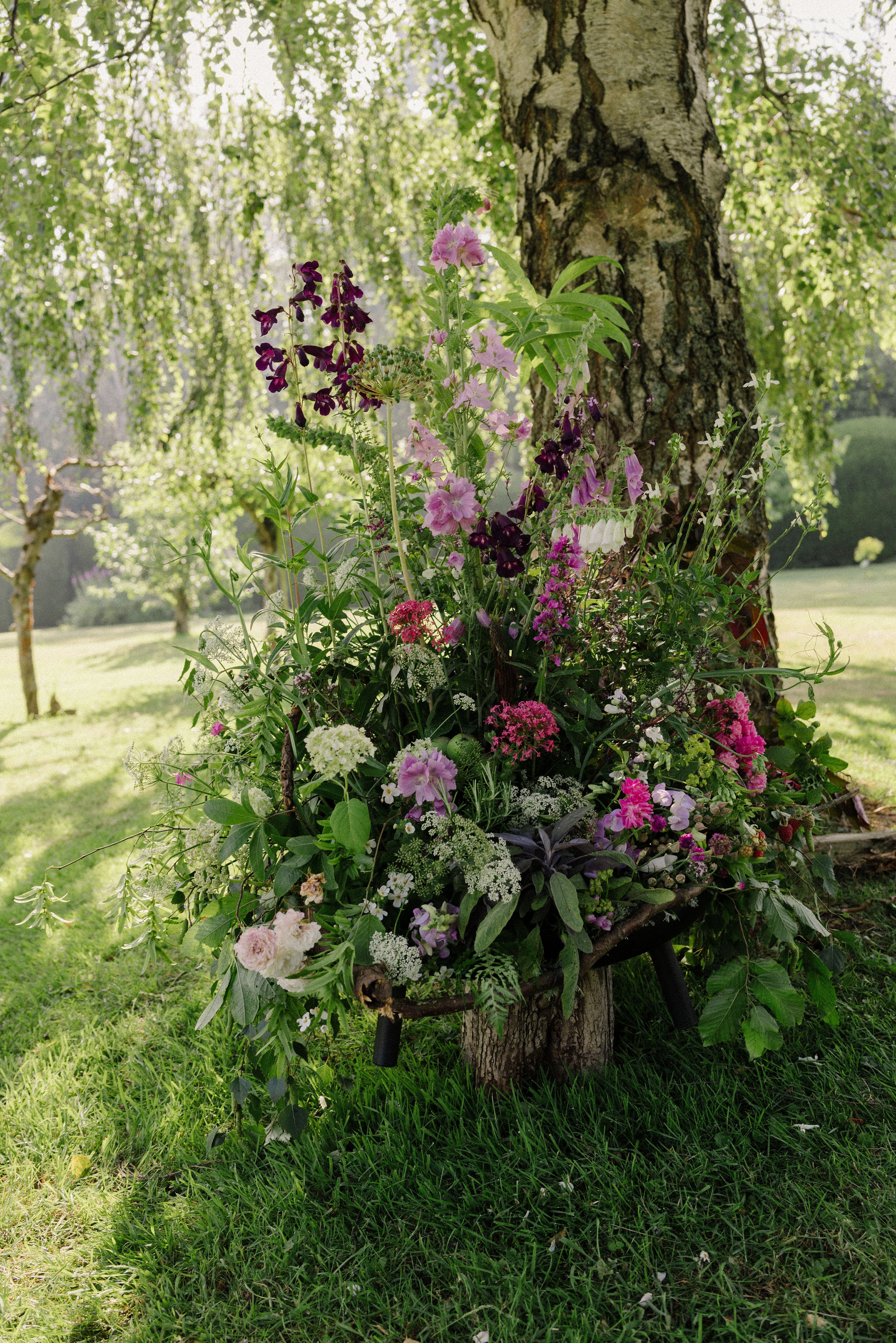
More habitat than centrepiece. Tasha’s living installation includes edible plants and a small drinking point for birds and insects.
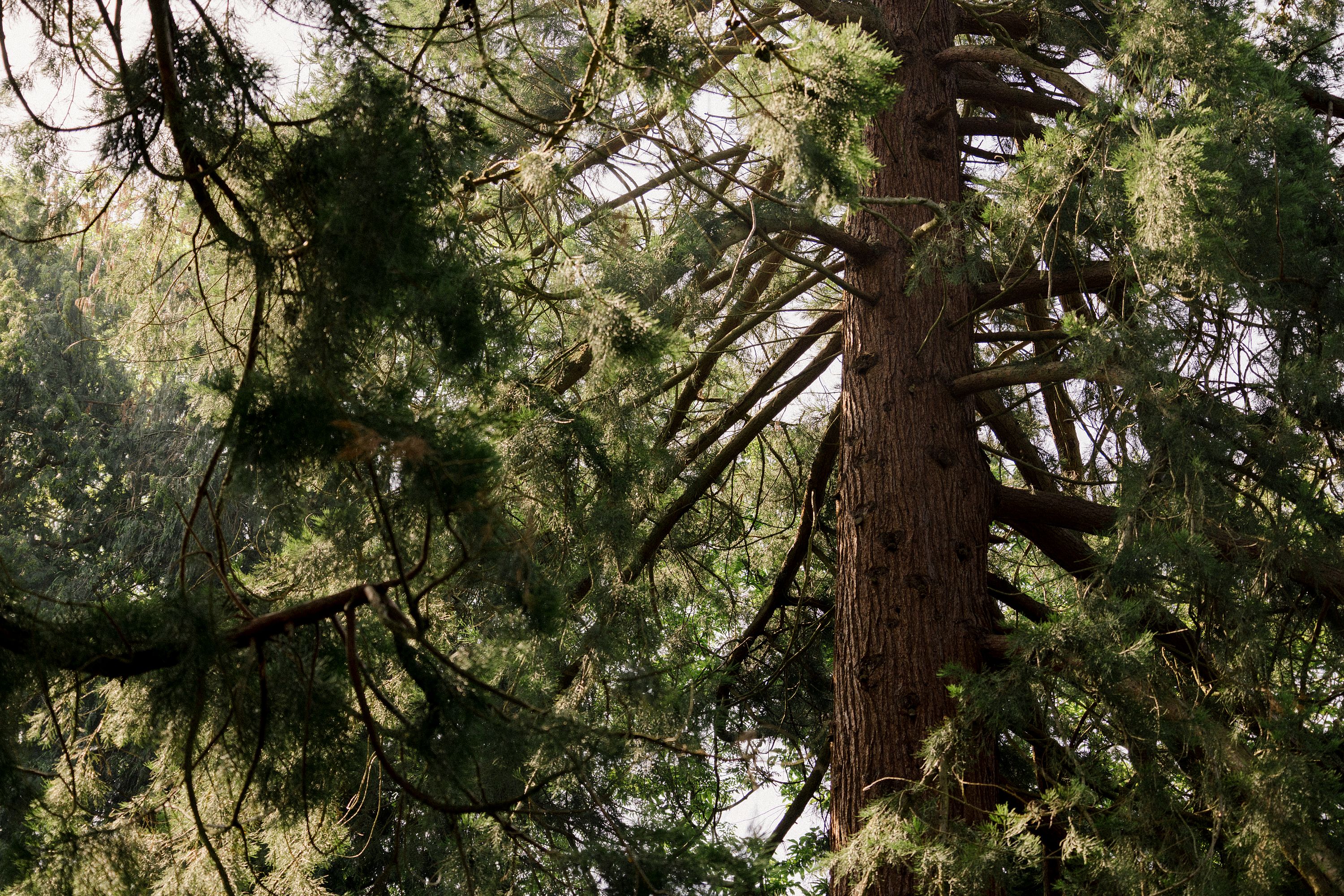
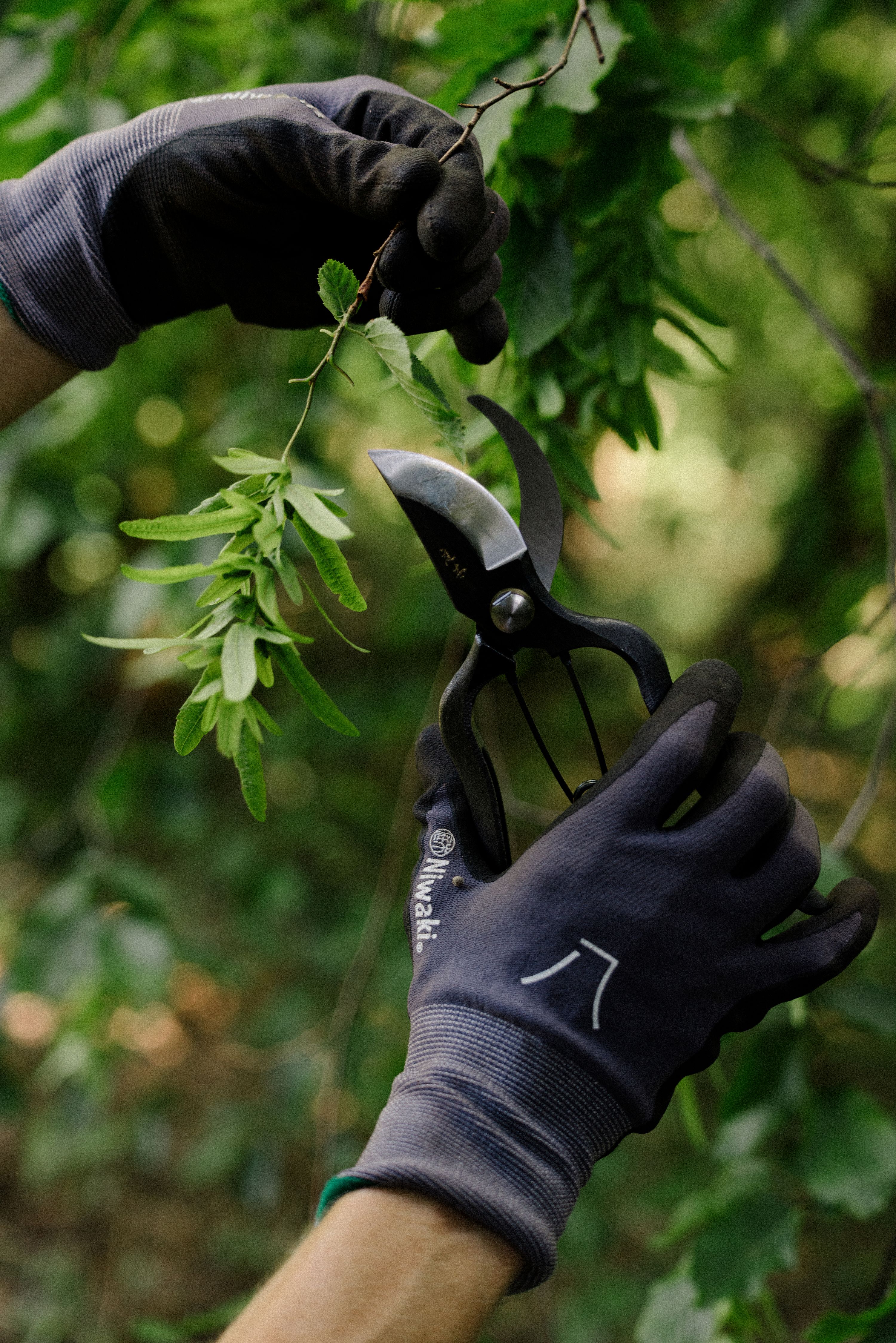
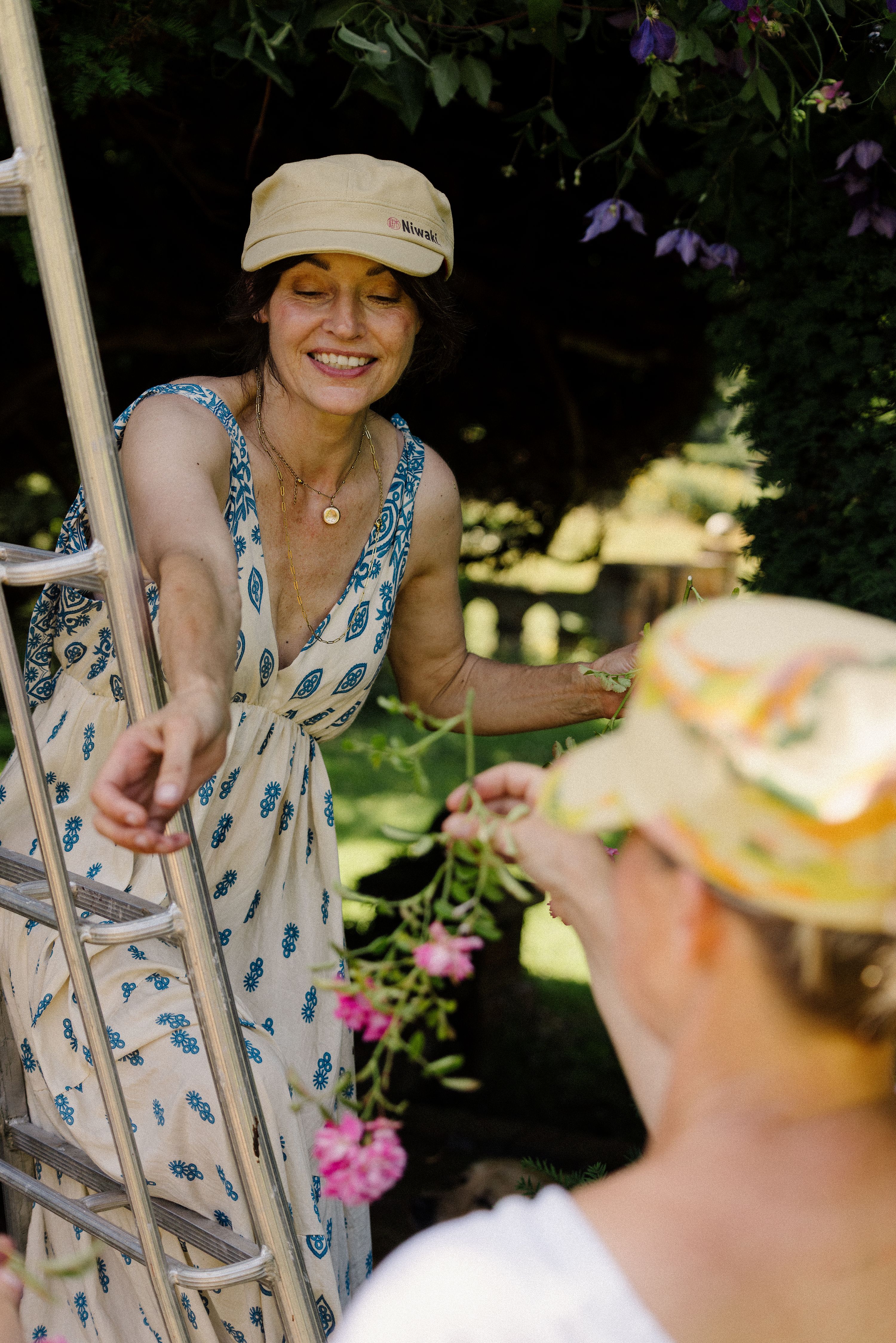
As we reach the hottest part of the day, it’s agreed that we should take refuge under the woodland canopy. The first section, known as the Lime Walk feels ancient but actually dates back to the 1850s, reflecting a Victorian fascination with exotic specimen trees rather than native woodland. Towering redwoods line the paths, alongside vast rhododendrons planted for ornamental effect. The redwoods, it turns out, are an excellent source of natural material. Planted very closely together, they raced skywards but have proven to be weaker and more prone to falling than in the wild. The rhododendrons – a source of contention – are now considered invasive in British woodland. ‘We’re trying to learn to love them,' Tasha jokes, snipping a few carefully chosen stems with a pair of Niwaki Sentei Secateurs. She finds their evergreen foliage to be surprisingly useful in winter arrangements. ‘We love bends,' she adds, holding up a twisting branch. “We’re always saying, where are the dancers?'
Tasha – ‘Of course we want the work to be pretty. But I always start the workshop by saying pretty isn’t enough. It’s going to be pretty, given what we’re working with. But don’t make that your goal.’
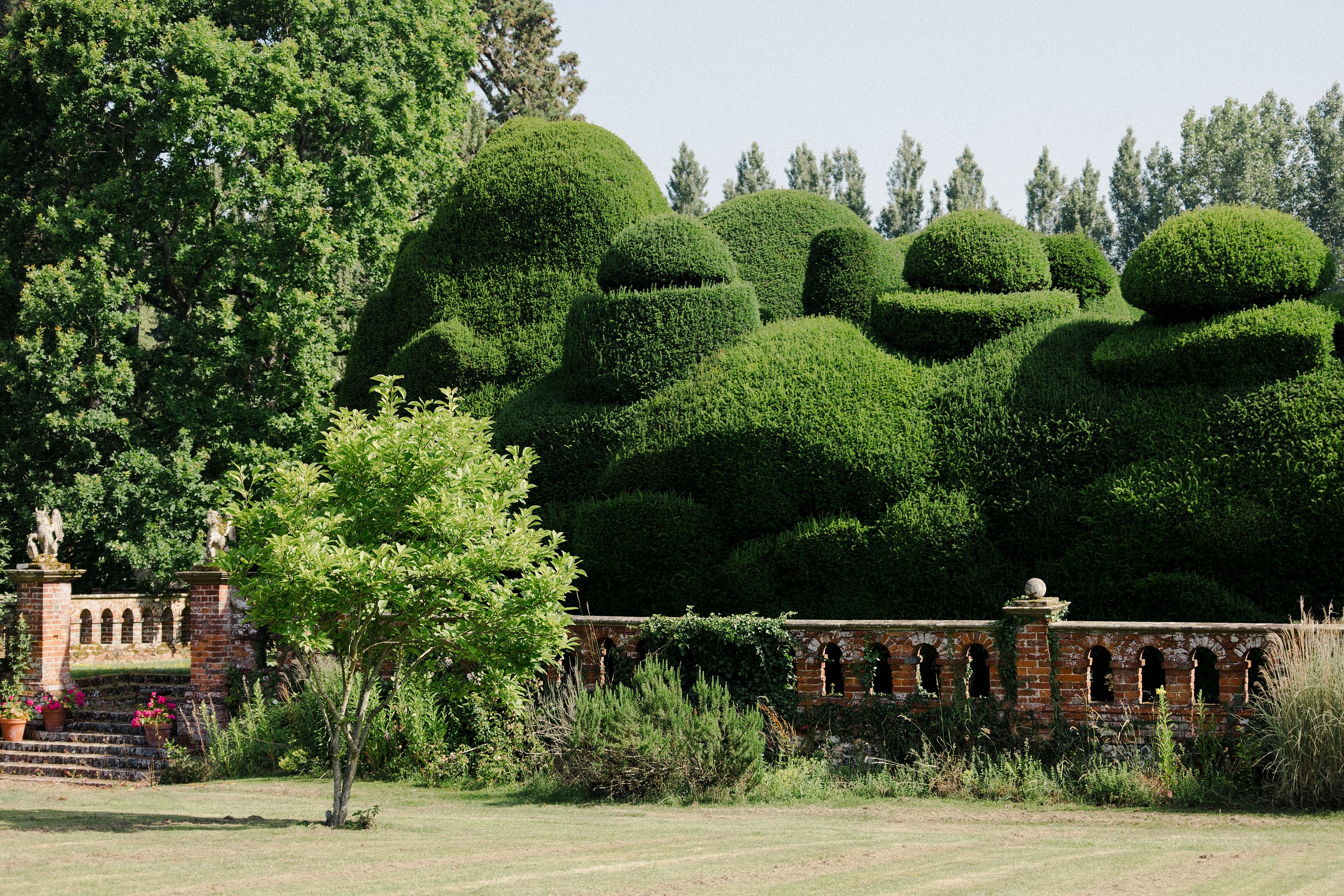
The estate’s famous yew hedges believed to be up to 700 years old
Next, we venture into the second, much older woodland – where we come across organised piles of sticks and carefully placed logs that Riki and Tasha have discovered on their foraging trips. Many of these ‘natural vessels’ are returned to their original habitat so as not to disturb the balance of things, and Riki explains how they leave markers to ensure they can be placed back in almost exactly the same spot. ‘Or, if we do a bigger forage, we give back by planting something new,’ she adds. The same philosophy extends beyond the woodland. ‘We always do our best to make sure our arrangements don’t end up in the skip. We’ve had wedding couples replant their arrangements to create their first garden, or gift them to members of the wedding party. We’re also happy to collect arrangements after an event and donate them to a local care home.'
The contrast to the Lime Walk is abundantly clear now. Instead of neatly curved paths, we have dark, gnarled passageways, wild foxgloves, fungi, and six different types of intricate moss. The trees here are likely markers of ancient boundaries that predate the house, possibly all the way back to the 11th century. Tasha points out an ancient field maple that the Kent Friends of The Trees (a local environmental charity) get particularly excited about. They believe it could have stood there for 500 years, making it perhaps the oldest in the county.
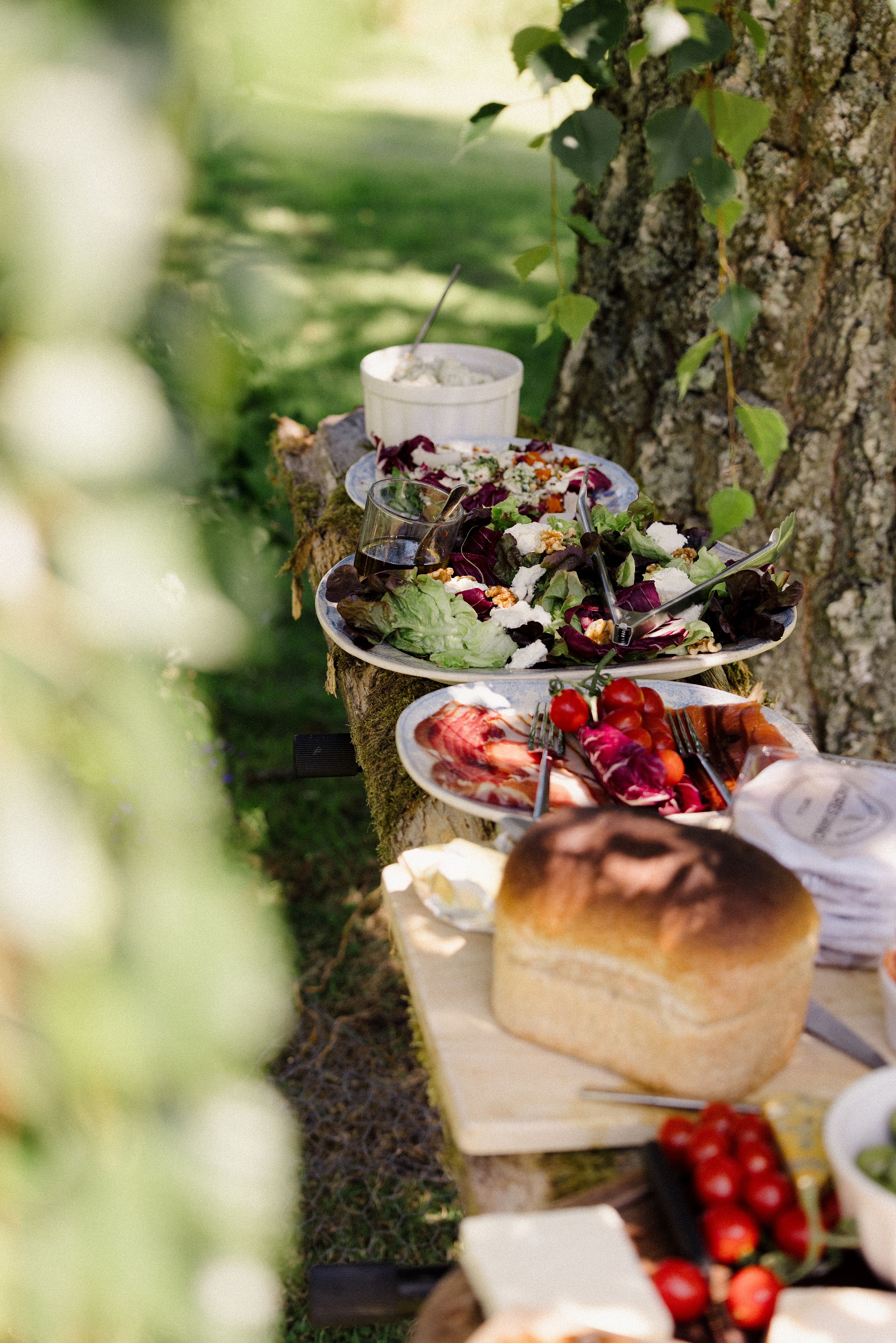
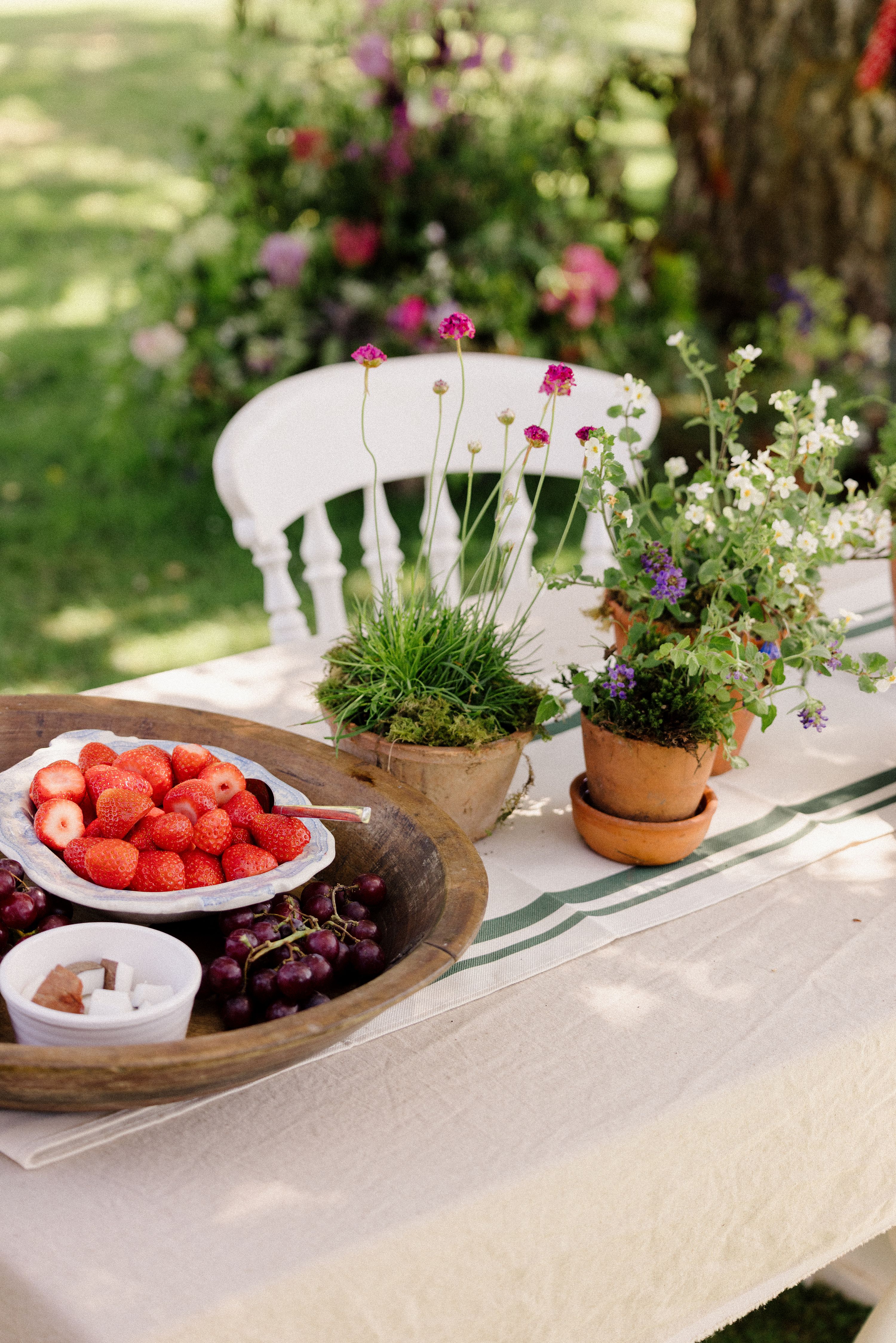
We pause for lunch under a shady hornbeam, its delicate catkins swaying in the breeze like wind chimes – another of Tasha’s dancers. She’s particularly fond of the silver birch catkins that are about at this time of year, finding space for their acid-green where she can in her arrangements. Lunch, prepared by Riki (the group’s self-appointed ‘feeder’), is a welcome continuation of our wild morning, with local cheeses, fruit and cured meats (some from Knepp, the famous rewilding project in West Sussex), alongside Tasha’s homemade vermouth, diluted with kombucha. This, like her flowers, changes with the season – light and floral in the summer (scented with geranium, chamomile and rose), and woody pine in winter – delivering a taste of the woodland at different times of year.
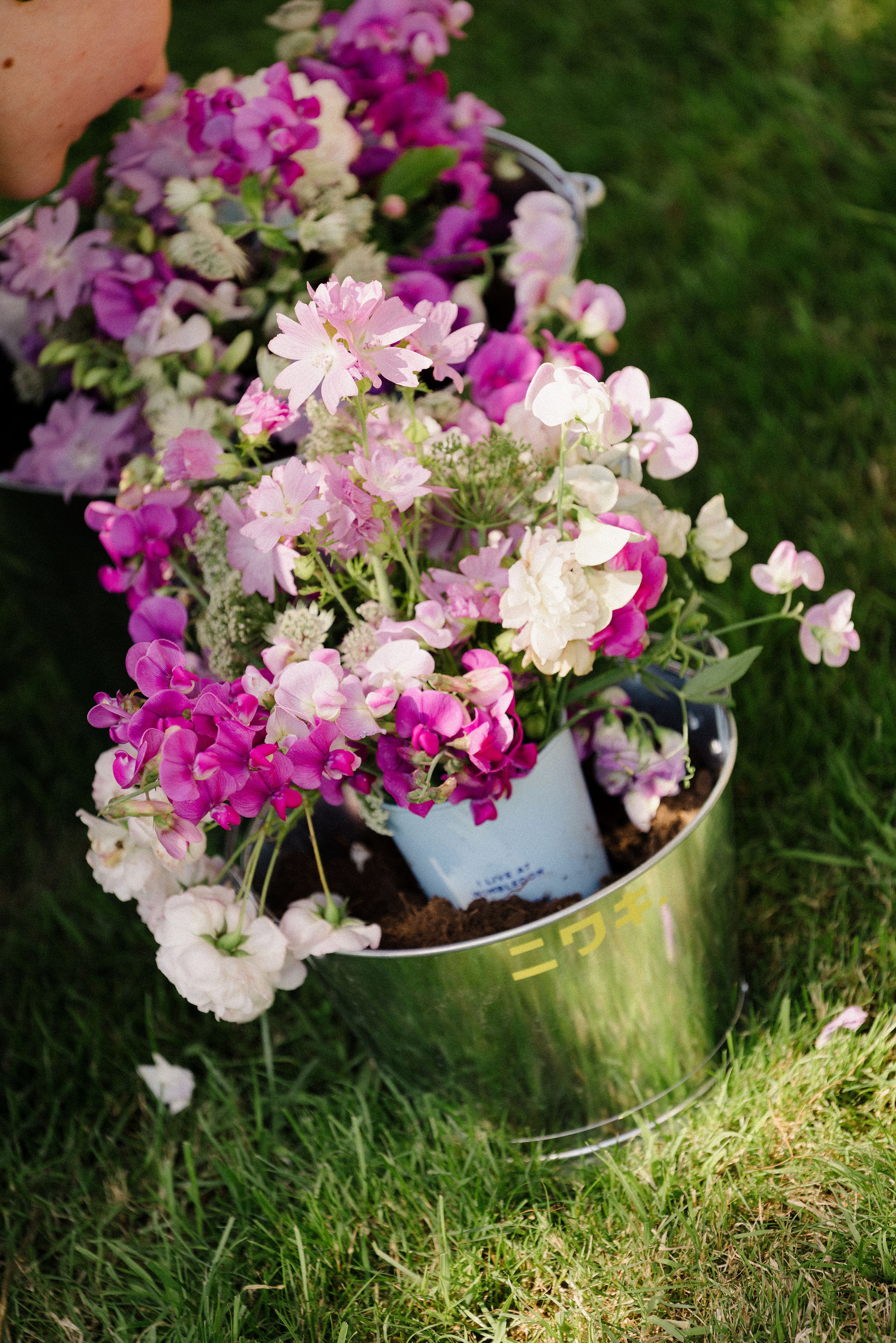
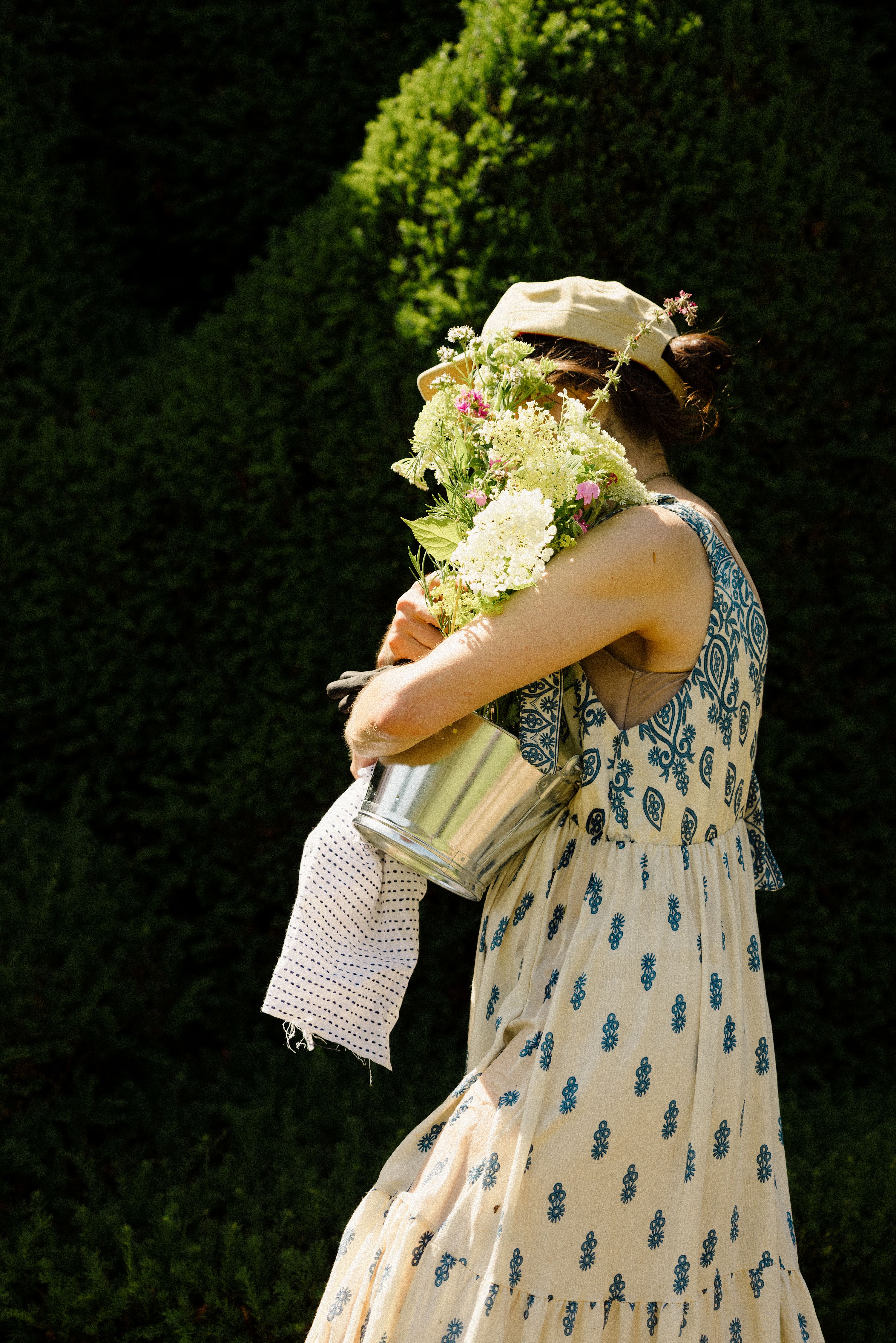
A bouquet of freshly picked flowers and a bucket of Kentish soul, thoughtfully prepared by Riki.
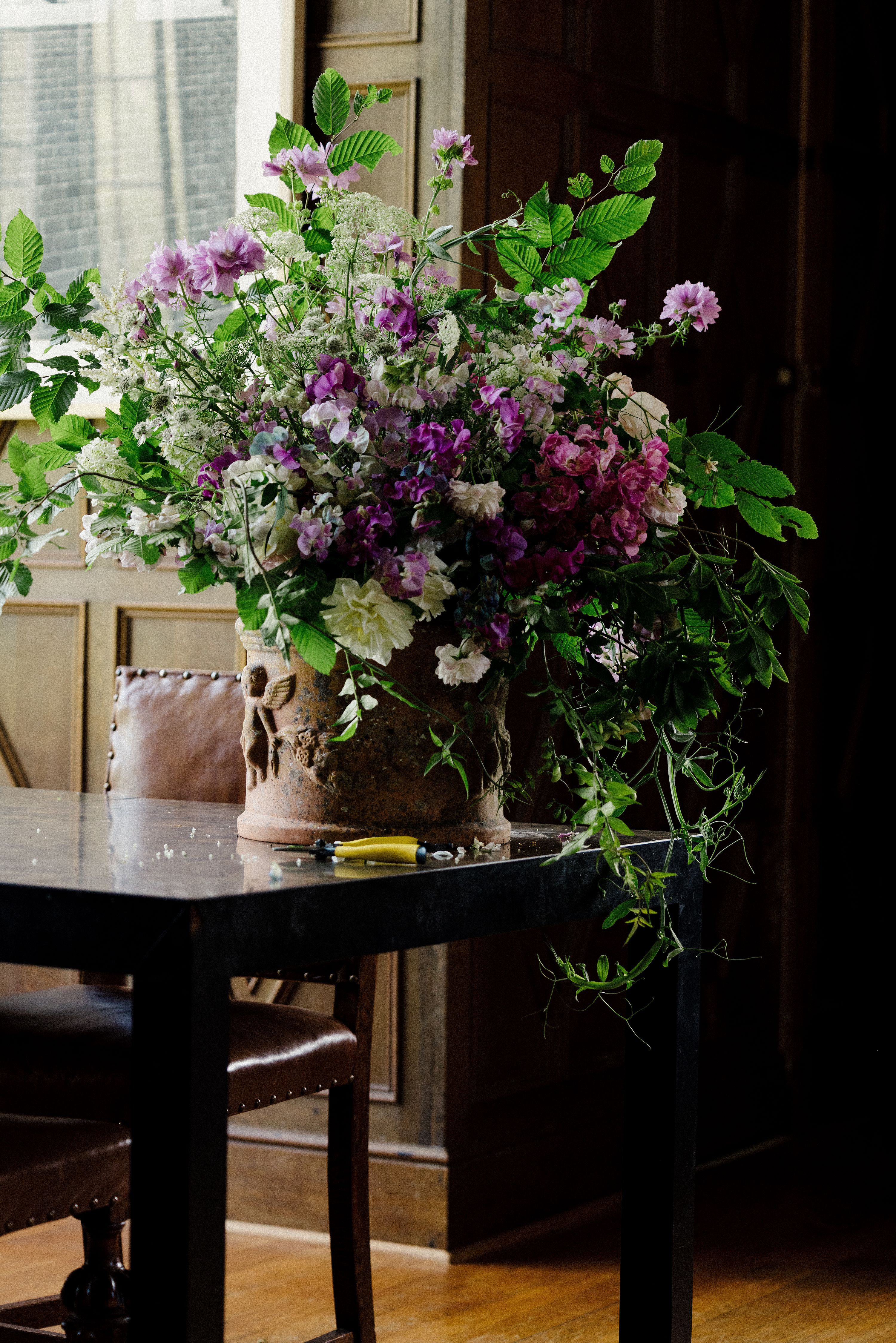
Riki’s arrangement for an upcoming engagement party
Tasha – ‘We love bends. We’re always saying, where are the dancers?'
Well-fed and suitably refreshed (Riki quite literally hosing us down – it was 34°C after all), we move on to see two current projects that are taking shape: a large floral installation for an engagement party, sheltering inside from the afternoon heat, and a living vessel for a restaurant with a menu centred around seasonal, foraged ingredients.
Had we visited a week earlier, Riki points out, these creations would have looked completely different. ‘We’re at the turning point because it’s Midsummer – things that were in full glory have gone over.' Both arrangements are unmistakably Wylding: frothing with locally gathered foliage and seemingly on the verge of spilling beyond their containers. Yet they, like their creators, each have their own character.

Riki describes her work as more structured, with a greater emphasis on flowers (she’s particularly fond of wild roses and umbellifers), while Tasha’s tends to be looser and more conceptual. Designed to mirror the restaurant’s changing menu, this living installation includes edible treats such as crab apples and raspberries, as well as a drinking point for birds and insects – reinforcing the idea of feasting. ‘In every arrangement, we’re trying to create what’s happening here,’ she says, adding, ‘the woodland informs everything we do.’ Both are aware of the freedom this offers them. They don’t charge by the stem, and there are no flower recipes, so abundance never has to be rationed.
It sounds idyllic, but it’s not necessarily the easy option. As our own meandering tour of the estate proved – frequently interrupted by misplaced tools, interesting fungi and unusual sticks – foraging is slow. More often than not, Riki explains, it would be cheaper to buy the flowers.
As with their bouquets, Tasha and Riki’s generosity extends right to the end of our visit, when they insist we each leave with a bucket of their Kentish loam – the nutrient-rich, moisture-retaining blend of sand, chalk and soil that makes the place so fertile. “That’s why Kent’s called the Garden of England”, Tasha adds, “because the soil is so good.”
As we head back towards the truck, sandwiches packed and a bouquet of pink flowers in hand (both prepared by Riki), she points beyond a high brick wall to another part of the estate we haven’t had time to explore. ‘Next time,' she smiles. A few days later, we emailed Tasha to ask what she’d recommend growing in the supplied Kentish soil. She replies with a wonderfully detailed list: hart’s-tongue fern, dog’s-tooth violet, lily of the valley, alpine strawberries and wild garlic, for starters. We vow to experiment over the coming year, but settle on foxgloves first – an appropriate reminder of the ancient Wylding.


