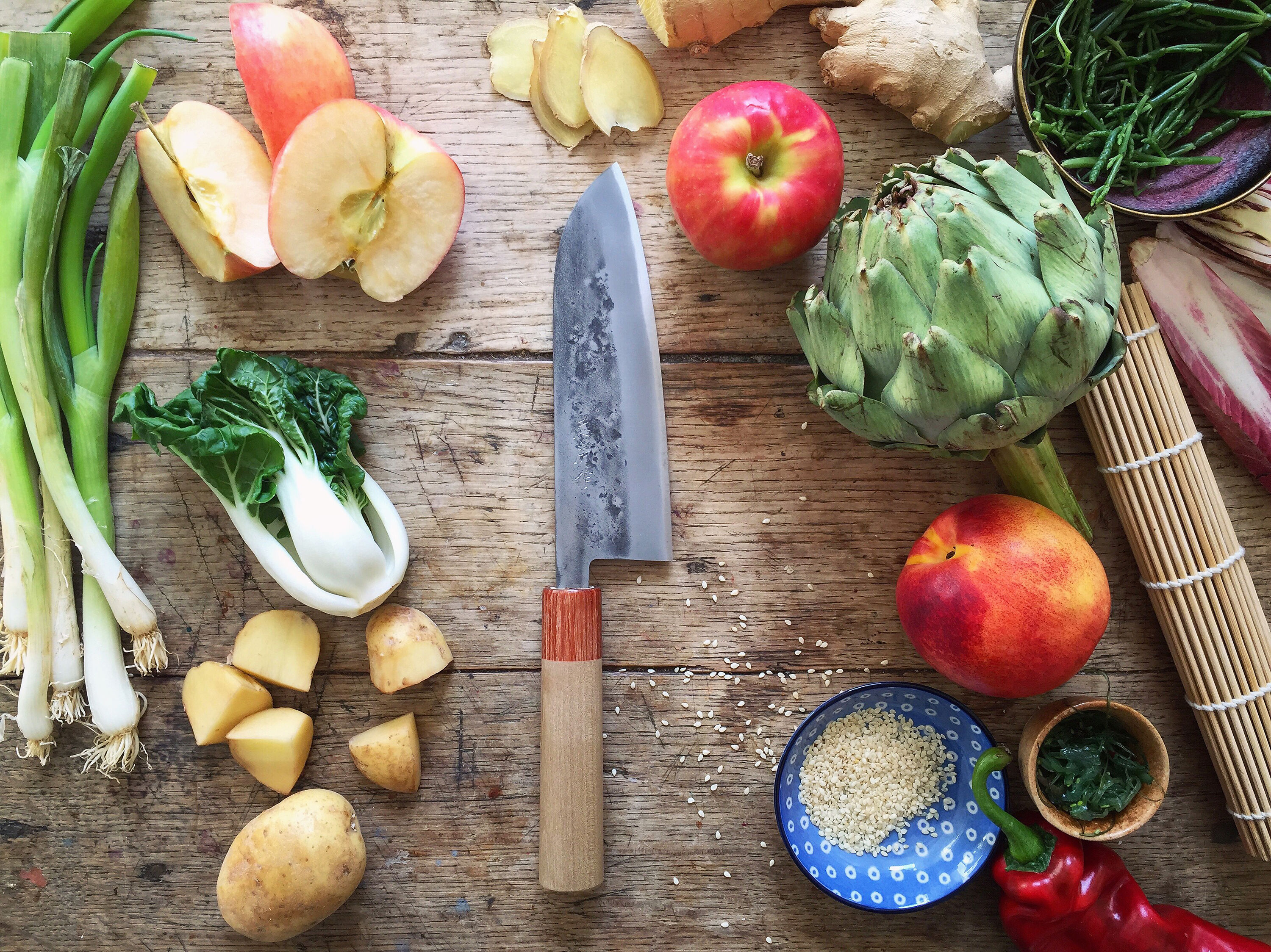
When choosing a Japanese kitchen knife here’s a few things to consider:
Which Knife type?
- All-Rounder: the Gyuto or Santoku - the standard domestic knife in Japan. Get one of these if you’re starting out. Technically, the Santoku has a broader blade, while the Gyuto is more slender, and based on a western chef’s knife
- Veg Knife: Nakiri - good for meat as well. Usuba - this one’s a bit special, it’s single bevelled for traditional Japanese veg prep, wafer thin sheets of daikon radish, that sort of thing
- Small Knife: Petty
- Raw Fish: Yanagiba (single bevelled)
- Carving: Sujihiki
- Filleting Fish: Deba, Mioroshi, Ajikiri (all single bevelled. Deba is the largest and most substantial, Ajikiri the smallest (named after the aji fish, a kind of mackerel) while Mioroshi is an interesting take on the Deba, with a touch of Gyuto thrown in.
Which Range?
- For beginners: think about the stainless steel Tetsuhiro or Mainichi range - they won’t blow you away, but are a great introduction to Japanese knives
- Beyond that: do you want a more traditional Japanese feel (Masashi’s knives and the Carbon range have Japanese style handles) or a heavier, more substantial Western feel - in which case go for the Nashi or Kiri range
White Paper Steel is the easiest to sharpen but Blue Paper Steel holds its edge longer while SLD and VG-10 are hard wearing and semi rust proof.
Masashi, needless to say, are the nicest, but the Niwaki Carbon and Niwaki Nashi hit a sweet spot of quality and value, giving you triple layered steel at an affordable price.
For better or worse, Western knives are often seen as general purpose kitchen tools, used for cutting, prising, levering and all sorts of other jobs around the kitchen (and sometimes beyond).
Japanese knives should not be viewed this way and it may require a change of mindset to get the best out of your knife and ensure it delivers many years of service.
Cared for correctly, this ought to be the case: the quality of the craftsmanship and the ease with which they can be kept incredibly sharp are two of the main reasons to make the switch to Japanese steel, but that comes at a price: the steel –especially steel with high carbon content - may be more brittle than you are used to and they are not for the heavy-handed or the careless. They are unforgiving tools and you may not get an opportunity to make the same mistake twice.
A good rule of thumb is to show them the same respect you show your poshest wine glasses, but here are some other pointers.
Commons mistakes to avoid:
- Leaving wooden handled knives to soak in water.
- Washing knives in the dishwasher.
- Not storing them carefully: store them individually, not jumbled up with other cutlery.
- Cutting into bone. If you’re not sure whether there’s bone, or you know there to be bone present, go very slowly and carefully, or consider using a different knife.
- Trying to cut frozen foods.
- Cutting down too hard on to the wrong sort of surface, for example kitchen worktops.
Don’t be put off. They are great to use and easy to care for. To get the best from your knives:
- Wash them by hand and dry thoroughly afterwards.
- Wipe over with Camellia Oil if not using regularly.
- Sharpen every two weeks or so of regular use.
- Use the Niwaki Combination Stone for everyday sharpening.
- Take care with harder foods, such as the skin of a pumpkin or a squash.
- Free delivery for orders over $100*
- Price depends on location - adjust the COUNTRY tab in your basket to see the price.
- We use DHL, FedEx, or UPS, and we’ll email you the tracking info.
*Customs fees may apply and are estimated during checkout. Surcharges may apply to some larger or heavier items to some areas.
* Please note Niwaki are not responsible for any import duty, taxes or fees incurred and these will be will be collected by our courier during customs clearance — When possible DHL will provide an estimate on the order confirmation page.